
The best Funnel.io alternative is the one that replaces the job Funnel is doing for you, not the whole platform. Agencies that mainly use Funnel to feed client reports usually spend less with a reporting platform like AgencyAnalytics, Swydo, or DashThis. Teams that need a full marketing data hub look at Improvado or Adverity, and data teams that only need pipes into a warehouse go with Fivetran or Airbyte.
That difference matters because Funnel isn’t cheap to keep around for a single job. Its plans start at $300 a month, billed annually only, and that number is a floor. Your real bill depends on flexpoints, Funnel’s internal unit for every connector, ad account, and destination you plug in.
Below you’ll find 13 alternatives in four lanes, each one priced at real agency scale, plus a migration checklist so you don’t leave years of history behind. Find your lane first. The rest is optional reading.
Quick Picks by the Job You Need Done
Each pick below maps to one job Funnel handles. Find the row that sounds like your week, and that’s your shortlist.
| If you mostly use Funnel to… | Look at |
|---|---|
| Send branded dashboards and reports to clients | AgencyAnalytics, Swydo, Whatagraph, DashThis, Databox |
| Pull ad data into Looker Studio, Sheets, or Power BI for less | Supermetrics, Windsor.ai, Coupler.io, Two Minute Reports |
| Run a governed data hub across brands and markets | Improvado, Adverity |
| Load raw marketing data into BigQuery or Snowflake | Fivetran, Airbyte |
| Run MMM or incrementality tests with Funnel Measure | A dedicated measurement vendor (covered below) |
How These Tools Were Compared
Every tool here was judged on what an agency actually pays for and delivers, not on the length of its feature list. Those are the questions that decide whether a switch saves you money and time.
- Cost at your size. What you’d pay at 20 clients, not the entry price on the pricing page.
- Client-facing delivery. White-label reports, a client portal, and scheduled sending.
- Monitoring between reports. Whether the tool tells you a client is off track before the monthly report does.
- Flexibility. Monthly billing, included users, and how painful it is to add the next client.
Tools built for jobs that agencies rarely need, like warehouse loading or enterprise governance, still get a fair entry in their own lane. They just aren’t scored against client-reporting tools.
What Funnel.io Actually Does
Funnel.io is a marketing data hub. It connects to your ad platforms, analytics, and CRM. It cleans and standardizes the data, then sends it wherever you analyze it: a warehouse, a BI tool, Looker Studio, or Funnel’s own dashboards.
The easiest way to picture it is a city water plant. Water comes in from rivers, reservoirs, and wells, which are your ad accounts. The plant filters it, makes it consistent, and pipes it to every building in town. That’s worth paying for when you’re supplying a city. But what if all you need is clean water at one kitchen sink every Monday morning? Then you’re paying for treatment capacity you’ll never touch.
The underlying problem Funnel solves is very real, though. In Funnel’s own 2026 Marketing Intelligence Report, only 12% of in-house marketers said they’d extensively automated their data-related tasks. A Salesforce marketing intelligence study found that 43% of marketers spend a week or more every month preparing data. So the question isn’t whether to automate. It’s how much plant you actually need.
The Four Jobs Funnel Bundles Into One Subscription
Funnel packages four separate jobs into one contract. Almost every alternative replaces only one or two of them, which is why one ranked list rarely helps you decide.
- Pipe. Moving data out of ad platforms and analytics tools into a destination, like Sheets, Looker Studio, or a warehouse.
- Hub. Cleaning and mapping that data so it lines up across sources and markets, with consistent naming, currencies, and metric definitions.
- Report. Turning the data into dashboards and reports people actually read, including client-facing ones.
- Measure. Marketing mix modeling and incrementality testing through Funnel Measure, a paid add-on.
Which job is Funnel.io doing for you?
Replace only the jobs you use every week.
Report
Sounds like you if
The end product is a branded dashboard or monthly report for clients.
Look at
AgencyAnalytics, Swydo, Whatagraph, DashThis, Databox
Pipe
Sounds like you if
Funnel mostly sends ad data into Looker Studio, Sheets, or a BI tool you build in yourself.
Look at
Supermetrics, Windsor.ai, Coupler.io, Two Minute Reports
Hub
Sounds like you if
You harmonize naming, currencies, and metrics across many brands or markets.
Look at
Improvado, Adverity, or stay on Funnel
Measure
Sounds like you if
You pay for Funnel Measure to run MMM or incrementality tests.
Look at
Northbeam, Triple Whale, Dreamdata, Meridian, Robyn
Before you compare a single tool, write down which of the four jobs you use every week. If the honest answer is Pipe and Report, you don’t need a hub. You need a reporting platform with good connectors, and that’s a much cheaper category. Getting clear on the difference between reporting and analytics helps here, because that’s usually where the overspend starts.
How Much Funnel.io Costs and How Flexpoints Work
Funnel.io sells annual contracts only. There are two tracks, one for agencies and one for brands, and every plan meters usage in flexpoints on top of the listed price. The plan tables show what you get, and the flexpoint math shows what you’ll actually pay.
Funnel.io Plans for Agencies and In-House Teams
Agencies get their own track, and it’s the one most readers of this article will be quoted on.
| Agency plan | Price | Connectors | Destinations | Users |
|---|---|---|---|---|
| Agency Standard | From $300/mo, billed annually | 117 | 13 | 5 |
| Agency Advanced | From $600/mo, billed annually | 600+ | 47 | Unlimited |
Agency Standard includes unlimited workspaces, Funnel AI, and Funnel MCP for AI tools. Agency Advanced adds custom integrations, enterprise governance, and white-label client reporting through Funnel Portals. That last point catches a lot of agencies off guard: a branded, client-facing setup starts at $600 a month before any extra flexpoints. And on Agency Standard, only five people on your team can log in.
In-house teams get a parallel track:
| Brand plan | Price | Connectors | Destinations | Users |
|---|---|---|---|---|
| Starter | From $300/mo, billed annually | 117 | 13 | 5 |
| Business | From $600/mo, billed annually | 579 | 46 | Unlimited |
| Enterprise | Custom | 600+ | 47 | Unlimited |
Enterprise adds SAML and SCIM single sign-on, an audit log, and the Snowflake destination. Funnel Measure is separate from all of these. Its Digital Measurement tier is listed at $2,250 a month, billed annually, for brands spending $500,000 to $1 million a month on ads.
How Flexpoints Turn a Listed Price Into a Real Bill
Flexpoints are Funnel’s capacity unit. Every connector, ad account, and destination you add uses some, following a fixed rate card.
| What you add | Flexpoints |
|---|---|
| Each connector (Google Ads, Meta, and so on) | 50 |
| Each platform account within a connector | 5 |
| Each visualization destination (Looker Studio, Google Sheets) | 150 |
| Each Funnel dashboard | 150 |
| Each data warehouse destination | 300 |
Every plan includes a minimum of 400 flexpoints. Extra capacity comes in 100-flexpoint bundles, and Funnel doesn’t publish what a bundle costs. Flexpoints count as long as a connector and account are active, even if nothing is being exported. On the plus side, Funnel doesn’t charge for data volume or rows.
Now run a typical agency setup through the rate card. Take 20 clients, each running Google Ads, Meta, and GA4, all feeding Looker Studio:
- 3 connectors × 50 = 150 flexpoints
- 60 accounts × 5 = 300 flexpoints
- 1 Looker Studio destination = 150 flexpoints
That’s 600 flexpoints, or 200 over the plan minimum. So you’d need two extra bundles at a price only sales can give you. Add BigQuery and you’re at 900.
Flexpoints aren’t a trick. Once you understand them, they’re fairly predictable. But they make comparison shopping hard, so do this math before your renewal date, not after.
Why Teams Look for a Funnel.io Alternative
Most teams don’t leave Funnel because the data is bad. They leave because the price and plan structure don’t match what they use. On G2, Funnel holds a strong 4.5 out of 5, and reviewers praise its support and integrations. The drawbacks they mention most are the learning curve and the cost.
Those complaints usually come down to a few situations:
- The price is hard to know in advance. The listed price is a floor, and extra flexpoint bundles have to be quoted.
- The features agencies want sit on the higher tier. Branded client portals, unlimited users, and most destinations are on Agency Advanced.
- You’re paying for a hub to do a reporting job. The mapping and harmonization tools are excellent, but a 15-person agency sending monthly PPC reports rarely touches them.
- Setup takes real effort. Field mapping and transformations reward teams with a data person. Teams without one often struggle.
- There’s no monthly billing. That’s tough on seasonal agencies or anyone testing a new service line.
When Staying on Funnel.io Makes Sense
Funnel is the right tool for some teams, and switching just to save money can cost you more in rework. Stay or renegotiate if two or more of these describe you:
- You run multiple brands or markets and rely on Funnel to standardize currencies and naming.
- Your data team has built warehouse models on top of Funnel’s exports.
- You use Funnel Measure and don’t want to rebuild your measurement setup right now.
- Support quality matters more to you than price.
Funnel.io Alternatives Compared Side by Side
How a tool charges matters more than its entry price. A per-client tool, a per-source tool, and a credit-based tool can cost the same at 5 clients and very different amounts at 40.
| Tool | Job it replaces | How it charges | Starting price | Monthly billing |
|---|---|---|---|---|
| Funnel.io | Hub, Pipe, Measure | Plan plus flexpoints | From $300/mo | No, annual only |
| AgencyAnalytics | Report, Pipe | Per client | $25/client/mo ($20 annual) | Yes |
| Swydo | Report, Pipe, monitoring | Per data source, 10 included | $69/mo ($62/mo annual) | Yes |
| Whatagraph | Report, Pipe | Source credits, 50 minimum | From $812/mo | No, annual only |
| DashThis | Report | By dashboards and sources | $54/mo ($44/mo annual) | Yes |
| Databox | Report | By clients and sources | $99/mo agency plan ($79 annual) | Yes |
| Supermetrics | Pipe | By sources and destination | $49/mo ($39/mo annual) | Yes |
| Windsor.ai | Pipe | By sources and accounts | Free plan, paid tiers above | Yes |
| Coupler.io | Pipe | By connected accounts | Free plan, paid tiers above | Yes |
| Two Minute Reports | Pipe, light Report | By accounts per connector | $97/mo | Yes |
| Improvado | Hub, Pipe | Custom contract | Quote only | Custom contract |
| Adverity | Hub, Pipe | Custom contract | Quote only | Custom contract |
| Fivetran | Pipe | Usage (monthly active rows) | Usage-based | Usage-based |
| Airbyte | Pipe | Free self-hosted, paid cloud | Free to self-host | Cloud plans |
Best Funnel.io Alternatives for Agency Client Reporting
This is the lane where agencies most often overpay for Funnel. If your final output is a branded dashboard or a monthly PDF for a client, the best client reporting software handles Pipe and Report in one tool, with templates, scheduling, and white-labeling built in. The pricing model is the big difference between these five.
AgencyAnalytics
One plan, every feature, priced per client.
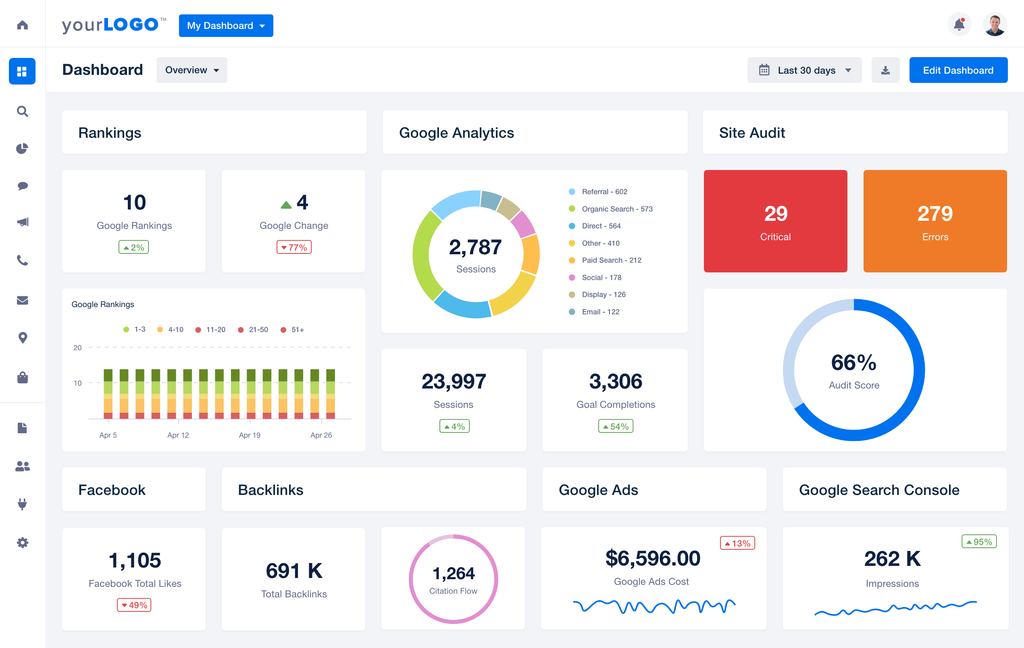
AgencyAnalytics gives agencies dashboards, reports, and client portal logins across 85+ integrations, with white-labeling down to your own domain and email. AI insights, anomaly detection, forecasting, API access, and MCP for ChatGPT and Claude are all included.
Standout feature. Per-client pricing means a client running eight channels costs the same as a client running one. That’s great for full-service agencies, and it’s the main split in Swydo vs AgencyAnalytics, since Swydo prices by data source instead.
Worth knowing. Your bill grows with every client you sign, including the small ones.
Pricing. $25/client/mo ($20 annual), with volume discounts from 25 clients. 14-day trial, no credit card.
Swydo
For agencies that want to catch problems across every client before the monthly report does.
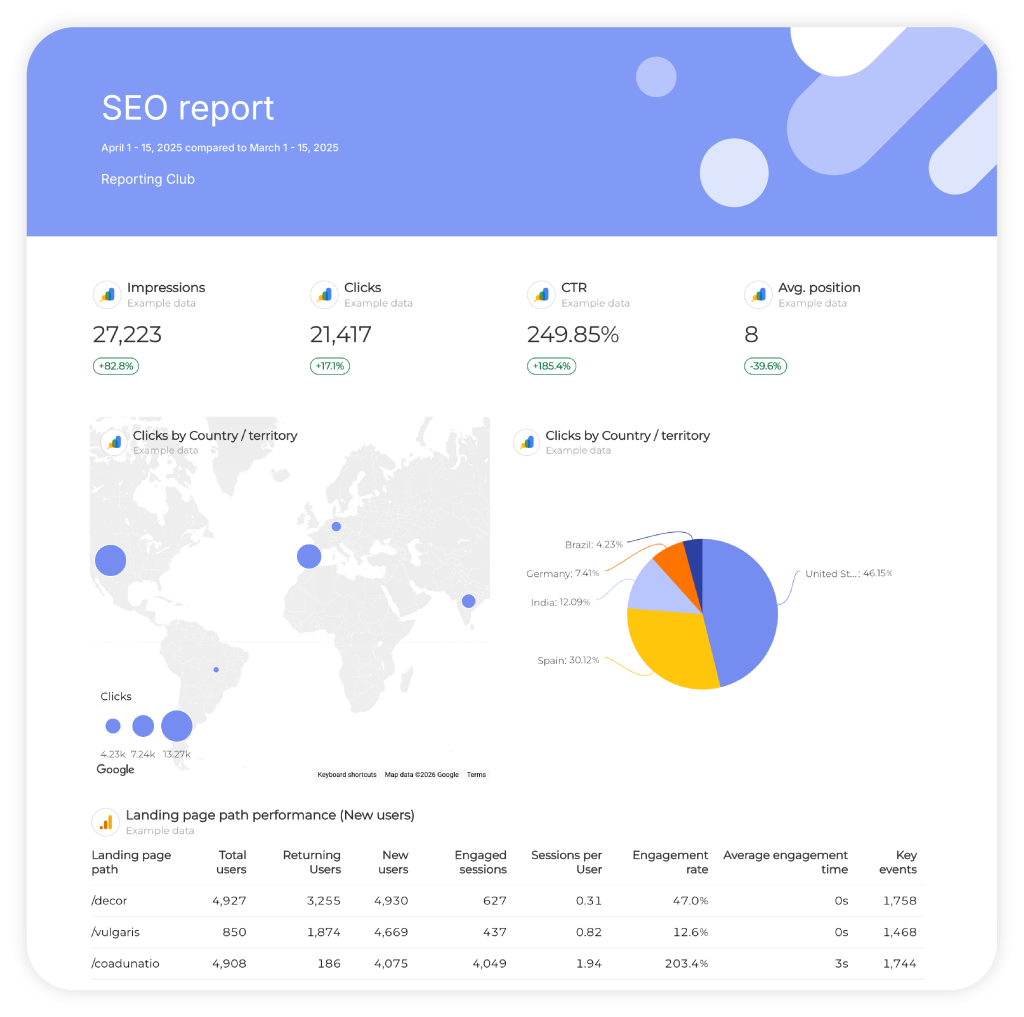
Swydo is client reporting and portfolio monitoring in one plan. Build a master template once, link it to every client, and branded reports go out on schedule while clients can log into their own Client Portal. Between reports, Swydo watches the whole portfolio for you, so monitoring vs reporting stops being a choice between two tools. The Monday-morning walkthrough further down shows it in practice.
Standout feature. Combined Data Sources blends up to five ad platforms into one widget, including cross-channel ROAS, and those blended numbers work in alerts and goals, not just in reports.
Worth knowing. Swydo connects natively to 40+ platforms, including ChatGPT Ads, and anything else flows in through Google Sheets or Excel with Zapier or Make. Data flows out just as easily: Swydo MCP answers questions in ChatGPT or Claude, Slackbot answers them inside Slack, and a read-only API feeds live client data into your warehouse or BI tool.
Pricing. $69/mo ($62 annual) with 10 data sources included. Additional sources cost $4.50 each up to 100, $3.00 from 101 to 500, and $2.00 beyond that, and you’re billed only for sources in use. Unlimited clients and users. 14-day trial, no credit card.
Whatagraph
Polished reports and in-house connectors, on an annual commitment.
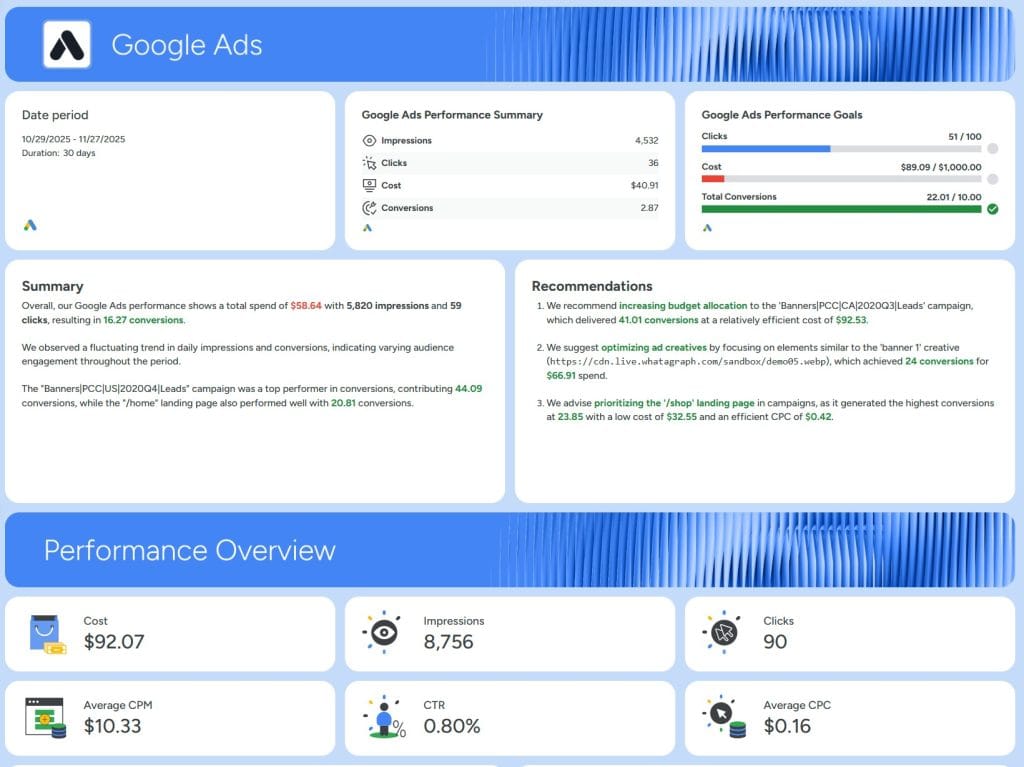
Whatagraph offers 66 integrations built and maintained in-house, plus data blending, white-label reports, KPI overviews with alerts, and its Whatagraph IQ AI features. The Prime plan adds BigQuery and Looker transfers and public API access. Agencies that want that polish without an annual commitment usually end up comparing Whatagraph alternatives.
Standout feature. Owning its integrations rather than relying on third-party connectors gives Whatagraph tighter control over data quality.
Worth knowing. There’s no monthly billing. Pricing runs on source credits, one per connected account, with a 50-credit floor, so a 20-account agency pays the same as a 50-account agency.
Pricing. Max from $812/mo, billed annually only. Prime is custom. 14-day trial, no credit card.
DashThis
Simple dashboards with predictable tiers.
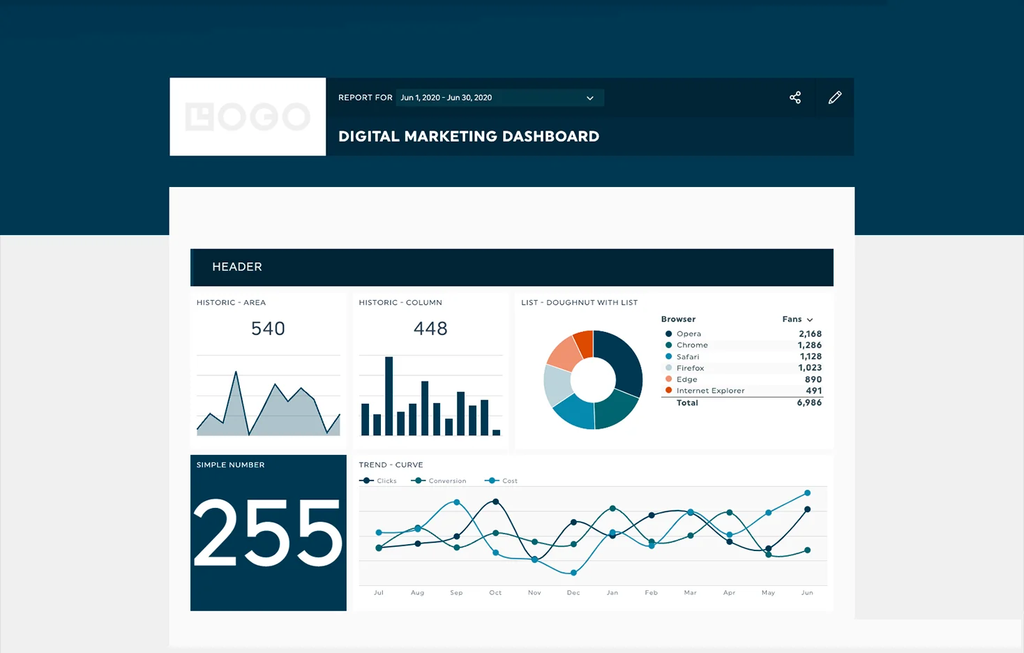
DashThis keeps things simple: connect 30+ integrations, build dashboards, and share them with your branding. Users and integrations are unlimited on every plan, and white-labeling is included at every tier. Teams that outgrow its plan caps usually start comparing DashThis alternatives with more room per plan.
Standout feature. It’s quick to learn. Most teams have a client dashboard live within an hour.
Worth knowing. Each plan caps the number of data sources, and that cap, not the dashboard count, usually decides your tier. AI Insights Pro is a paid add-on.
Pricing. Individual $54/mo ($44 annual), Professional $164/mo ($139), Business $324/mo ($279), Standard $499/mo ($429). 14-day trial.
Databox
KPI tracking with benchmarks and an AI analyst.
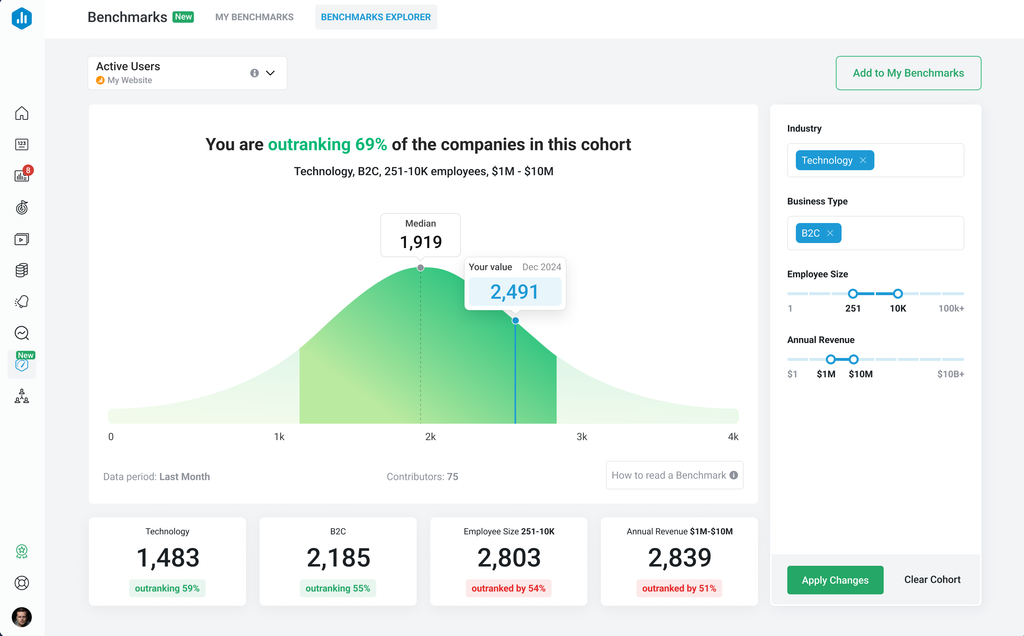
Databox connects 130+ integrations to KPI dashboards, with industry benchmarks, Slack alerts, and its Genie AI analyst on every tier. It runs separate pricing tracks for agencies and in-house teams, and agencies that don’t need benchmarks often pick Databox alternatives with white-labeling in the base price.
Standout feature. Benchmarks let you show clients how their numbers compare with similar companies, which is a stronger talking point than raw trends.
Worth knowing. Agency plans include only three data sources, with extras at $2.40 each. White-labeling is a $250-a-month add-on unless you’re on Agency Premium.
Pricing. Agency Starter $99/mo ($79 annual), Agency Pro $199/mo ($159), Agency Growth $499/mo ($399), Agency Premium $999/mo ($799). A free plan exists on the business track.
Best Funnel.io Alternatives for Cheaper Connectors and Pipelines
If Funnel is mostly the pipe between your ad accounts and Looker Studio, Sheets, or a BI tool, Looker Studio connectors do the same job for much less. The tradeoff is that you build and maintain the reports yourself.
Supermetrics
The best-known connector, now with AI tools as a destination.
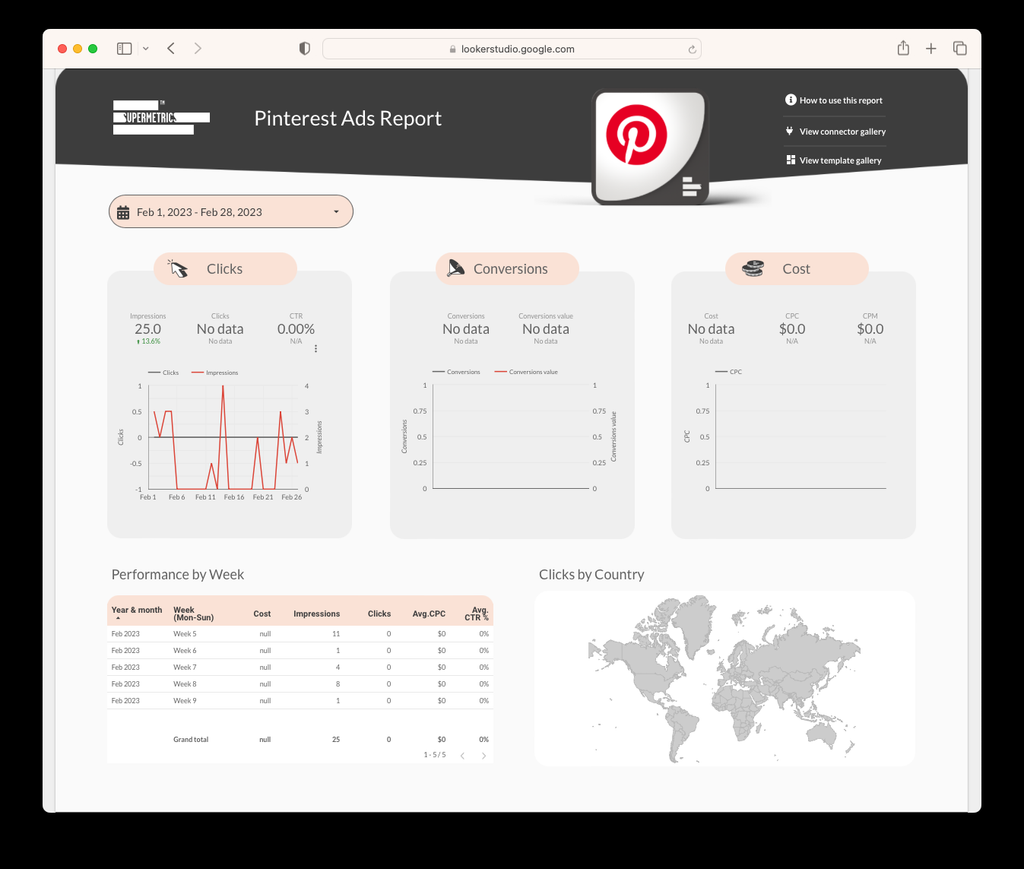
Supermetrics pulls marketing data into the tools you already use, including Looker Studio, Google Sheets, Excel, and Power BI. Each plan is built around one core destination, and plans scale by the number of sources, accounts per source, and users.
Standout feature. Claude, ChatGPT, and Microsoft Copilot count as core destinations, so you can ask questions of your marketing data inside an AI assistant.
Worth knowing. Refreshes run weekly on Starter, daily on Growth, and hourly on Pro. Warehouse destinations like BigQuery and Snowflake require Enterprise.
Pricing. Starter from $49/mo ($39 annual), Growth from $199/mo ($159 annual), Pro from $499/mo ($399 annual), Enterprise by quote. 14-day trial, no credit card.
Windsor.ai
The budget route into a warehouse.
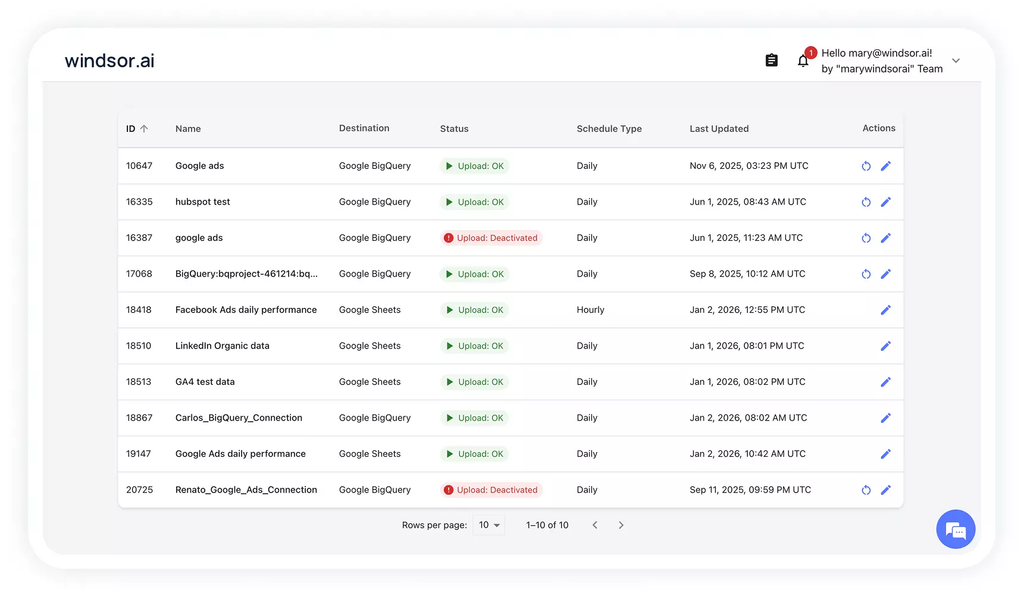
Windsor.ai connects marketing platforms to Looker Studio, Sheets, BI tools, and data warehouses. Small teams pick it because it reaches warehouse destinations without an enterprise contract.
Standout feature. Warehouse destinations are available on self-serve paid plans, which makes it a practical Pipe-only replacement for a lean team that owns its own BigQuery project.
Worth knowing. Lower tiers cap the number of accounts you can connect, so count your clients’ ad accounts before choosing a plan.
Pricing. A free plan is available, with paid tiers priced by sources and accounts.
Coupler.io
For teams that live in spreadsheets.
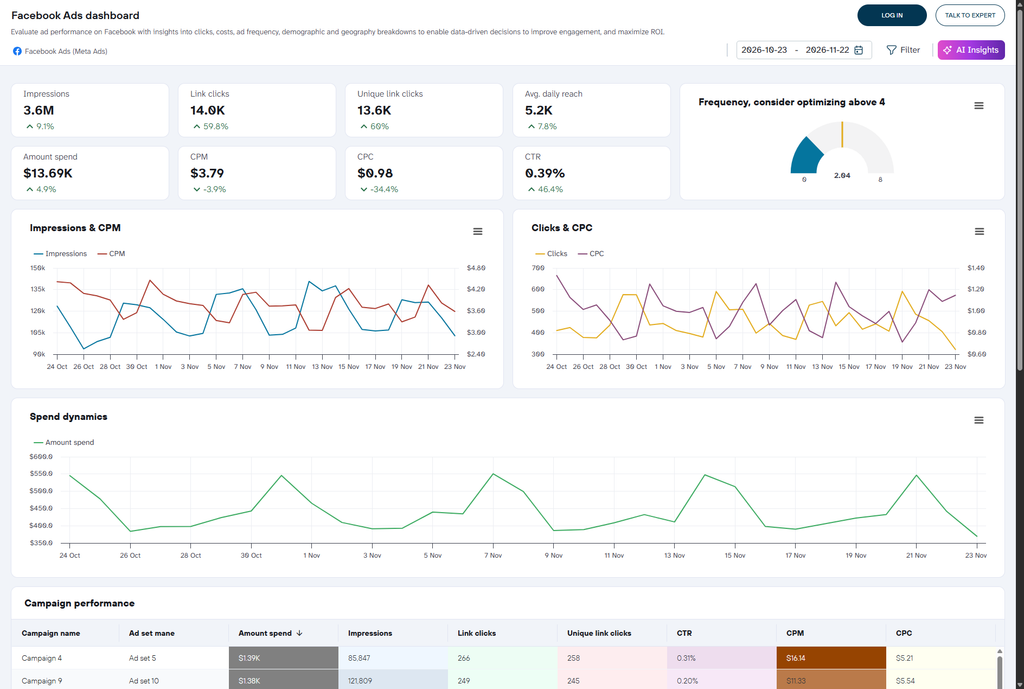
Coupler.io moves data from marketing, sales, and finance apps into Google Sheets, Excel, Looker Studio, Power BI, and warehouses on a schedule. It also includes light transformations and ready-made dashboard templates.
Standout feature. It covers far more than marketing. If your reports blend ad spend with accounting or CRM data, one tool handles both.
Worth knowing. You’re still building and maintaining the reports. White-label client delivery isn’t the focus.
Pricing. A free plan is available, with paid tiers priced by connected accounts.
Two Minute Reports
Agency reporting inside Google Sheets and Looker Studio.
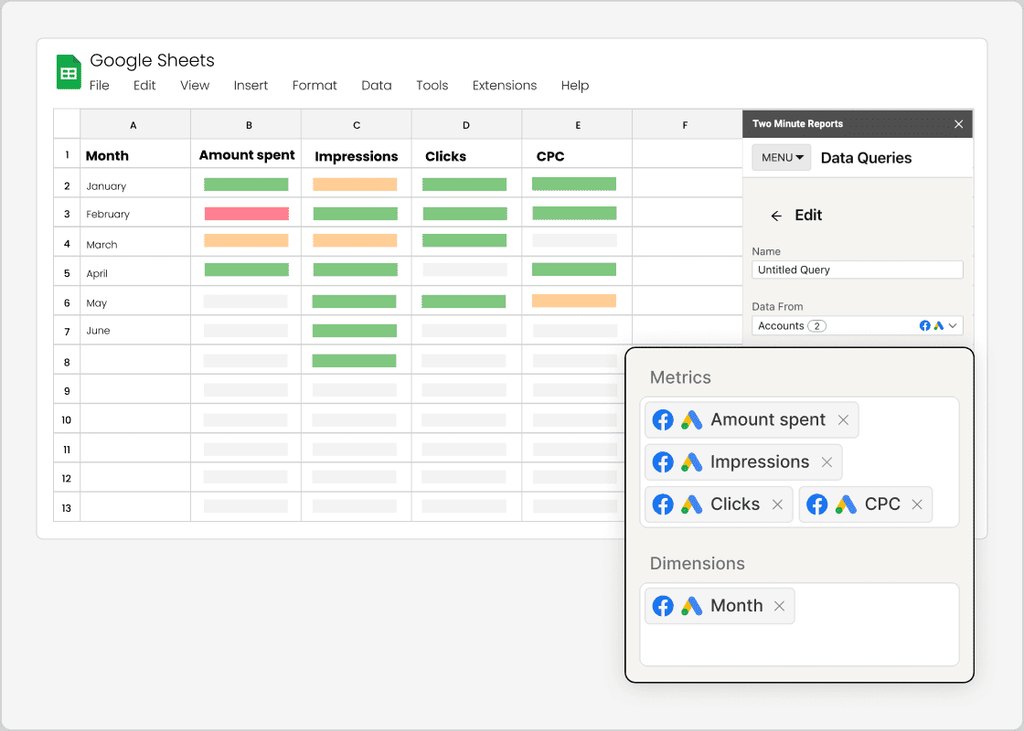
Two Minute Reports pulls 30+ data sources into Sheets or Looker Studio, with templates, AI dashboards, and scheduling. Every plan includes unlimited users, queries, and data history.
Standout feature. API access, MCP, and goals are included on every tier, which is unusual at this price.
Worth knowing. Accounts are counted per connector. Twenty clients on Google Ads and Meta use 20 of each allowance, not 20 in total. An extra destination costs $49 a month.
Pricing. Lite $97/mo, Pro $297/mo, Business $597/mo, with two months free on annual billing. 14-day trial, no credit card.
Best Funnel.io Alternatives for a Full Marketing Data Hub
If you rely on Funnel’s Hub job, a real replacement has to do serious mapping and data blending across dozens of sources and markets. These two are the closest like-for-like swaps, and they’re priced like it.
Improvado
The enterprise pick when marketing data has to meet BI and finance standards.
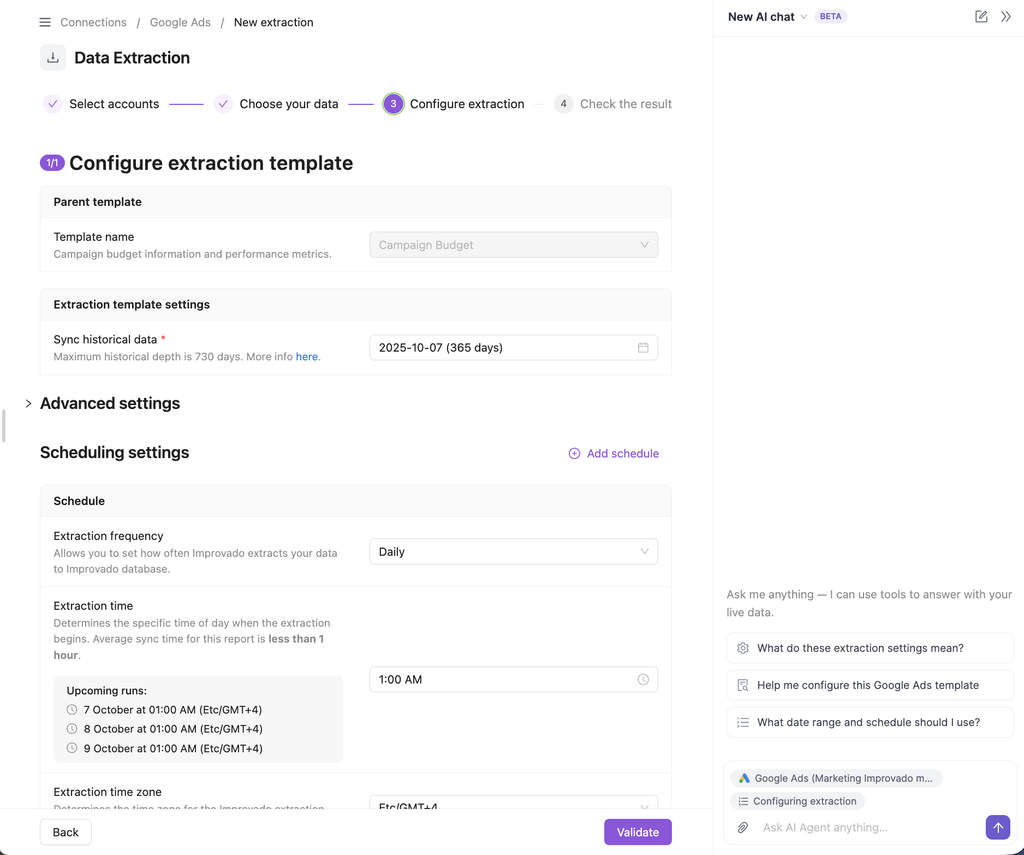
Improvado extracts data from ad, analytics, and CRM platforms, normalizes it into a consistent marketing data model, and loads it into your warehouse or BI tool. It’s built for marketing ops and analytics teams at larger companies, and onboarding is hands-on, with Improvado’s team doing much of the initial setup.
Standout feature. Its prebuilt marketing data model aligns campaign naming and metric definitions across platforms before the data reaches your warehouse. That’s the same job Funnel’s Hub does.
Worth knowing. It’s sales-led and sized for enterprise budgets, so it’s usually more than an agency with a few dozen clients needs.
Pricing. Custom annual contracts. Quote only.
Adverity
Built for teams that care about data governance as much as data delivery.
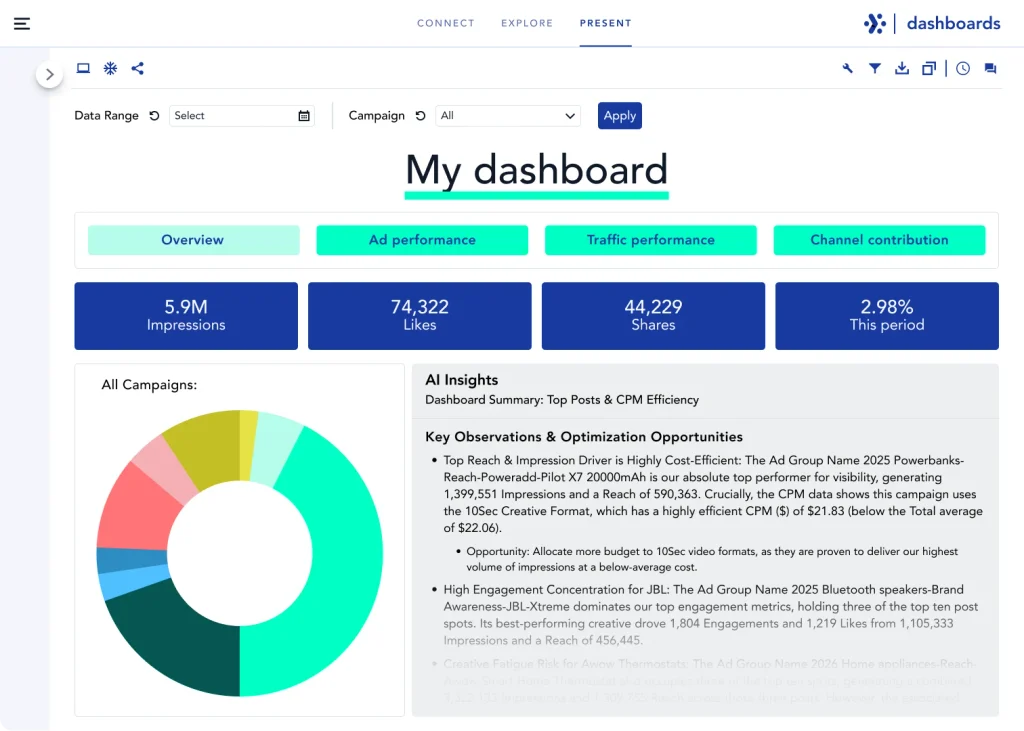
Adverity is an enterprise data integration platform for marketing, sales, and ecommerce data. It covers connection, transformation, and delivery to warehouses and BI tools, with controls that suit companies where many teams touch the same numbers.
Standout feature. Built-in data quality monitoring flags anomalies and broken mappings before they reach a dashboard. For large organizations, that’s often worth more than another connector.
Worth knowing. Expect a proper setup project. It’s a platform for teams with data owners, not a quick swap for a two-person agency.
Pricing. Custom contracts. Quote only.
Best Funnel.io Alternatives for Warehouse-First Data Teams
If your data team owns a warehouse and Funnel is only the ingestion layer, a general-purpose ELT tool is cheaper and more flexible. The catch is that you lose Funnel’s marketing-specific mapping, so someone on your team has to own the transformations.
Fivetran
Managed pipelines plus transformations under one roof.
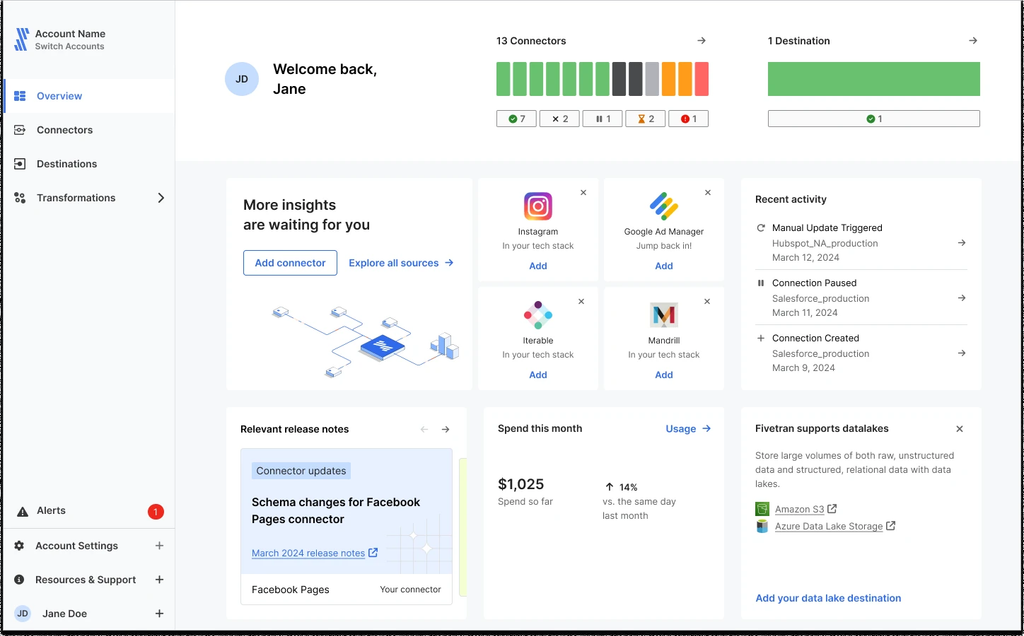
Fivetran runs managed connectors into every major warehouse, and its marketing connectors cover the major ad and analytics platforms. It’s now one company with dbt Labs after the two merged, so ingestion and dbt transformations live with one vendor.
Standout feature. Fivetran maintains the connectors when platform APIs change, so your engineers aren’t patching broken pipelines.
Worth knowing. Usage-based pricing means large historical backfills or busy connectors can spike a month’s bill. Watch usage closely during migration.
Pricing. Usage-based, on monthly active rows.
Airbyte
The open-source option.
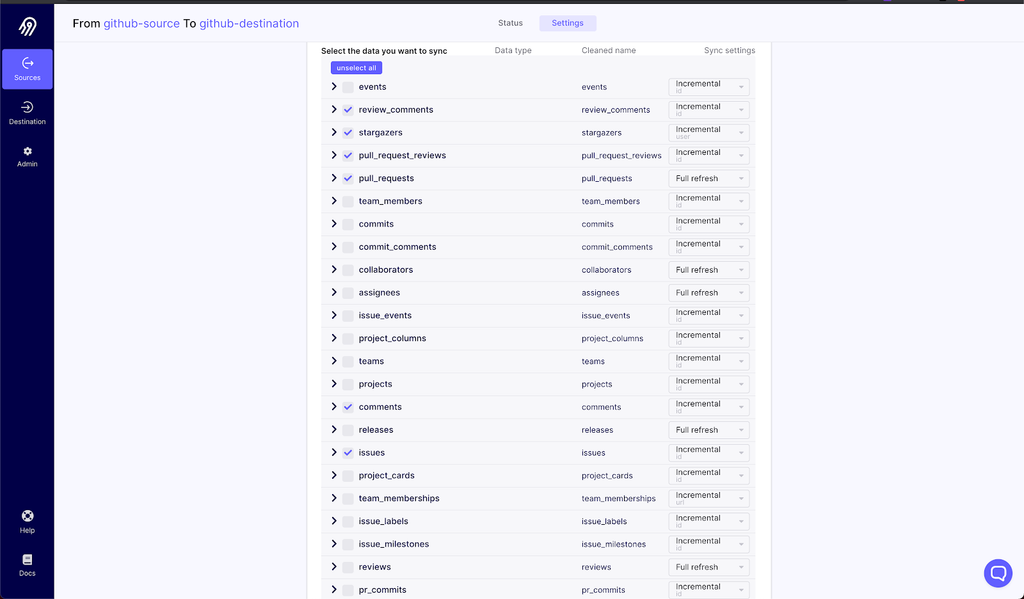
Airbyte is an open-source ELT platform with a large catalog of community and certified connectors, plus a connector builder for anything missing. You can self-host it or use Airbyte’s cloud service.
Standout feature. Self-hosting is free, and you can see and change every connector’s code.
Worth knowing. “Free” means your engineers handle hosting, upgrades, and connector fixes. That’s a real cost, just not one that shows up on an invoice.
Pricing. Free to self-host. Paid cloud plans are available.
What to Use if You Rely on Funnel Measure
Funnel Measure is a separate add-on, so changing your data hub doesn’t have to mean losing your measurement. If you use only Funnel’s Data Hub, you can skip this section.
If you do use Measure, keep the two decisions apart. Dedicated attribution tools such as Northbeam and Triple Whale serve ecommerce brands, and Dreamdata focuses on B2B revenue attribution. Teams with in-house analysts can run open-source MMM frameworks like Google’s Meridian or Meta’s Robyn. Don’t migrate your data hub and your measurement model in the same quarter, though. If the numbers move, you won’t know which change caused it.
What Each Option Costs for a 20-Client Agency
At 20 clients running three platforms each, Swydo is the lowest-cost reporting option priced here at $294 a month, with Two Minute Reports right behind at $297. Entry prices hide most of that story, so every tool below is priced at the same 60 data sources, on monthly billing wherever it’s offered.
Monthly cost for a 20-client agency (60 data sources)
List prices, monthly billing where offered
Swydo
$294
Two Minute Reports
$297
Funnel.io Agency Standard
$300+ (annual only)
DashThis
$324
Databox
~$336 + $250 white-label
AgencyAnalytics
$500
Funnel.io Agency Advanced
$600+ (annual only)
Whatagraph
$812 (annual only)
Plan cost
Required add-on
Price floor, extra flexpoints quoted by sales
Scenario: 20 clients on Google Ads, Meta, and GA4. Funnel.io at this size needs about 600 flexpoints, 200 above the plan minimum. White-label client portals require Agency Advanced.
A few patterns stand out. Per-source pricing favors agencies with many clients on a few channels each. Per-client pricing favors agencies running lots of channels for fewer clients. Credit floors and annual-only contracts favor agencies that are already big and stable.
The comparison with Funnel is sharper than the dollar figures suggest. For $294 a month on monthly billing, Swydo includes unlimited users and a branded Client Portal. Getting both from Funnel means Agency Advanced at $600 a month or more, billed annually.
Which of those pricing models describes your next 12 months, not your last 12? That’s the one to price against.
What Replacing Funnel Looks Like on a Monday Morning
For a 20-client agency, replacing Funnel with a reporting platform changes Monday mornings more than it changes the invoice. Here’s what that same morning can look like in Swydo.
At 8:50, a Data Health Check alert lands in your inbox. One client’s Meta connection expired over the weekend, and the email links straight to the fix. The client never sees a blank chart.
At 9:00, Metrics Overview shows spend, conversions, and ROAS for all 20 clients on one screen. Two rows are red. Say one client’s Goal shows paid search pacing well under its monthly target. An Alert has already posted that to your team’s Slack channel.
At 9:15, you open that client’s report. It’s linked to your master template, so last week’s layout change is already in place. The AI Report Builder drafts the commentary, you adjust two sentences, and the client sees the update in their branded Client Portal.
At 9:30, your account manager asks Slackbot how that client did this month versus last, and posts three talking points in the client channel before the call.
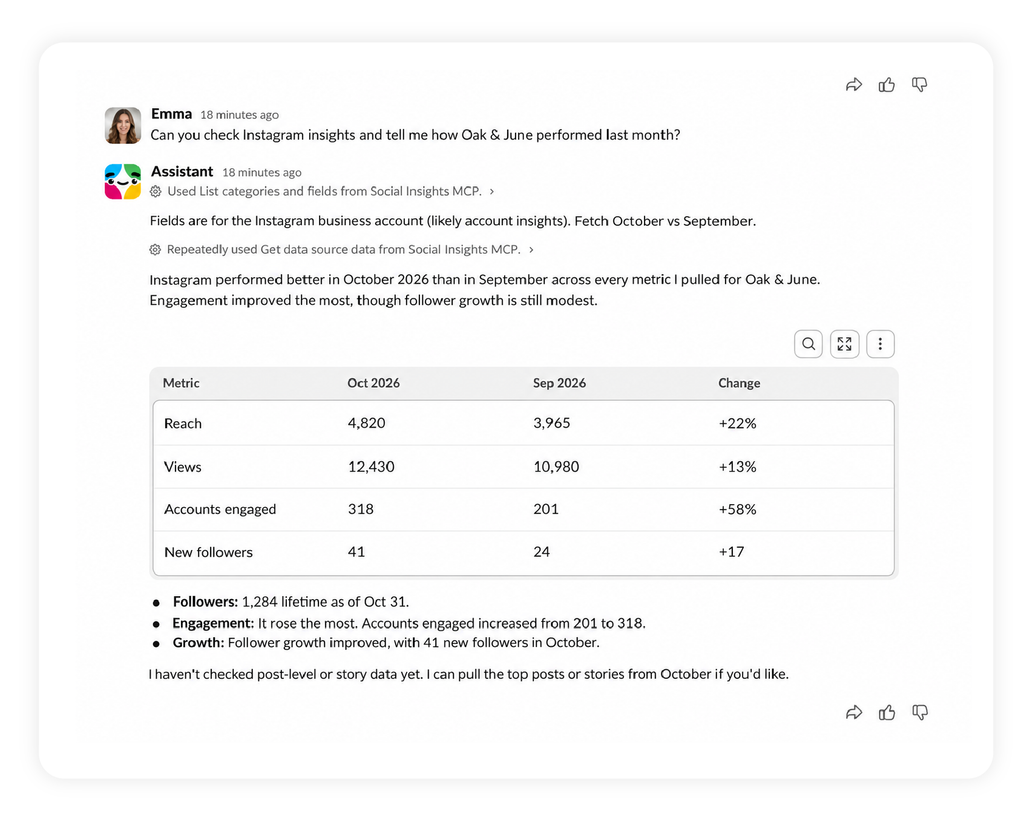
That’s the whole check, across every client, before your first call. Funnel would still be moving the data. It just wouldn’t be telling you which client needs you first.
How to Choose the Right Funnel.io Alternative
The right choice comes from your answers to a handful of practical questions, not a feature checklist. Go through these with whoever builds your reports today:
- Which of the four jobs do you use weekly? Pipe, Hub, Report, or Measure. Replace only those.
- What does the price look like at twice your size? Price your current setup, then double the clients and channels.
- Where does the data need to land? If it’s a warehouse, check which tier unlocks that destination. It’s rarely the entry plan.
- How fresh does it need to be? Weekly refreshes are fine for monthly reports. They’re painful for daily pacing.
- How far back can the tool pull history? This matters most during migration.
- Who sees the output? Client-facing work needs white-labeling, client logins, and scheduling.
- Can your team ask questions in AI tools? MCP access is now available from several vendors in this list.
- What are the contract terms? Monthly billing gives you room to test. Annual-only commits you before you know.
One more test. Which client would notice first if a connection broke over a long weekend, and would your new tool tell you before that client did?
How to Move Away From Funnel.io Without Losing Data
The biggest risk in leaving Funnel isn’t the new tool. It’s losing history and trust in your numbers during the switch. These six steps prevent both.
- List everything Funnel touches. Write down every connector, account, custom field, naming rule, and destination, plus who relies on each output.
- Export your history before the contract ends. Push full historical data to a warehouse or Google Sheets while you still have access. Some ad platforms limit how far back their APIs return data, so a new tool may not be able to backfill everything Funnel holds.
- Rebuild your rules on purpose. Recreate naming conventions, currency settings, and custom metrics in the new tool. Fix the ones that never made sense while you’re at it.
- Connect and backfill. Check how much history each source actually returns in the new tool.
- Run both tools for one full reporting cycle. Reconcile spend and conversions line by line. Small gaps usually come from time zones or attribution windows. Large gaps mean a mapping error.
- Switch clients, then cancel. Move client-facing outputs last, and send your cancellation well before Funnel’s renewal notice period.
Mistakes to Avoid When You Switch
Most failed switches come from mixing up the job or the math. Watch for these:
- Buying a hub to do a reporting job, or the reverse: swapping a data hub your analysts depend on for a dashboard tool.
- Comparing entry prices instead of cost at your size. The 20-client table shows how fast the order changes.
- Ignoring account limits. Per-account caps and per-connector counting change the bill more than the headline price.
- Assuming warehouse support on entry plans. It usually sits on a higher tier.
- Skipping the parallel run. One reconciled month saves you from explaining a “drop in conversions” that never happened.
Funnel.io Alternatives FAQ
Direct answers on what Funnel does, what it costs, and how to replace it
Funnel.io collects marketing data from ad platforms, analytics tools, and CRMs, standardizes it, and sends it to a warehouse, a BI tool, Looker Studio, or its own dashboards. Teams use it so every channel’s numbers use the same names, currencies, and definitions.
Yes. Funnel.io is a marketing-specific ETL tool: it extracts data from marketing platforms, transforms it into a consistent format, and loads it into destinations like BigQuery, Snowflake, or Looker Studio.
That’s the key difference from reporting tools like Swydo or AgencyAnalytics, which pull the data and turn it into client-ready reports in the same place.
Funnel.io is worth it if you need a true marketing data hub: many brands or markets, a data warehouse, and a team that uses the cleaned data beyond reports. It’s usually overkill if your main output is client dashboards, because you pay hub prices for a reporting job.
The most common complaints in G2 reviews are the learning curve and the cost. Users also mention that inactive sources still use flexpoints and that visualization options are limited compared with dedicated reporting tools.
Reviewers consistently praise its support and its range of integrations, so the frustration is usually about fit and price rather than data quality.
Yes. Looker Studio is one of Funnel’s visualization destinations, and adding it uses 150 flexpoints on top of your connectors and accounts.
If Looker Studio is where all your reporting happens, a cheaper connector like Supermetrics or Windsor.ai can feed it, or a reporting platform can replace both Funnel and Looker Studio.
Funnel.io starts at $300 a month, billed annually, and its next tier starts at $600 a month. Enterprise pricing is custom.
| Agency plan | Price | Connectors | Users |
|---|---|---|---|
| Agency Standard | From $300/mo, annual only | 117 | 5 |
| Agency Advanced | From $600/mo, annual only | 600+ | Unlimited |
Those prices are floors. Usage beyond the included 400 flexpoints is sold in 100-flexpoint bundles at a price Funnel’s sales team quotes.
Flexpoints are Funnel’s capacity unit. Every connector, ad account, and destination uses a fixed number of them, and they count as long as a connection is active, even if no data is exported.
| What you add | Flexpoints |
|---|---|
| Each connector | 50 |
| Each platform account | 5 |
| Each visualization destination (Looker Studio, Sheets) | 150 |
| Each Funnel dashboard | 150 |
| Each data warehouse destination | 300 |
Funnel doesn’t charge for data volume or rows, so your bill grows with what you connect, not how much data moves.
An agency with 20 clients on Google Ads, Meta, and GA4, all feeding Looker Studio, needs about 600 flexpoints: 150 for the three connectors, 300 for 60 ad accounts, and 150 for Looker Studio.
That’s 200 above the 400 included, so two extra bundles. Adding a BigQuery destination brings the total to 900.
No. Funnel.io doesn’t offer a permanent free plan to new buyers, and its plans are billed annually. Trials are arranged with Funnel’s team.
Swydo, AgencyAnalytics, DashThis, and Supermetrics all offer monthly billing if you want to test before committing.
White-label client portals start at $600 a month, billed annually, because they’re included only from Agency Advanced up. Agency Standard doesn’t include them.
Reporting platforms such as Swydo, AgencyAnalytics, and DashThis include white-labeling on their standard plans with monthly billing.
Funnel Measure is a separate add-on. Its Digital Measurement tier is listed at $2,250 a month, billed annually, for brands spending $500,000 to $1 million a month on ads, and its offline measurement tier is custom-priced.
The best alternative replaces the job Funnel does for you, not the whole platform.
| If you use Funnel to… | Look at |
|---|---|
| Send reports and dashboards to clients | AgencyAnalytics, Swydo, Whatagraph, DashThis, Databox |
| Feed Looker Studio, Sheets, or Power BI | Supermetrics, Windsor.ai, Coupler.io, Two Minute Reports |
| Run a governed data hub across brands | Improvado, Adverity |
| Load raw data into a warehouse | Fivetran, Airbyte |
For moving data, Windsor.ai and Coupler.io have free plans, and Supermetrics starts at $49 a month. For client reporting, Swydo starts at $69 a month with 10 data sources included.
The entry price matters less than the cost at your size. At 20 clients with three platforms each, Swydo comes to $294 a month and AgencyAnalytics to $500, while Funnel starts at $300 a month plus quoted flexpoint bundles.
A client reporting platform is the best fit for most agencies, because the finished product is a branded report, not a warehouse table. The pricing model decides which one costs least.
| Tool | How it charges | 20 clients, 60 data sources |
|---|---|---|
| Swydo | Per data source, 10 included | $294/mo |
| Two Minute Reports | Accounts per connector | $297/mo |
| DashThis | Dashboards and sources | $324/mo |
| AgencyAnalytics | Per client | $500/mo |
| Whatagraph | Source credits, 50 minimum | $812/mo, annual only |
Per-source pricing suits agencies with many clients on a few channels. Per-client pricing suits agencies running many channels for fewer clients.
Yes, for agencies that use Funnel mainly for client reports and dashboards. Swydo covers data collection, branded reporting, a client portal, and cross-client monitoring for $69 a month with 10 data sources, unlimited clients, and unlimited users.
Teams that need the data in a warehouse can pull it out through Swydo’s read-only API. Teams that rely on Funnel Measure will still need a dedicated measurement tool.
Fivetran, Airbyte, Improvado, Adverity, and Windsor.ai all load data into warehouses like BigQuery and Snowflake. Supermetrics does too, but only on its Enterprise plan.
On Funnel itself, Snowflake is available only on Enterprise, so check which tier unlocks your warehouse before comparing prices.
Supermetrics, AgencyAnalytics, Two Minute Reports, and Swydo all let you query marketing data in AI assistants like ChatGPT or Claude, mostly through MCP. Funnel offers the same through Funnel MCP.
Swydo also has a Slack integration, so your team can ask about a client’s performance and share the answer without leaving Slack.
Yes, Airbyte. It’s free to self-host and lets you read and change every connector’s code.
Free to run isn’t free to own, though: your team handles hosting, upgrades, connector fixes, and the data cleanup Funnel would otherwise do.
Supermetrics is a connector, while Funnel.io is a data hub. Supermetrics moves data into tools like Looker Studio, Sheets, Power BI, and AI assistants from $49 a month with monthly billing.
Funnel.io also stores, cleans, and standardizes the data before sending it out, and it’s sold on annual contracts from $300 a month.
Both are marketing data hubs, but Improvado is built for enterprise teams and sold only through custom annual contracts, with hands-on onboarding from its team. Funnel.io publishes entry prices and suits mid-size teams and agencies as well as enterprises.
Windsor.ai is a low-cost connector with a free plan that can load data into Looker Studio, Sheets, BI tools, and warehouses. Funnel.io costs more but adds deeper data cleanup, like standardizing naming and currencies across markets.
If you only need the data moved, Windsor.ai is the cheaper route. Watch the account limits on its lower tiers.
Not on its own. Looker Studio builds dashboards, but it needs a connector to pull data from non-Google platforms like Meta or LinkedIn, and it doesn’t clean or store that data the way Funnel does.
Looker Studio plus a connector replaces Funnel’s Pipe and Report jobs. A reporting platform replaces both in one tool.
Yes, if you export it before your contract ends. Push your full history to a warehouse or Google Sheets while you still have access.
Don’t count on the new tool to rebuild it. Some ad platforms limit how far back their APIs return data, so a backfill may not reach everything Funnel holds.
Plan for at least one full reporting cycle, usually a month. Connecting accounts is quick; most of the time goes into rebuilding naming rules and running both tools side by side until the numbers match.
Small gaps usually come from different time zones, attribution windows, or currency settings between the two tools. Large gaps usually mean a field was mapped differently.
Reconcile spend and conversions line by line during a parallel run, before any client sees the new reports.
Cancel only after your history is exported and the new tool has matched Funnel’s numbers for a full reporting cycle. Because Funnel’s plans are annual, check the notice period in your agreement and send notice well before the renewal date.
Stay if you manage several brands or markets and rely on Funnel to standardize the data, if your data team has built warehouse models on Funnel’s exports, or if you need Funnel Measure.
If you’re switching mainly to save money, price your real setup first. Renegotiating can cost less than rebuilding.
Final Thoughts
Funnel.io is a strong data hub, but many teams pay hub prices for a reporting job. Name the job you actually need first: Pipe, Hub, Report, or Measure. Then price your shortlist at your real size, and protect your history with an export and a parallel run before you cancel anything.
If client reporting is the job, start with the agency lane. If you’re still deciding between dashboards and a BI tool, these Looker Studio alternatives and this roundup of white-label reporting tools are useful next reads.
Get branded client reports and cross-client alerts without hub-sized contracts or flexpoint math.
Try Swydo Free for 14 Days