SEO tools fall into ten categories, and most agencies need three or four of them. Every tool below answers the same three questions: what it does, which agency it’s for, and what it pairs with.
One category is new since 2024, and it’s the one clients ask about most. AI visibility tracking exists because AI search referrals, while still under 1% of traffic by BrightEdge’s measure of Fortune 100 sites, decide whether a brand gets named in an answer. Rankings still feed those answers, but less mechanically than most people assume: across 362,000 keywords, 94% of Google AI Overviews cite at least one page from the top 20, while 44% of individual citations come from outside it.
Rank well and you’re eligible. Rank well and you’re still not guaranteed a citation. Which is why the foundation categories below still carry most of the weight, and why one new category sits alongside them.
Monthly prices lead throughout. Annual rates follow in brackets, and any tool that sells annual contracts only is labeled as such.
Why These Tools Matter for Your Agency
The right stack removes your agency’s biggest bottleneck first. It is not the one with the longest feature list. A five-person agency with 20 local clients has a different bottleneck than a 50-person agency running enterprise e-commerce, and the tool choice should follow the bottleneck.
Google ran two broad core updates in the first half of 2026 and spam updates in March and August. The pattern hasn’t changed since 2025: quality decides, and how the content was produced doesn’t.
What has changed is which AI engine your client shows up in. For most of 2025 the answer was ChatGPT or nothing. BrightEdge’s Q1 2026 referral data shows that concentration breaking up.
For an agency, that’s a buying decision. A tracker that only watches ChatGPT covers a shrinking majority, and the cheapest tier of most AI visibility tools is exactly that single-engine view.
So what does your agency actually lose time on today? Start there.
AI Visibility Tracking Tools
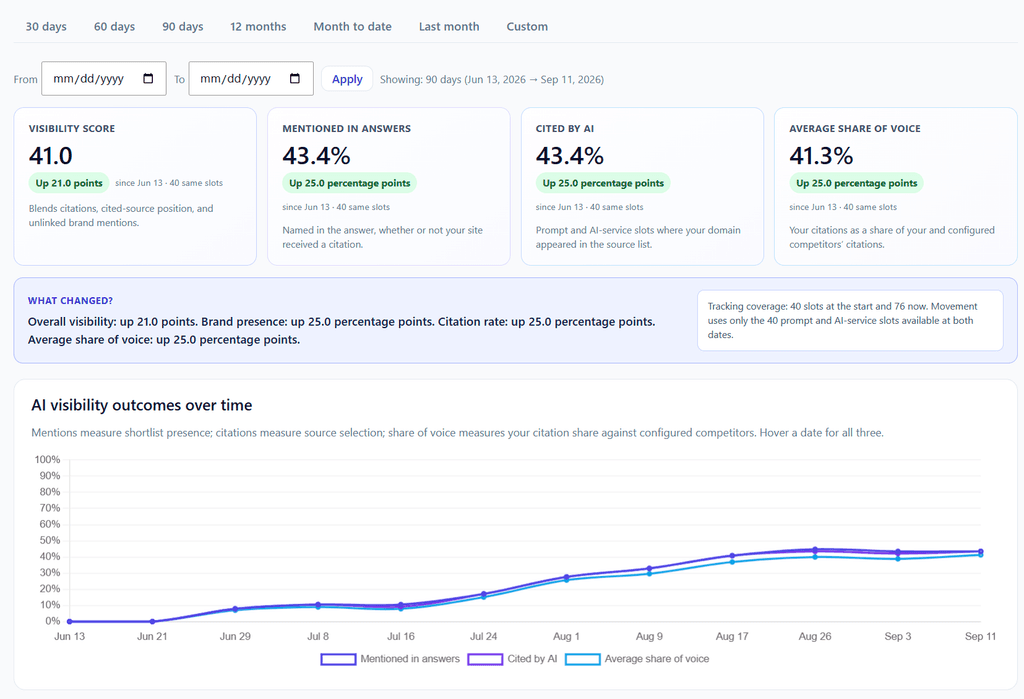
Buy one of these, not two. There are three routes and the right one depends on what you already pay for. If you’re on SE Ranking or Surfer, AI tracking is already in your bill and a standalone tool is a duplicate. If you’re on Ahrefs or Looker Studio, you have no AI coverage at all and need a standalone. And if your clients are on WordPress and the monthly per-brand fees don’t fit the retainer, a third route runs on your own API keys instead.
If you also want to track AI traffic in GA4, that’s a separate setup and it’s free.
Standalone Platforms Built for AI Search Visibility
Otterly.AI Share of Voice tracking across six AI surfaces, plus GEO audits of 25+ on-page factors.
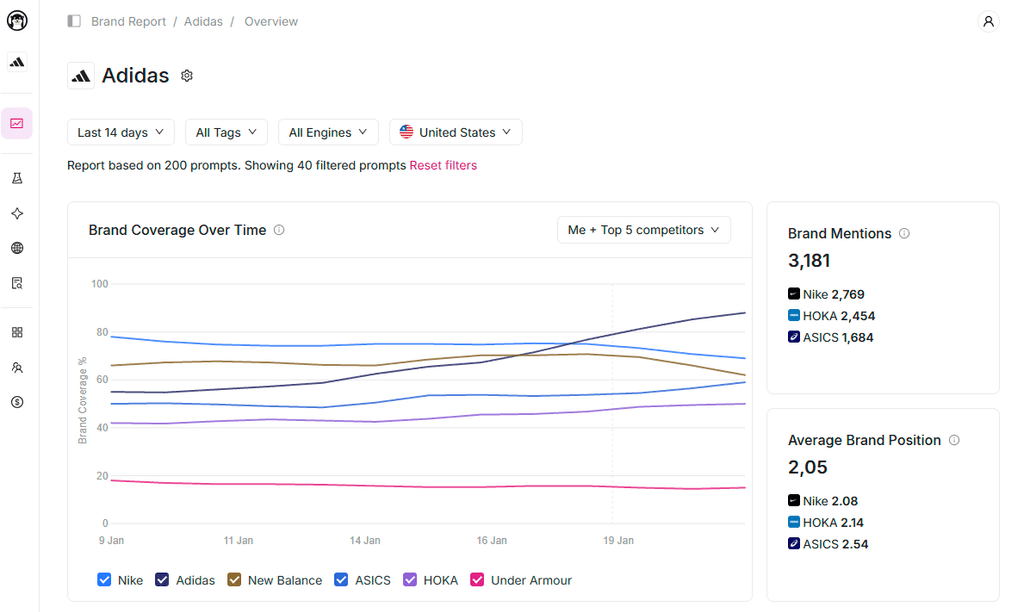
Best for agencies whose clients keep asking “are we in ChatGPT?” and who need a defensible yes or no fast. It’s the lightest lift in the category to get a first report in front of someone.
Works with any reporting tool through export. It won’t tell you why you’re missing, so pair it with a content optimization tool when the answer is no.
Peec AI Daily AI visibility tracking with unlimited user seats on every plan.
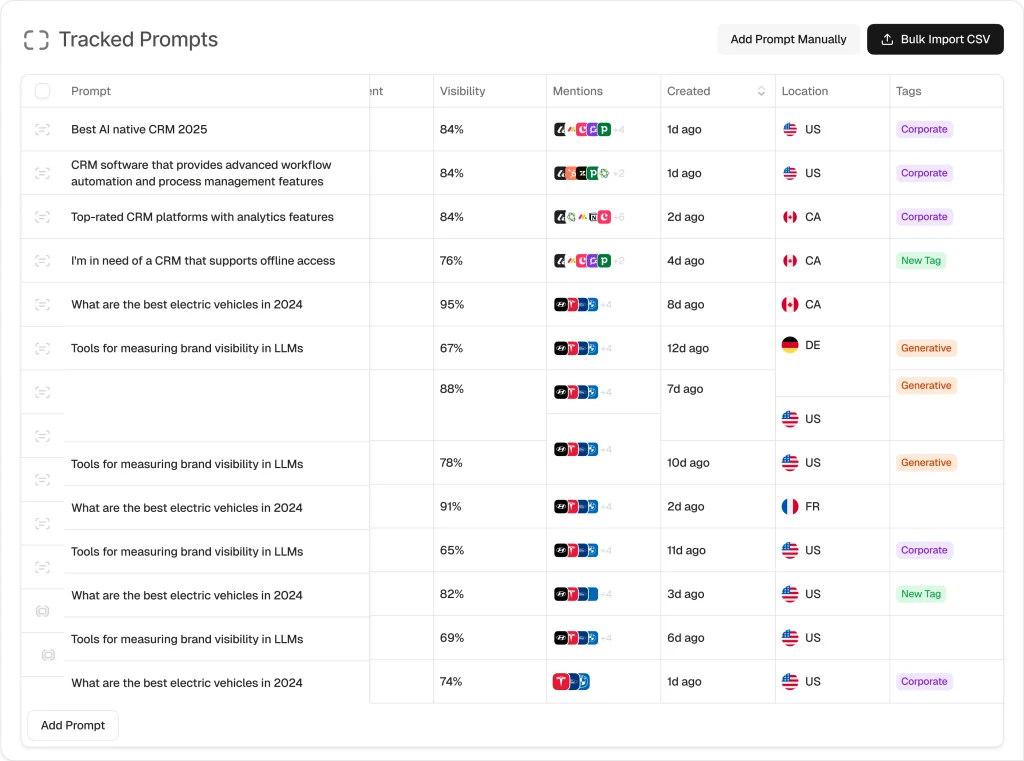
Best for agencies with more than three people who’d otherwise pay per seat. If four account managers and two strategists all need dashboard access, Peec is the only tool here where that costs nothing extra.
Skip it if you need more than three engines. Self-serve plans cap at three of your choice, and adding a fourth costs $35 to $165/month, which usually means the next tier up is better value.
Price $95/month ($80 annually) for 50 prompts. Pro $245, Advanced $495. A separate agency track starts at $245.
Profound The deepest AI visibility dataset available, covering up to nine engines.
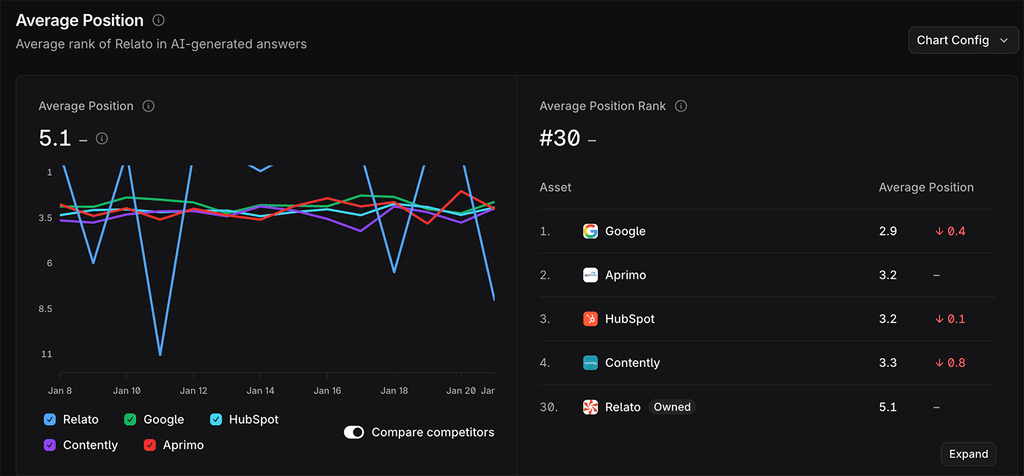
Best for agencies with enterprise clients who will fund a per-brand line item. The data holds up under a CMO’s scrutiny in a way the cheaper tools don’t, and prompt-volume data is something only Profound publishes.
Works with your reporting layer by export, not by integration. Budget for the reporting work separately.
Price Growth $399/month ($332.50 annually) for ChatGPT, Perplexity and AI Overviews. Enterprise custom.
Skip it if your clients are SMBs. The $99 Starter tracks ChatGPT alone, which will give a client a falsely clean picture of their AI visibility.
Self-Hosted and Bring-Your-Own-Key Options
Every tool above bills per brand per month, and that model breaks first when a client’s whole retainer is $1,500. The alternative is bring-your-own-key, where you pay a flat license and the queries run against your own OpenAI, Anthropic or Perplexity API keys at cost.
CiteTrack AI AI citation and visibility tracking that runs inside WordPress on your own API keys.
Best for agencies managing WordPress client sites on retainers too small to absorb $95 to $399 a month per brand. The license is flat and annual, and query costs are whatever your own API usage comes to, which for a normal prompt set lands far below any subscription tier here.
Works with the client’s existing WordPress install, so there’s no new dashboard to onboard anyone to and no seat count to manage. Pair it with your reporting tool for the client-facing layer.
Price $59/year per site, plus your own API usage.
Skip it if you need one portfolio view across 20 clients. A per-site plugin reports per site, so rolling results up into a single agency dashboard is manual work the standalone platforms do for you. It’s also a non-starter for clients who aren’t on WordPress.
AI Visibility You May Already Be Paying For
Three tools in this guide bundle AI tracking into a subscription you might already hold, which makes a standalone tracker a duplicate purchase. Each gets a full entry in its own category. What matters here is the AI coverage and what it costs you.
- Semrush bundles it as the AI Visibility Toolkit, $99/month per domain standalone, or inside Semrush One from $199/month. Per-domain pricing means ten clients is $990/month, so it suits agencies with a few large accounts rather than many small ones. Full entry under Keyword Research Platforms.
- SE Ranking includes it in the base plan at no extra cost, with 100 tracked prompts daily on Core and 250 on Growth. The cheapest route to AI coverage in this guide if you need a research suite anyway. Full entry under Keyword Research Platforms.
- Surfer includes it from Standard at $119/month with weekly refresh, moving to daily on Pro. Best when content is the fix, since the diagnosis and the rewrite happen in one tool. Full entry under Content Optimization.
Our SE Ranking review covers how that data lands in a client report.
| Tool | Entry price | Engines on entry plan | Seats | Fit |
|---|---|---|---|---|
| Peec AI | $95/mo ($80 annual) | Choose 3 of 6 | Unlimited | Mid-size teams, agency track from $245 |
| Profound | $99/mo ($82.50 annual) | ChatGPT only; 3 on Growth ($399) | 1 | Enterprise clients on Growth+ |
| Semrush AI Visibility | $99/mo per domain | ChatGPT, AI Overviews, Perplexity, Gemini | 1 | Existing Semrush accounts; bundle from $199 |
| SE Ranking Core | $129/mo ($103.20 annual) | ChatGPT, Perplexity, Gemini, AI Overviews | 1 | Included with SEO suite |
| Surfer Standard | $119/mo ($99 annual) | 25 prompts, weekly refresh | 3 | Daily refresh needs Pro |
| CiteTrack AI | $59/yr + API usage | ChatGPT, Perplexity, Gemini, Claude, AI Overviews | Per site | WordPress rosters on small retainers |
| AccuRanker (AccuLLM) | $249/mo ($224 annual) | ChatGPT, Perplexity, AI Overviews, AI Mode | Unlimited | Rank-tracking-first agencies |
SEO Reporting Tools
This is the one category every agency needs, and the choice is really about pricing model. Per-client pricing is predictable and scales with revenue. Per-source pricing is cheaper when clients share platforms. Per-dashboard pricing is cheapest at low volume and punishing above ten clients.
For the wider category, start with our guide to the best SEO reporting software.
Reporting Platforms Built for Agency Workflows and White-Label Needs
AgencyAnalytics One plan with every feature, billed per client.
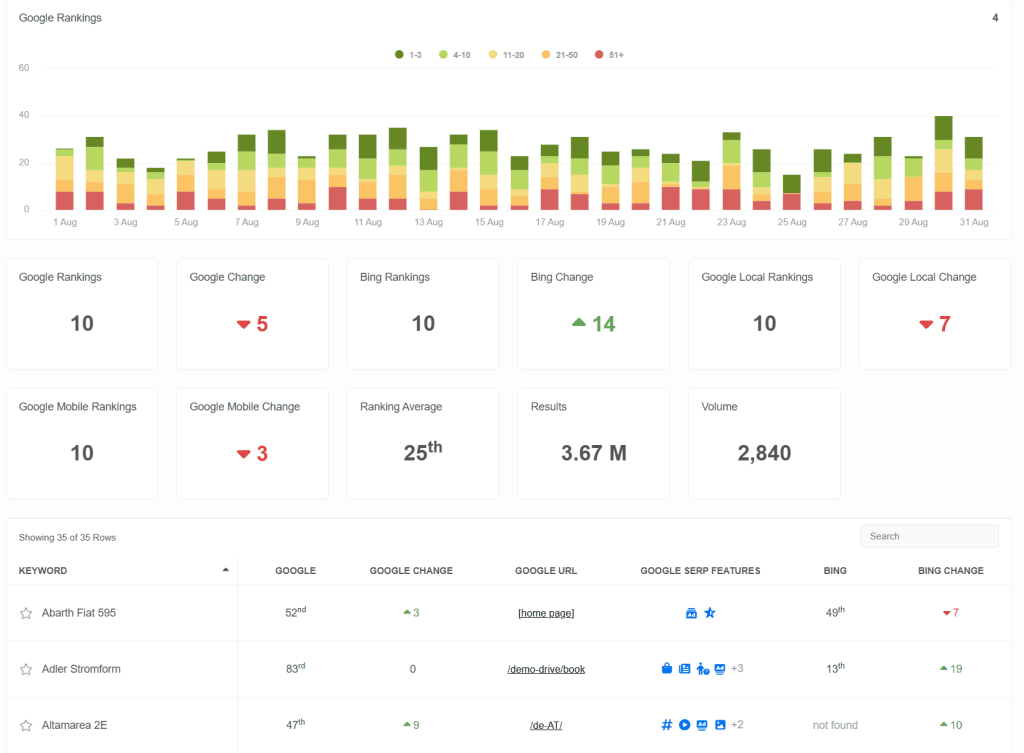
Best for agencies with high-value clients on many different platforms. Because you pay per client rather than per data source, a client running eight channels costs the same as one running two, which is the opposite of how most competitors bill.
Works with the widest integration set here at 85+, so it’s the safest pick when you can’t predict what a new client will run.
Price $25/client/month ($20 annually). Twenty clients is $500/month.
Skip it if your clients are small and numerous. Thirty $500/month clients means a $750 reporting bill.
Swydo Per-source reporting with daily monitoring between the reports.
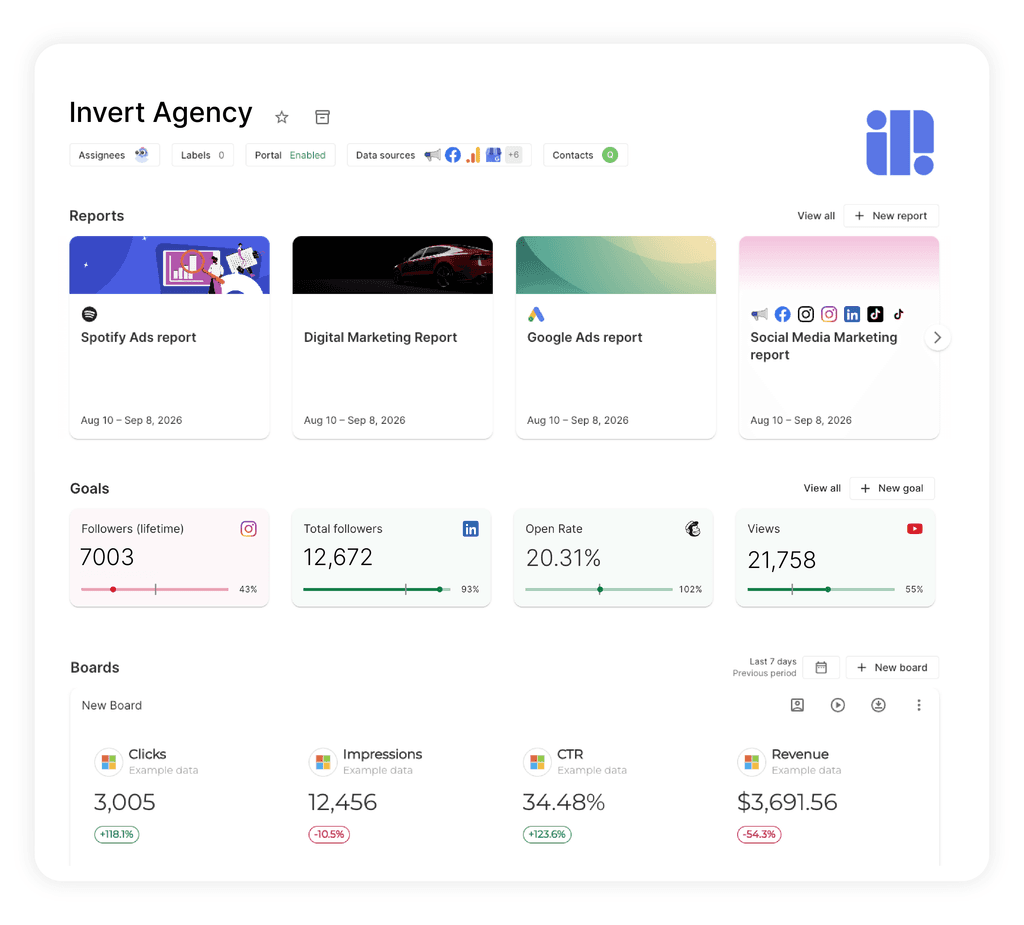
Best for agencies whose clients run similar platform combinations. Twenty clients all on Google Ads, GA4 and Search Console is 60 sources, which costs less than half what per-client pricing would.
It’s also the pick when reporting isn’t your only problem. The Monitoring suite (Metrics Overview, Goals, Alerts and an automatic Data Health Check) watches every client daily, so nobody opens 20 dashboards hunting for the one that broke. The AI Report Builder drafts a report structure from a plain-language prompt, and the Client Portal gives each client one branded link.
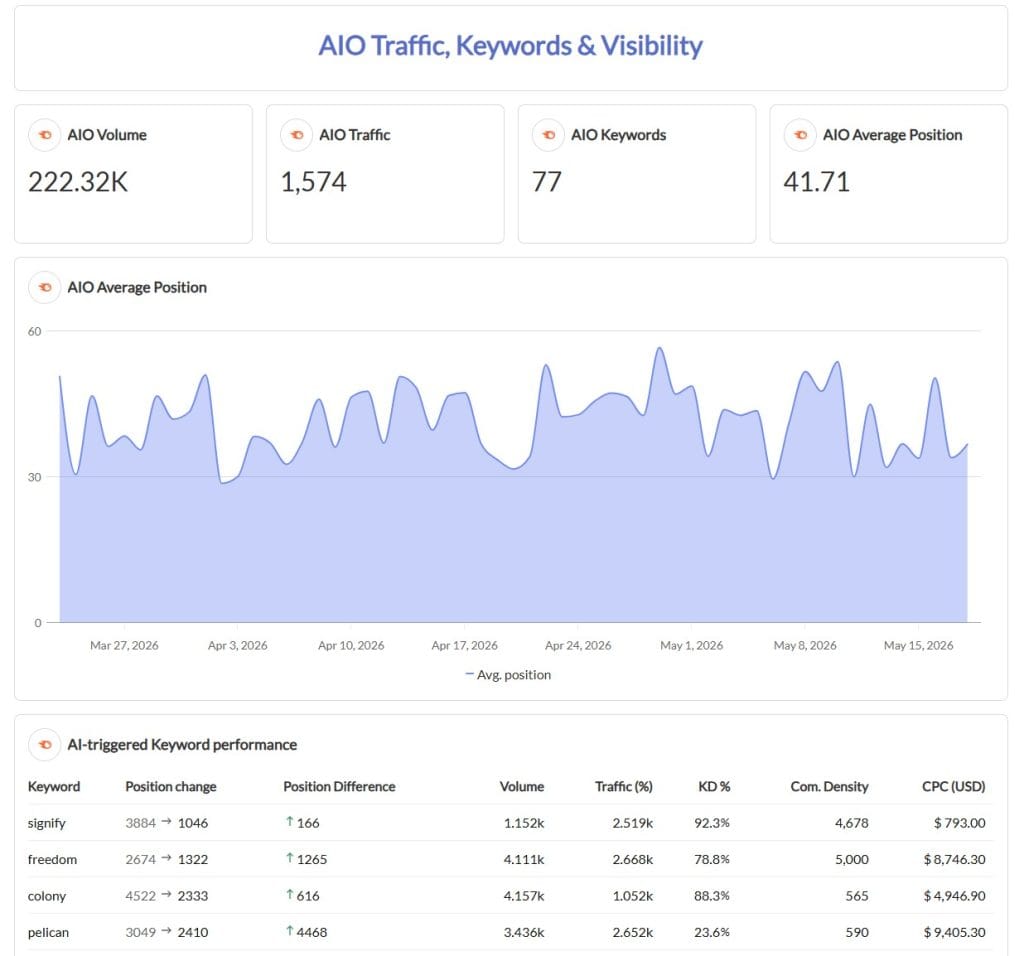
Works with Semrush, SE Ranking and AccuRanker natively, and the Semrush source exposes AI Overview keyword fields, so AI visibility reports next to rankings without a second tool.
Price $69/month ($62 annually), 10 sources included, then $4.50 each. Twenty clients on three platforms is $294/month. Unlimited clients, users and reports.
Skip it if you need a public REST API, native rank tracking or a free tier.
Whatagraph Heavy data blending across 66 in-house integrations.
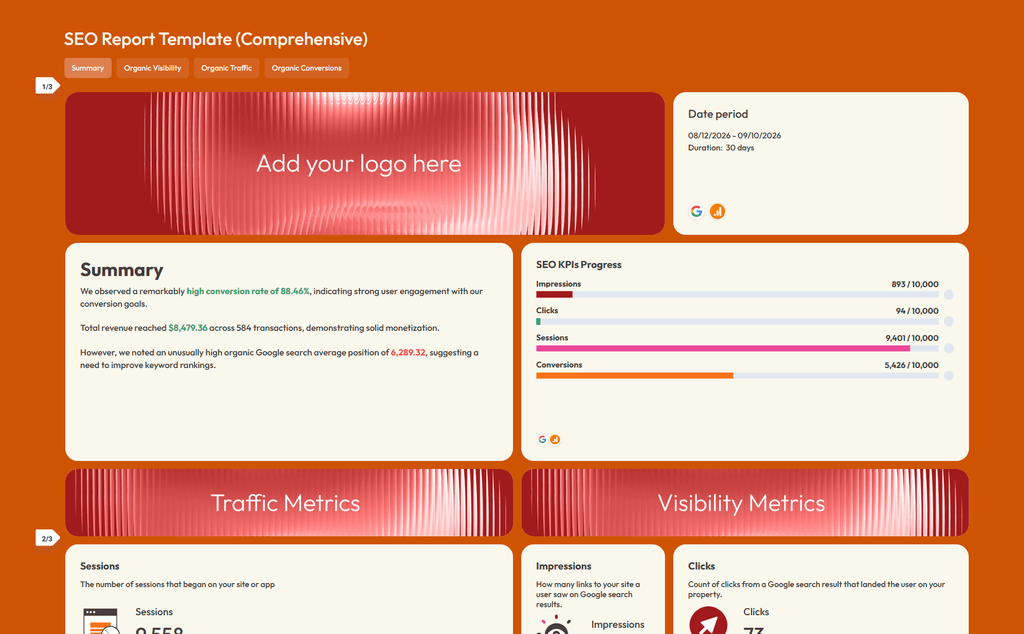
Best for agencies whose reports merge many sources into single unified views, where blending is the actual deliverable rather than a nice-to-have.
Price Max from $812/month, billed annually only. Prime custom.
Skip it if you want monthly billing, which doesn’t exist here, or if you run fewer than 50 data accounts. The 50-credit floor means a 20-account agency pays the same as a 50-account one.
DashThis The simplest reporting tool to hand to a junior team member.
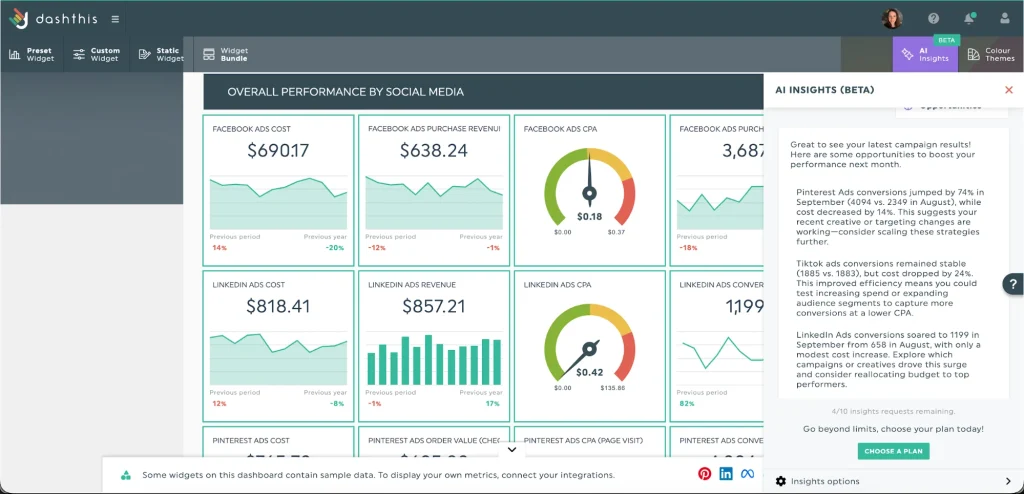
Best for small agencies where training time costs more than software. Someone can build their first client dashboard in an afternoon without help, which is not true of anything else in this section.
Price Individual $54/month ($44 annually), 15 sources. Professional $164 ($139), 40. Business $324 ($279), 100.
Skip it if you’re growing fast. The source cap, not the dashboard count, forces upgrades, and 20 clients pushes you to Business.
Free Options and Enterprise Solutions for Large Agencies
Google Data Studio Free reporting for Google data sources.
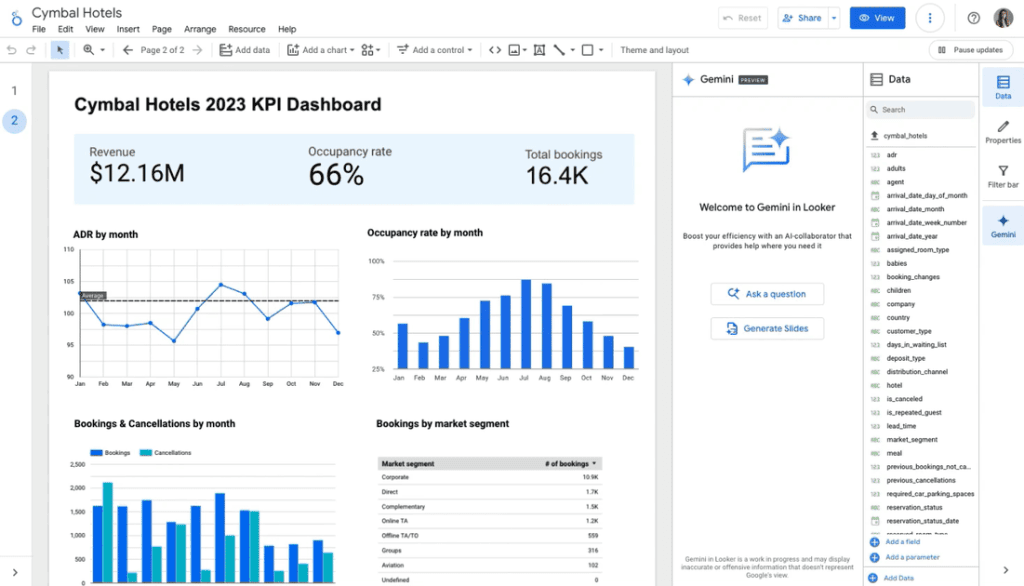
Best for agencies under about ten clients whose work is mostly Google Ads and GA4. At that size the free price beats every feature argument.
Skip it if you need white-labeling, client management or monitoring. None exist, and rebuilding them manually costs more hours than a paid tool costs in dollars.
NinjaCat Enterprise reporting built around location hierarchies.
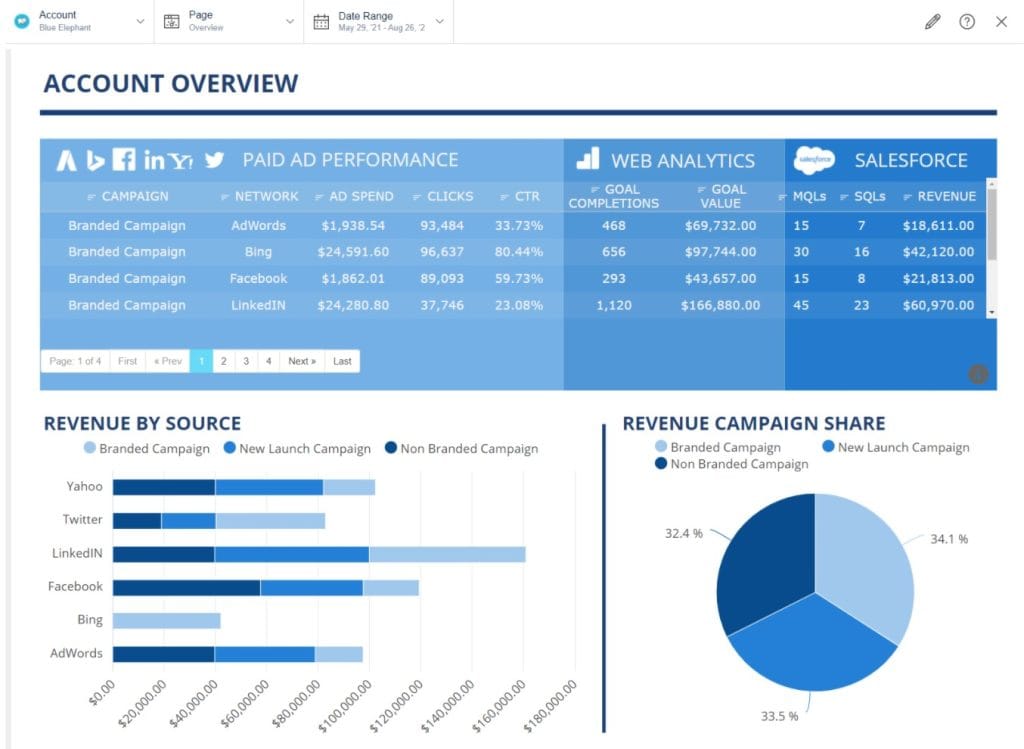
Best for agencies serving franchise and multi-location brands, where one client means 200 Google Business Profiles. It handles that structure natively instead of making you fake it with filters.
Price Quote only, annual contract.
Skip it if you have under 25 clients. The setup effort outweighs the benefit.
Schema Markup Tools
Choose by site size, not features. Under a few hundred pages, a $79/year plugin does everything a $30,000 platform does. Above a few thousand interrelated pages, the plugin stops scaling and the platform earns its price.
Automated Schema Platforms for Sites With Hundreds or Thousands of Pages
Schema App Automated schema that builds a connected knowledge graph.
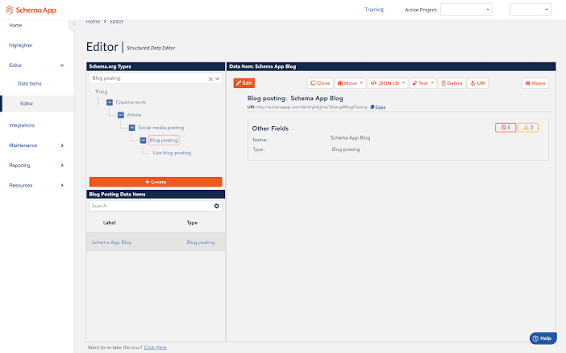
Best for agencies with enterprise e-commerce or publisher clients. Entities link to each other and to external identifiers, so a product connects to its brand, category and reviews as a set rather than as isolated markup.
Works with WordPress, Shopify and Drupal, and pairs naturally with WordLift when entity work is the whole engagement.
Price Quote only, enterprise numbers.
Skip it if your clients are under a few hundred pages. Schema Pro does the same job for $79 a year at that scale.
Alli AI Bulk on-page changes deployed without touching the codebase.
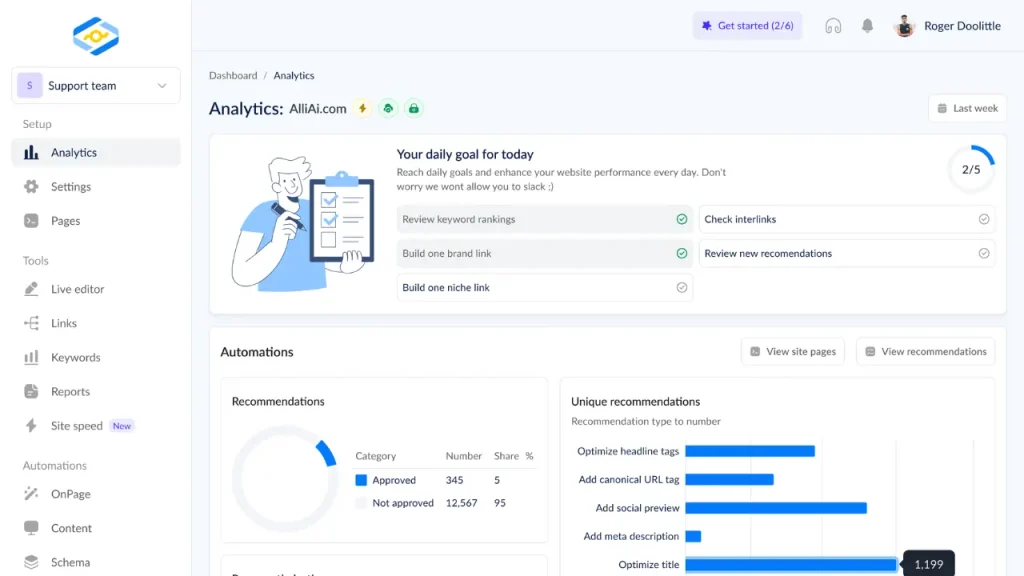
Best for agencies whose clients have slow or unavailable developers. You push title tags, metas, headings, internal links and schema across a site in minutes instead of waiting three weeks on a dev queue.
Price Business $299/month ($249 annually, 5 sites). Agency $599 ($499, 15 sites).
Skip it if the engagement is a one-time audit. Changes deploy through a JavaScript layer, so everything reverts when the subscription lapses. That’s fine for retained clients and wrong for project work.
Schema Pro Rule-based schema automation for WordPress, licensed for unlimited sites.
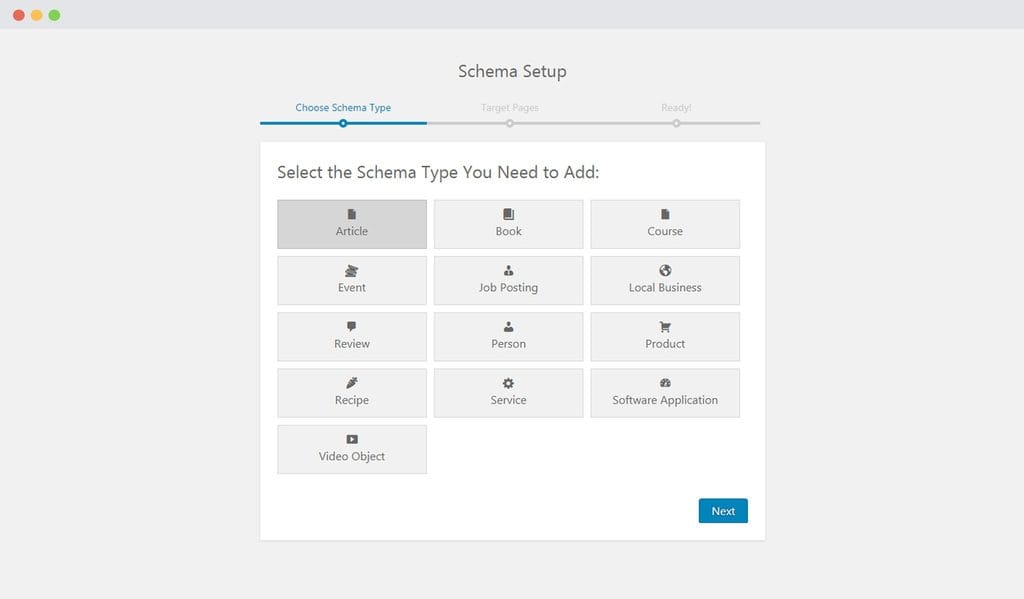
Best for agencies with a WordPress-heavy roster. Map the schema once against a post type, set display rules, and every matching page is covered, including ones published next year.
Works with whatever SEO plugin the client already runs, since it only does schema.
Price $79/year unlimited sites, annual only. Lifetime license $249.
Free Schema Tools for Manual Setup and Testing
Merkle Schema Markup Generator Free JSON-LD generation for 13 schema types.
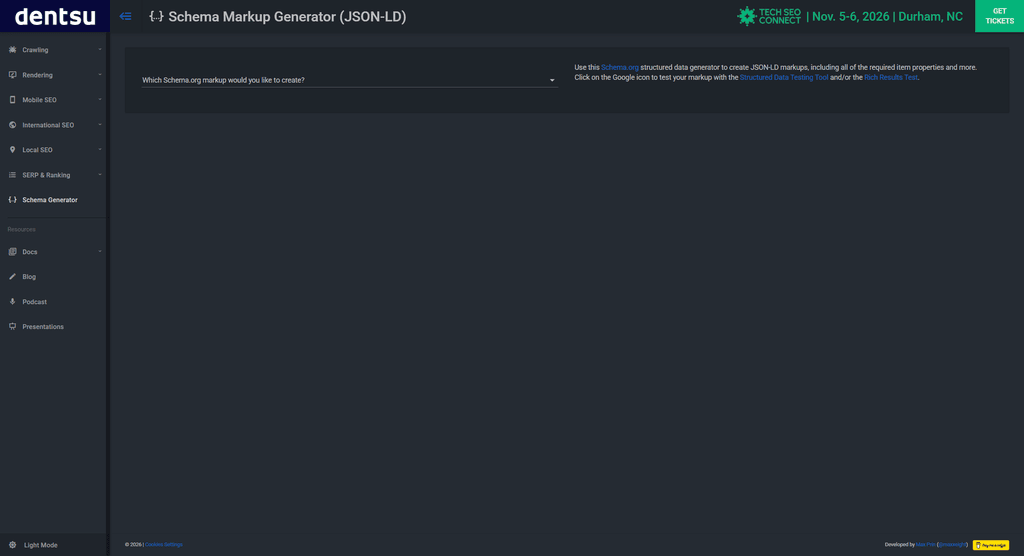
Best for the six-landing-page job where a subscription can’t be justified. Also the fastest way to test whether schema moves anything for a client before you propose paying for automation.
Google’s Rich Results Test and Schema Markup Validator Free validation for markup from any source.
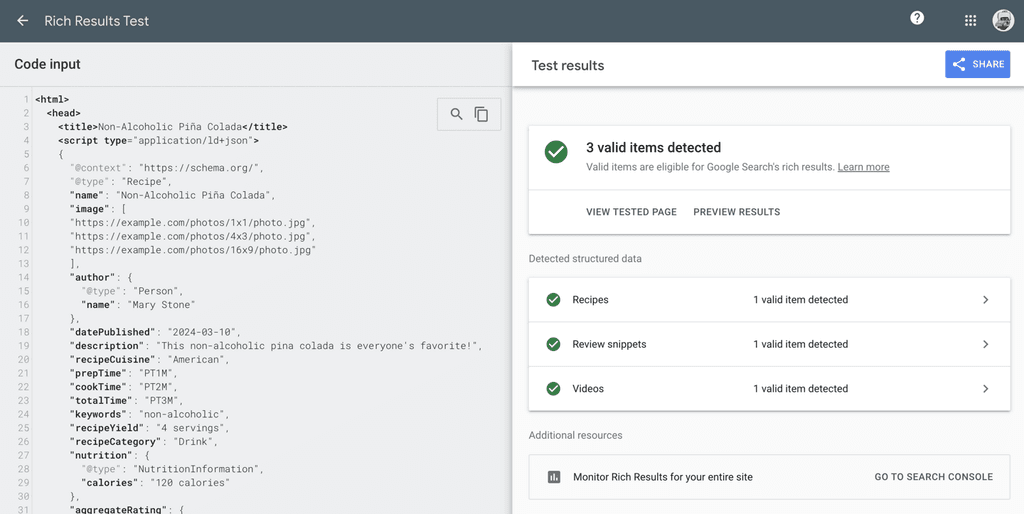
Best for every agency, every time. The Rich Results Test shows eligibility, the Validator catches syntax errors the first one ignores. Automated platforms produce invalid markup more often than their marketing suggests, usually when a custom field maps to an unexpected value type.
Rank Math A WordPress SEO plugin with 18+ schema types free.
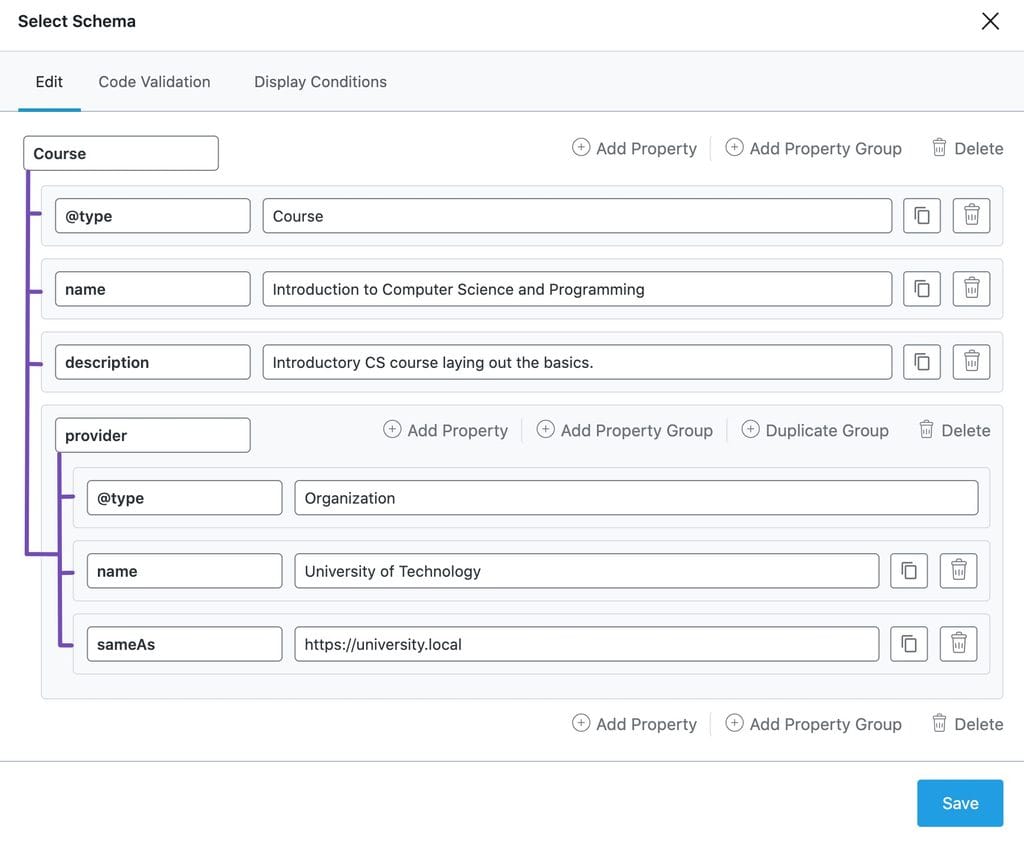
Best for agencies already running Rank Math as their SEO plugin. Business covers a hundred client sites and removes the need for a separate schema subscription entirely.
Price Annual only. Pro about $96/year, Business about $300/year (100 client sites), Agency about $708/year (500 sites). Renewals cost more than year one.
Skip it if you’d be switching plugins to save money. The migration costs more than Schema Pro.
Rank Tracking Tools
Pick by what you’ll be billed for. Trackers meter on keywords, seats or both, and the cheapest headline price is rarely the cheapest bill. Pair whichever you choose with an SEO tracking framework so the numbers reach a client report instead of a spreadsheet.
AccuRanker The fastest tracker, with on-demand refresh and AI visibility built in.
Best for agencies where someone needs a live ranking answer during a client call. On-demand refresh is the feature you’re paying for, and AccuLLM covers ChatGPT, Perplexity, AI Overviews and AI Mode in the same tool.
Works with Looker Studio and any reporting platform through its API, both on Expert.
Price Professional $249/month ($224 annually), 2,000 to 5,000 keywords. Expert $849 ($764).
Skip it if you won’t use on-demand refresh monthly. Without it you’re paying roughly double the per-keyword rate of SE Ranking for data you’d get anyway.
Nightwatch Daily local rank tracking with agency features on the entry plan.
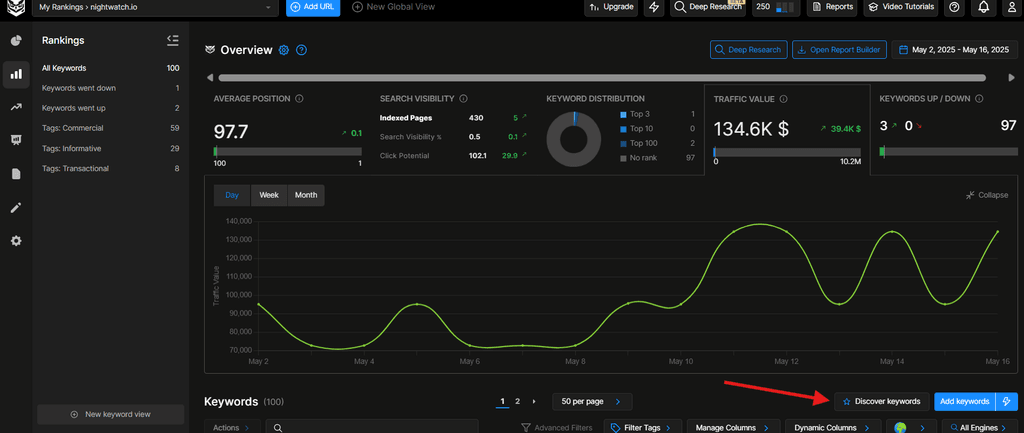
Best for small agencies serving local clients. Unlimited seats, unlimited white-label reports and API access all sit on the $39 plan, where competitors gate them two tiers up. ZIP-code precision across 107,000+ locations.
Works with Local Falcon as a pairing for local work, since Nightwatch handles organic positions and Falcon handles map-pack grids.
Price $39/month ($32 annually), 250 keywords. About $82 at 1,000. AI tracking is a separate $99/month beta.
SERPWatcher (Mangools) Rank tracking bundled with a five-tool research suite.
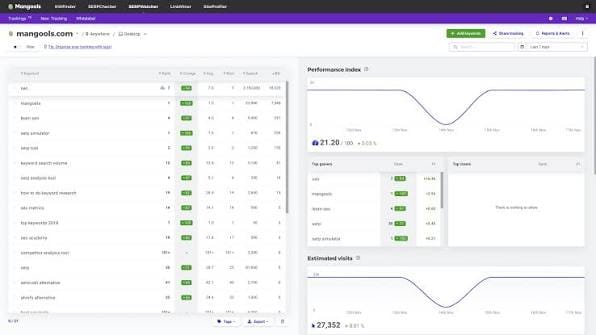
Best for solo operators and two-person agencies buying their first real toolset. You get keyword research, SERP analysis, backlinks and tracking on one bill for less than most tools charge for one of those.
Price Basic $49/month ($29.90 annually), 200 keywords. Premium $69 ($44.90), 700. Agency $129 ($89.90), 1,500.
Skip it if more than one person needs access. Basic supports exactly one user with no option to add seats, and its 100 daily lookups run out fast across two clients.
Advanced Web Ranking Keyword-volume pricing with unlimited seats and projects on every tier.
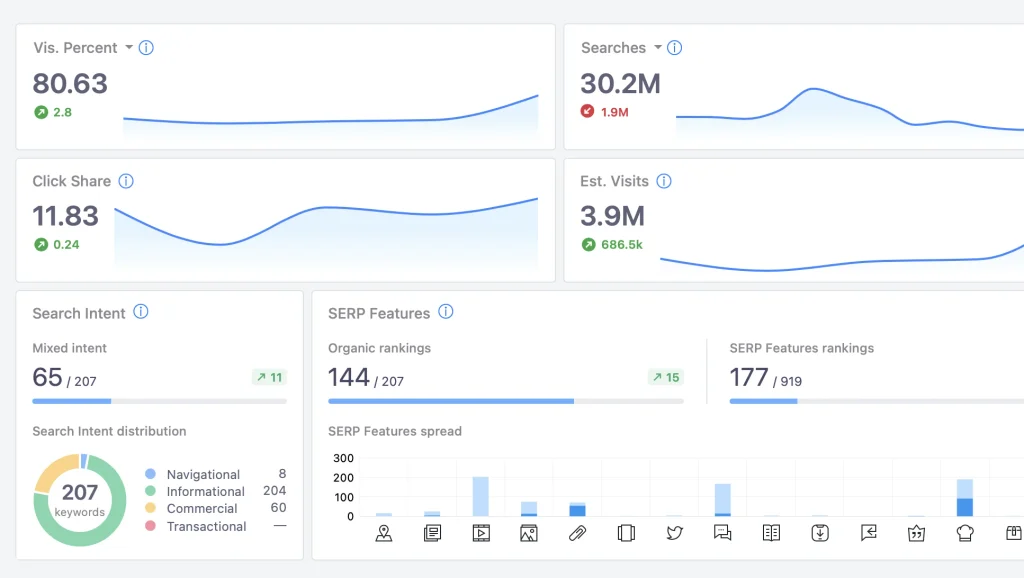
Best for larger agencies with many analysts. A ten-client agency with four people pays the same as a solo consultant, which no per-seat tool matches. Three layers of white-label branding and 50 competitors per project included.
Price Pro $139/month ($125.10 annually), Agency $279 ($251.10).
Skip it if you’re budgeting off the keyword counts. It sells keyword units, where one unit is one query on one engine on one device weekly, so 7,000 units is nearer 1,000 keywords at daily desktop and mobile tracking.
Programmatic SEO Tools
These tools only make sense as a chain: something generates or stores the content, something syncs it, something publishes it. Buy one without the others and you have half a pipeline.
AI Content Generation for Bulk SEO Pages
Byword Bulk article generation published straight to your CMS.
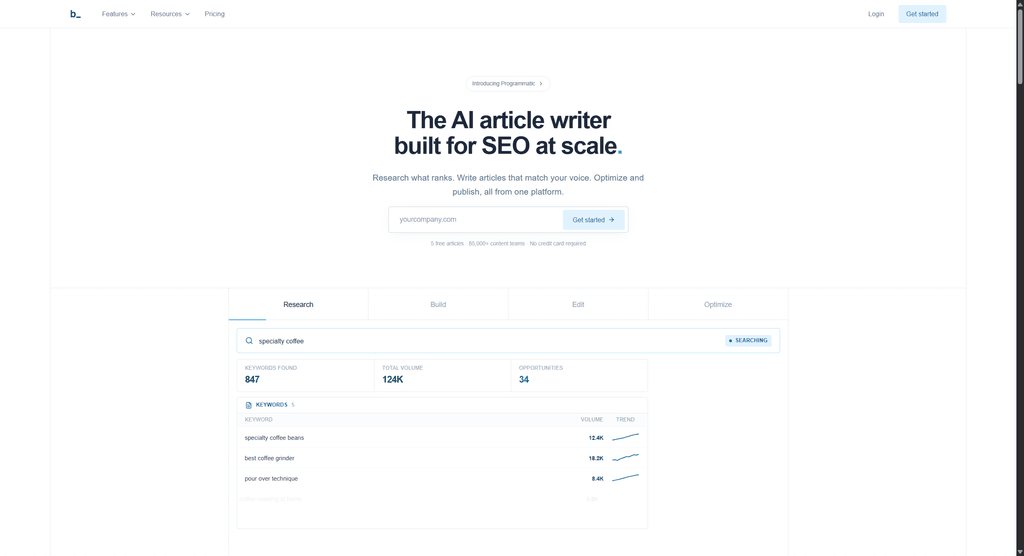
Best for agencies selling content volume to clients who can’t afford writers. At roughly $3.30 to $4.00 per draft against $50 to $100 for a freelancer, the margin is the product.
Works with WordPress and Webflow directly, so no sync layer is needed for article content.
Price Starter $99/month (25 articles), Standard $299 (80), Scale $999 (300).
Skip it if the client’s topic needs judgement or original reporting. Quality drops there, and there’s no AI-detection pass.
Data Sync Tools That Connect Your Database to Your Website
Whalesync Two-way sync between a database and a website builder.
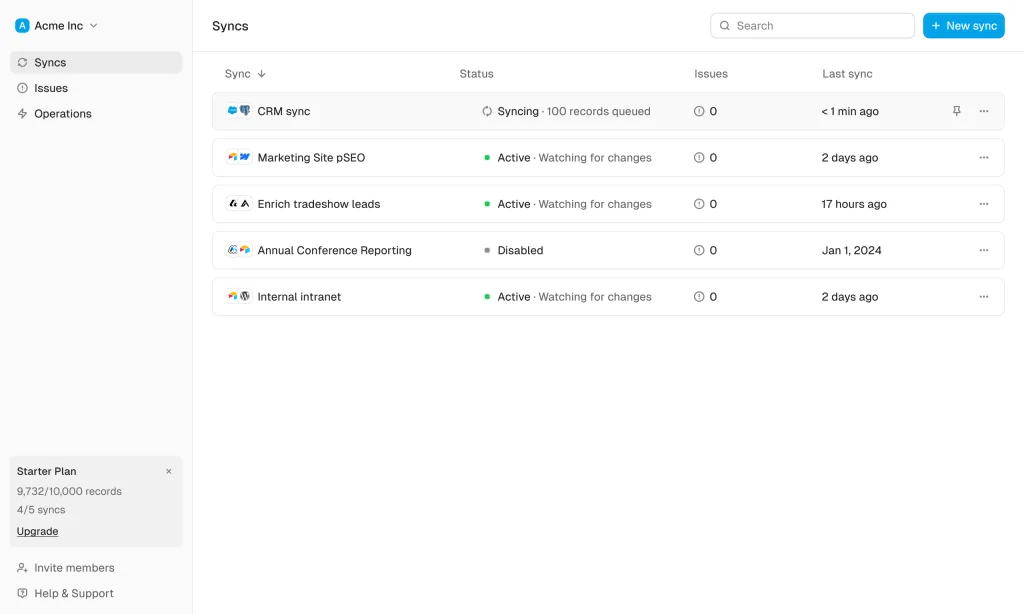
Best for agencies building directory or location pages from structured data. Two-way matters because the client can fix a typo on the live page and the source data updates too, which is the failure that kills homegrown setups.
Works with Airtable, Sheets and Notion on one side, Webflow, WordPress and Shopify on the other. This is the middle link in the chain.
Price Metered by synced record count, restructured more than once this year. Check the live page before budgeting.
The common stack Airtable for data, Webflow for templates, Whalesync between them.
Best for agencies selling programmatic SEO as a service without hiring a developer. The client adds a row and a page appears, which is the demo that closes the deal.
Skip it if nobody owns template quality. The stack publishes 2,000 thin pages as happily as 2,000 useful ones.
WordPress Plugins for Bulk Page and Post Generation
WP All Import Bulk import of XML, CSV or Excel into any WordPress post type.
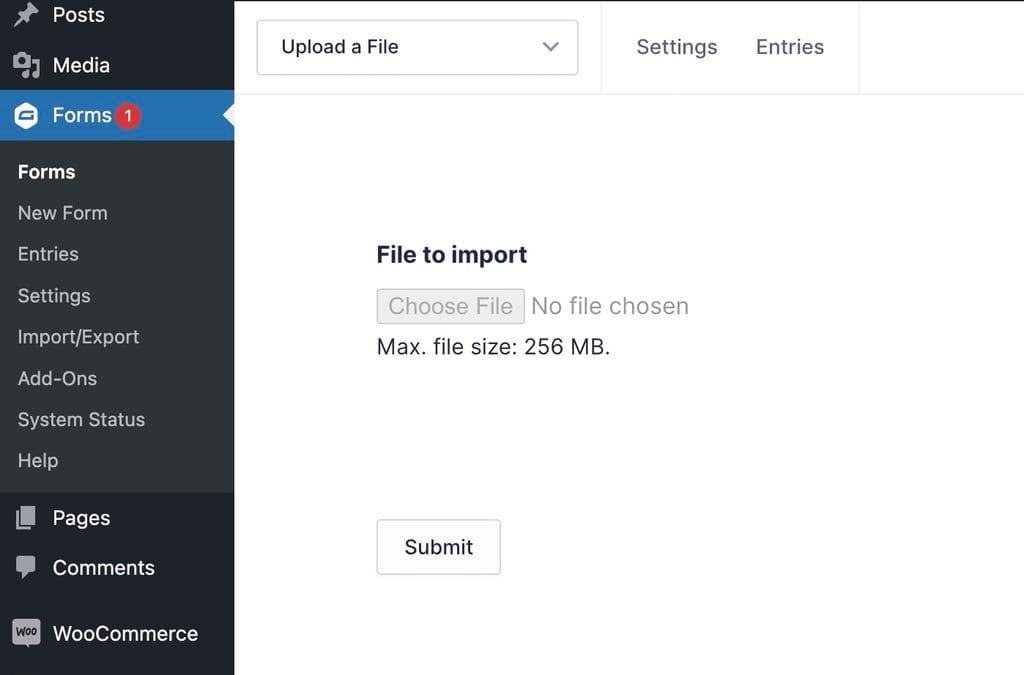
Best for agencies migrating or syncing client data from external systems, especially e-commerce catalogs. One license covers every client site you run it on.
Works with ACF and Meta Box for custom fields, and scheduled re-imports keep a feed current. It moves data and doesn’t design the page, so pair it with a template.
Price Annual, not one-time. Standalone $99/year, Developer $149, Professional $299 (needed for WooCommerce).
Page Generator Pro Mass page generation with a built-in geographic dataset.
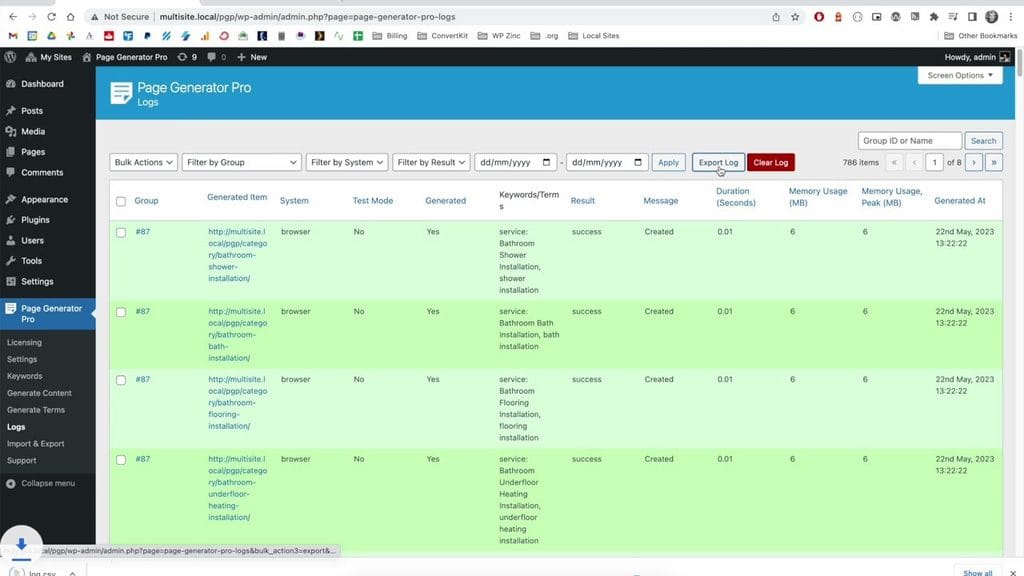
Best for agencies doing local SEO at scale. It ships roughly 2.6 million cities and 45,000 counties at no extra charge, which removes the first step of every location-page project.
Works with 25+ page builders, and hierarchical generation handles state to city to service with interlinking built in.
Price $99/year single site, $199/year unlimited, $299 lifetime.
Entity SEO and Knowledge Graph Tools
These three solve different problems and stack rather than compete. Linkilo works on internal structure, WordLift on machine-readable meaning, Kalicube on how Google represents the brand itself.
Linkilo Internal link suggestions from content analysis, plus orphan and cannibalization reports.
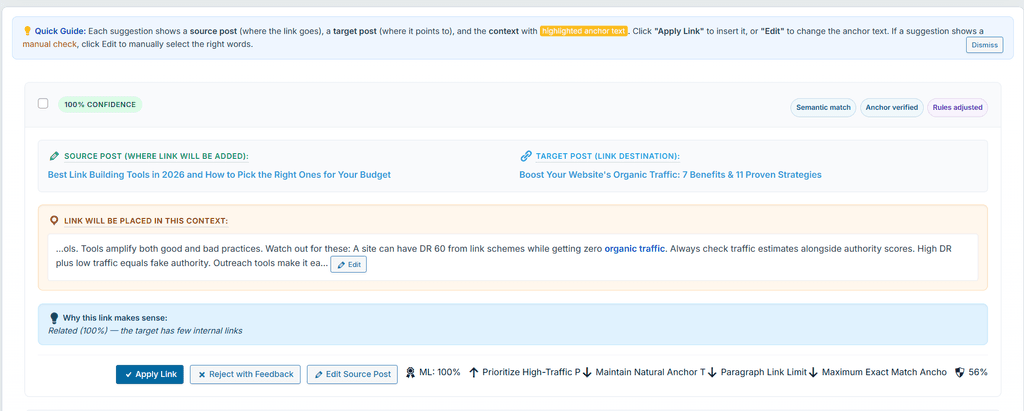
Best for agencies with WordPress clients sitting on a large back catalog. It finds the linking opportunities nobody has time to map manually, without requiring keyword configuration first.
Works with any SEO plugin, and pairs with Page Generator Pro when generated pages need connecting.
Price From $59/year, single site.
WordLift Knowledge graph construction published back as schema.
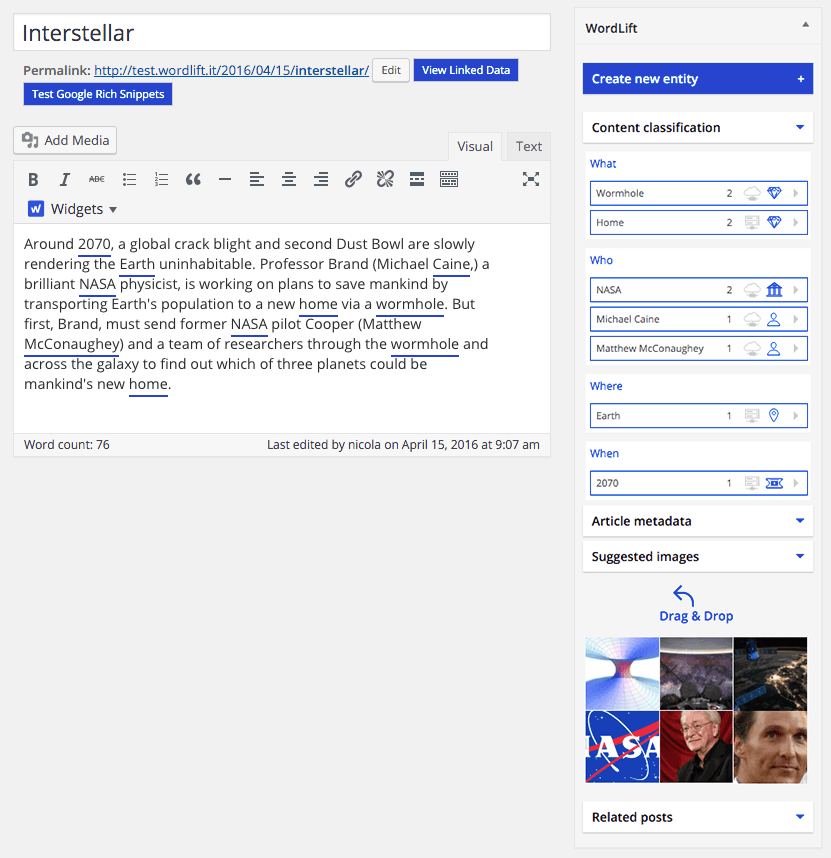
Best for agencies whose clients publish at volume in a defined topic area. It links a page semantically to its brand, category and people, which is the structure AI systems parse when deciding what a site is authoritative about.
Price Enterprise, quoted. 14-day trial.
Skip it if the client has ten brochure pages. There’s no entity structure to build.
Kalicube Knowledge Panel and brand entity management.
Best for agencies with founder-led or personal-brand clients whose name returns a messy or missing Knowledge Panel. It tracks what Google currently believes, where that came from, and what corroboration is missing.
Works with WordLift, since one builds the entity data and the other works on how Google reads it.
Price Custom, closer to a consulting retainer than a subscription.
Content Creation and Optimization Tools
Generation and optimization are different purchases. Most agencies need one of each, and buying two scorers is the most common waste in this category.
AI Content Generators for Blog Posts, Landing Pages and Marketing Copy
Jasper Brand voice and company knowledge enforced automatically at generation time.
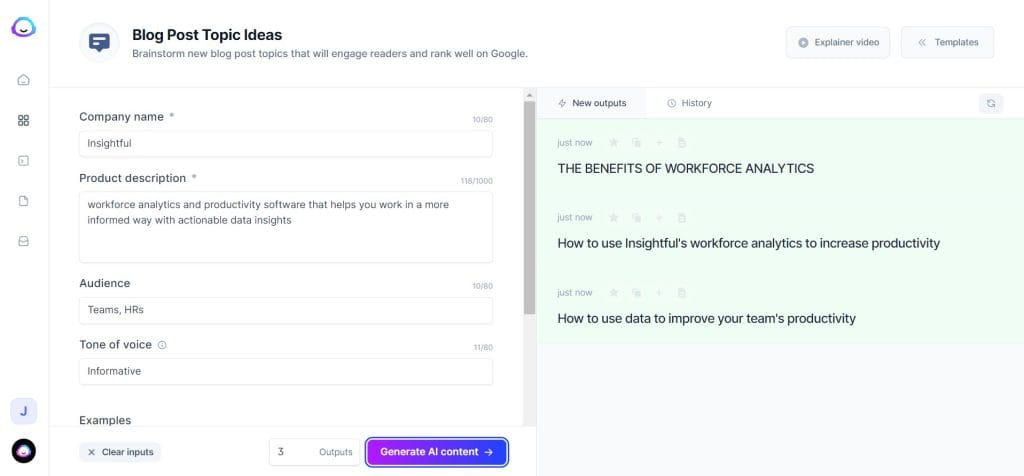
Best for agencies running several client brands where consistency is the deliverable. Writers can’t forget the brand rules because the rules apply before the draft exists.
Price Pro $69/seat/month ($59 annually). Business custom.
Skip it if you have one brand or a big team. There’s no volume discount, so five seats is $345/month for something a shared prompt library handles.
Copy.ai Workflow automation for repeatable short-form content.
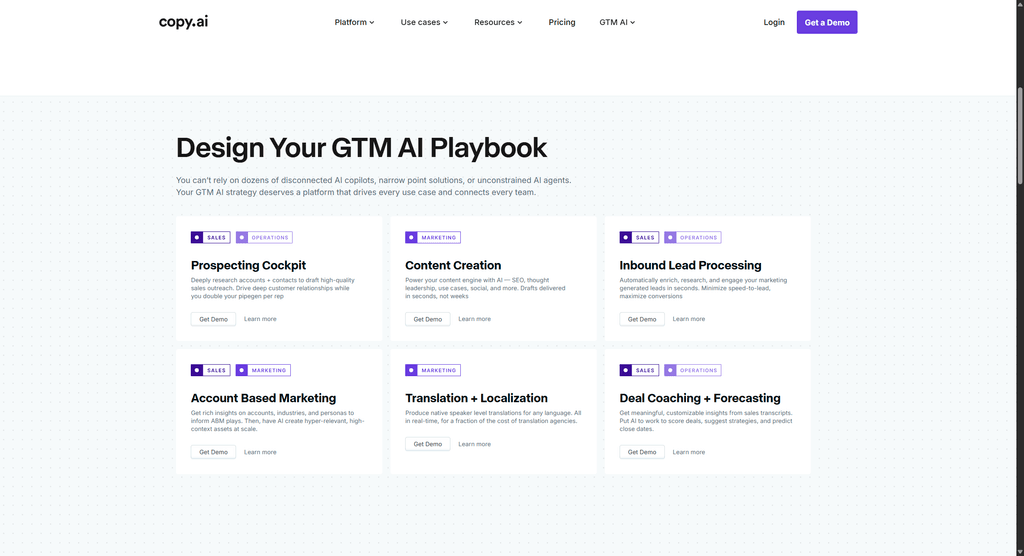
Best for agencies producing high volumes of ads, emails and outreach copy. The workflows chain research, generation and formatting into steps you build once and rerun.
Price Free tier worth using. Starter $49/month (about $36 annually). Advanced $249 (about $186), five seats.
Skip it if long-form is the job. It needs more editing than Jasper there.
Writesonic Article generation plus AI search visibility tracking in one platform.
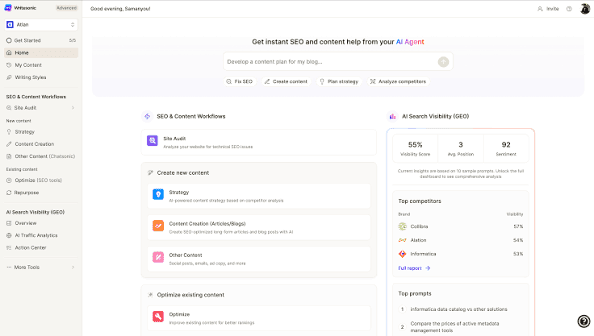
Best for agencies that want content production and AI visibility on a single bill rather than two subscriptions. Basic is where the AI-search tracking and API access become useful.
Price Starter $99/month ($79 annually), Basic $249 ($199), Growth $499 ($399).
Skip it if you need stable plan names for a client proposal. Tiers changed at least twice in 2026.
Letterdrop Content operations and distribution for B2B programs, now built around pipeline signals.
Best for agencies running B2B content for sales-led clients, where the deliverable is a workflow rather than a word count. Subject-matter expert review routing, LinkedIn employee advocacy and attribution back to pipeline are the parts clients notice.
Works with Webflow, WordPress and HubSpot for publishing. It sits upstream of your reporting tool, not alongside your rank tracker.
Price Custom, sales-led.
Skip it if you want an SEO content tool. Letterdrop has moved toward demand generation and social selling, so a team buying it for SEO output alone will be paying for a lot it won’t touch.
Content Optimization Platforms That Score and Improve Existing Content
Surfer Real-time content scoring against what currently ranks.
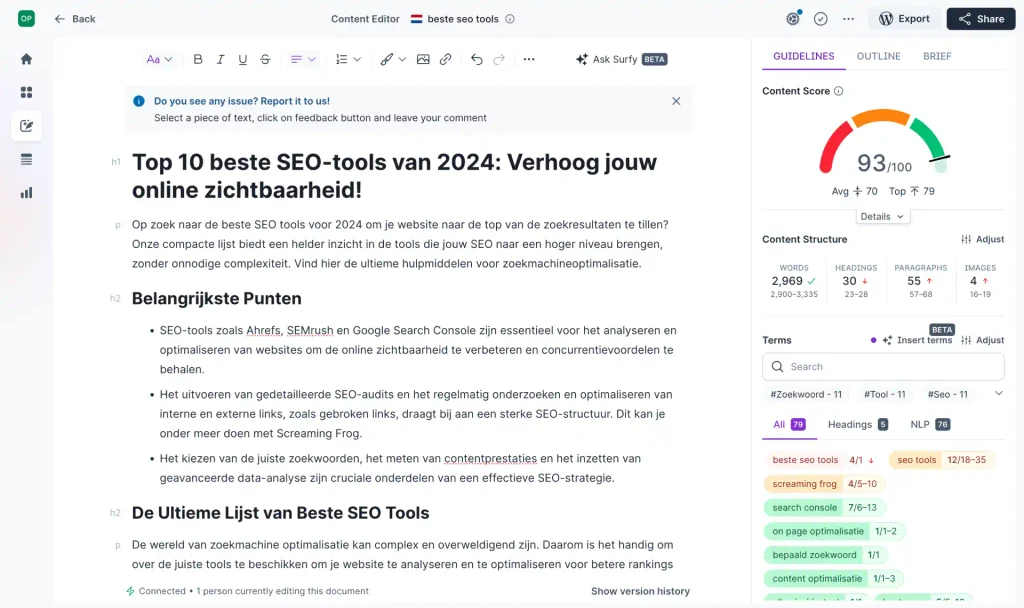
Best for agencies whose writers work in Google Docs and want feedback as they type. Pro adds the agency features: one-click internal linking, gap analysis, custom templates, cannibalization reports. AI visibility tracking is included from Standard, so the same tool shows where a client is missing from AI answers and helps fix it.
Price Standard $119/month ($99 annually), weekly AI refresh. Pro $219/month ($182), daily refresh.
Skip it if the client publishes in French, Spanish or other non-English markets, where scoring underperforms.
Clearscope Premium content grading with unlimited user seats.
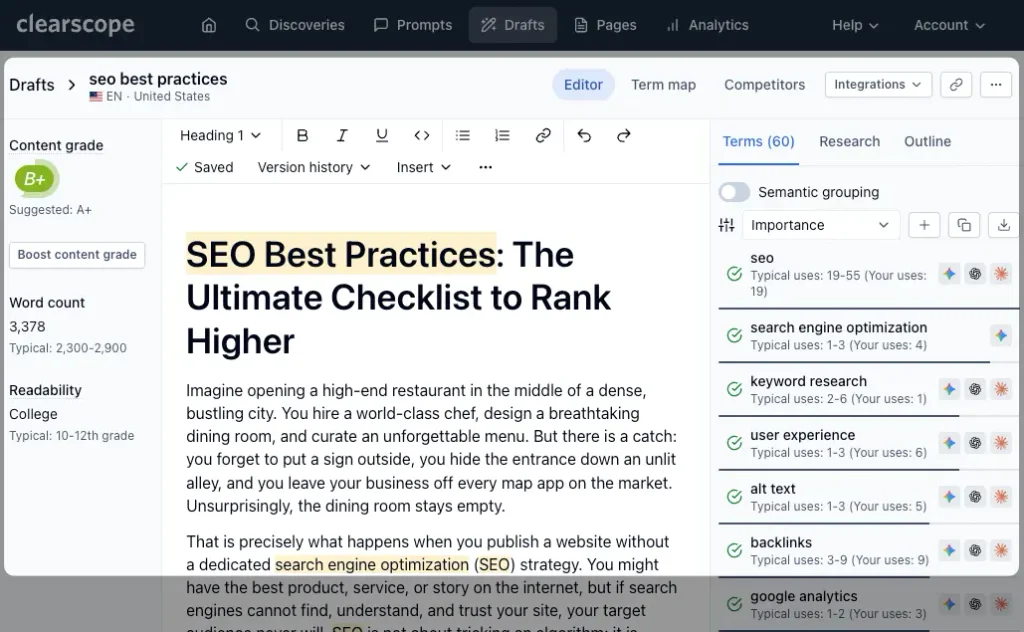
Best for agencies with five or more writers. At that size it works out near $26 per person, which no per-seat competitor approaches, and the recommendation quality is the best here.
Works with Semrush or Ahrefs rather than replacing them, since it does no keyword research, audits or backlinks.
Price Essentials $129/month (about $107 annually). Business $399 (about $331).
MarketMuse Topic cluster planning with difficulty scores modeled on your client’s site.
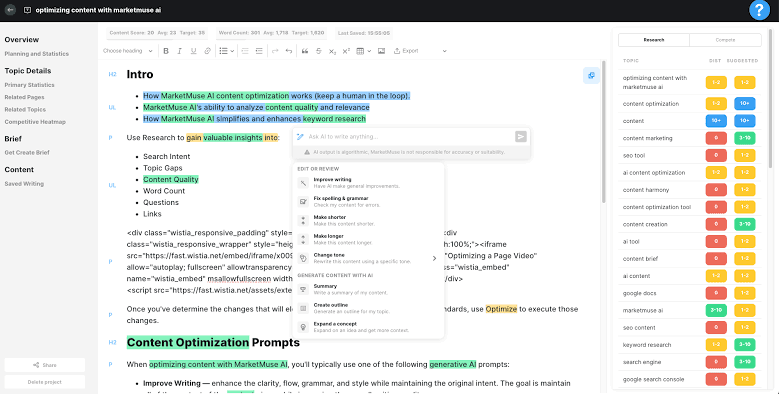
Best for agencies selling content strategy rather than content production. Personalized difficulty changes which clusters are worth attacking, which is a strategic answer no generic score gives you.
Price Optimize $99/month, Research $249, Strategy $499.
Skip it if you’d be on Optimize. Its 100-query cap stops you dead until the cycle resets, with no overage option.
Frase Content briefs assembled from SERP analysis in under a minute.
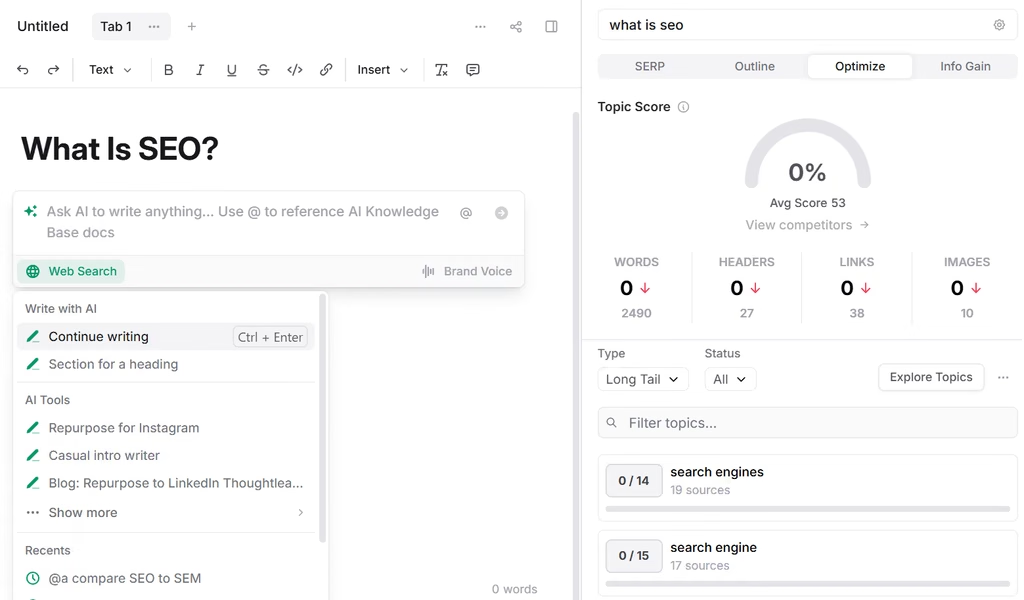
Best for small agencies briefing freelance writers at volume. It’s the cheapest way to give every writer a structured brief instead of a keyword and a hope.
Works with a separate keyword research tool, since it has none of its own.
Price Starter $49/month ($39 annually), 10 articles. Professional $129 ($103), 40 articles.
Keyword Research Platforms
One of these three, never two. They overlap almost entirely, and the real differences are link data depth, competitive research depth and cost per tracked keyword.
Semrush The deepest competitive research dataset, across 26 billion keywords.
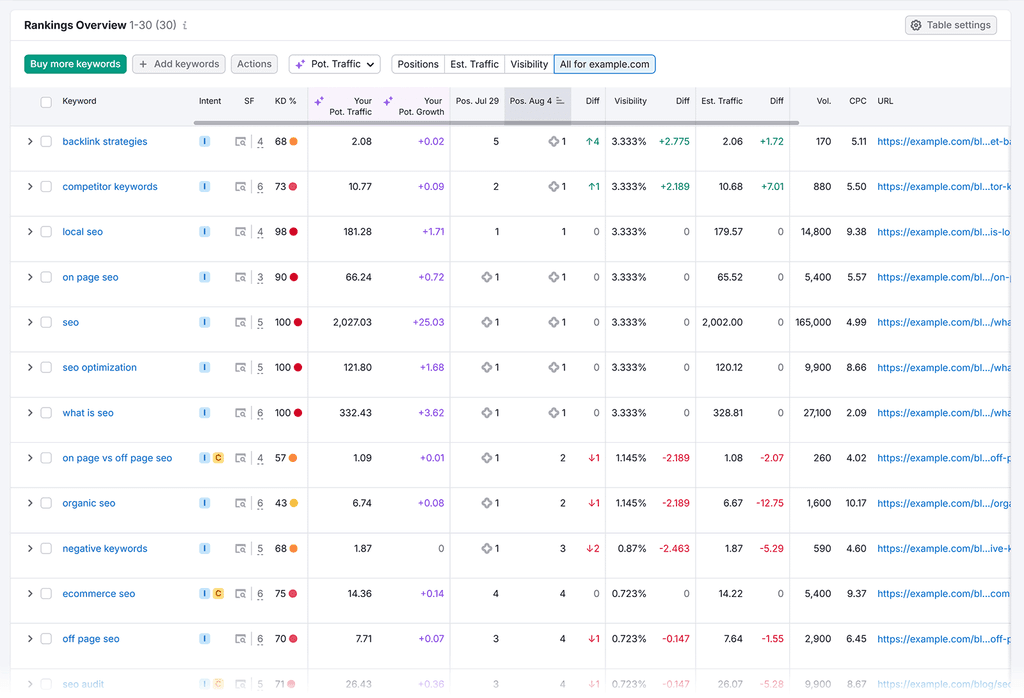
Best for agencies that pitch on competitive intelligence. Nothing cheaper shows you a competitor’s paid and organic history at the same depth, and that’s what wins new business.
Works with Swydo, AgencyAnalytics and Looker Studio for reporting. The AI Visibility Toolkit adds AI tracking to the same subscription at $99/month per domain, or bundled in Semrush One from $199/month.
Price Pro $139.95/month ($117.33 annually), Guru $249.95 ($208.33), Business $499.95 ($416.66). Most agencies land on Guru.
Skip it if Pro is your budget. It gives 5 projects and 500 keywords with no historical data or content tools, which runs out inside two clients.
Ahrefs The strongest backlink index, roughly 35 trillion links refreshed every 15 to 30 minutes.
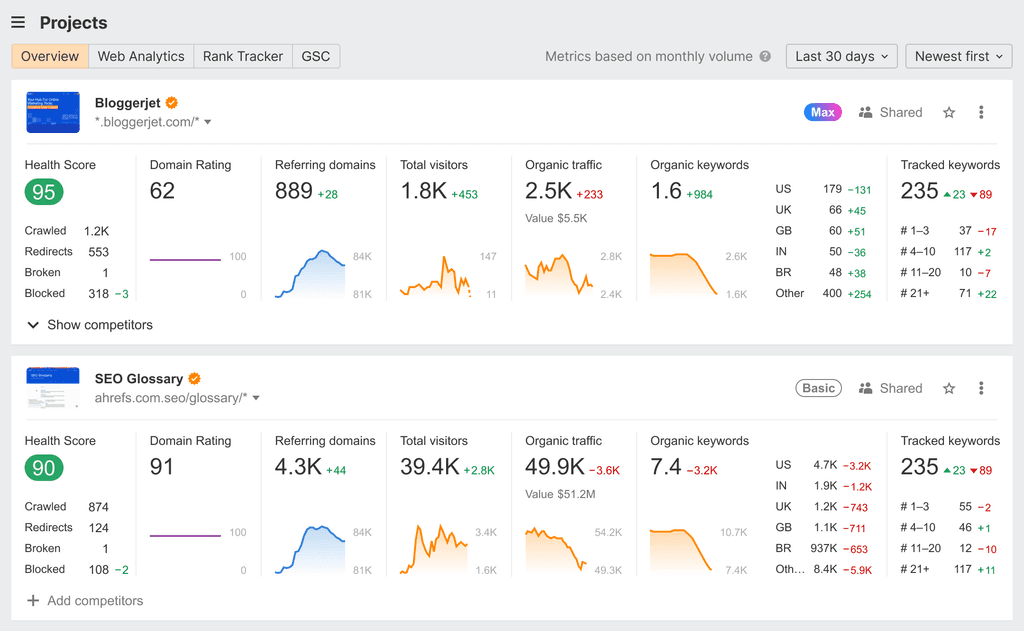
Best for agencies selling link building or doing competitive link analysis. No alternative comes close on link data, and that’s the only reason to choose it over cheaper suites.
Price Lite $129/month ($108 annually), Standard $249 ($208), Advanced $449 ($374).
Skip it if your team is larger than one. Every plan includes a single seat and extras cost $40 to $100 each, so four people on Standard is $429/month.
SE Ranking The same daily jobs at roughly a fifth the cost per tracked keyword.
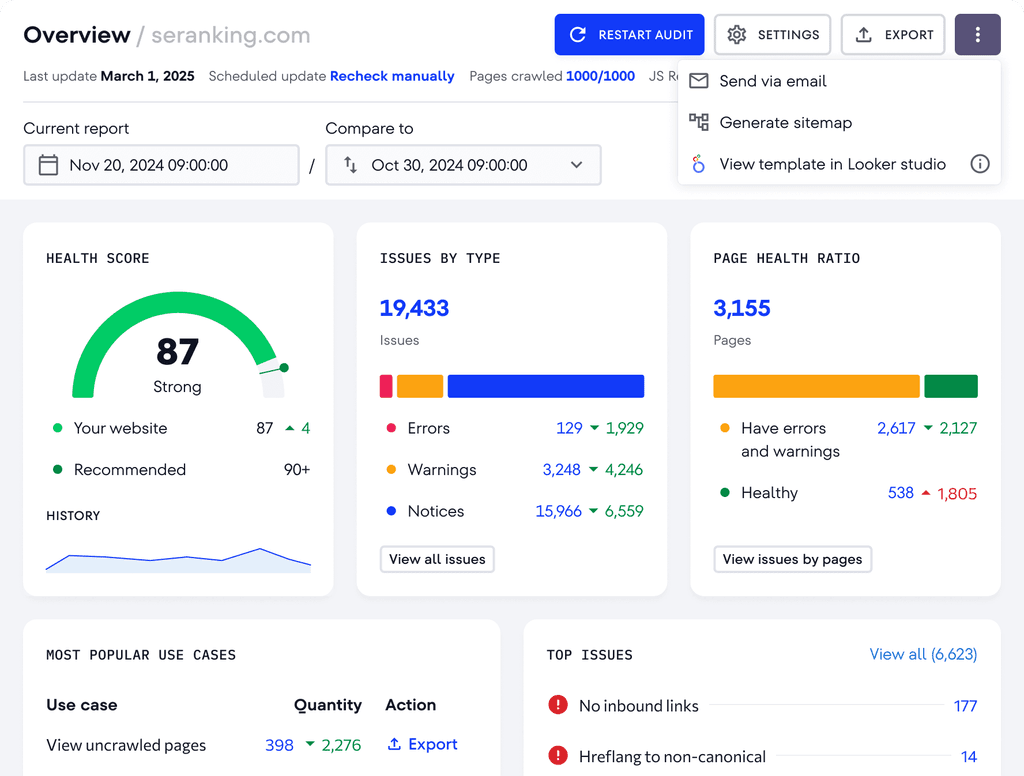
Best for agencies whose work is tracking, auditing and reporting rather than deep competitive research. Core gives 2,000 daily keyword checks against Semrush Pro’s 500, full API access sits on every paid tier, and AI visibility tracking is included rather than sold separately.
Price Core $129/month ($103.20 annually), Growth $279/month ($223.20). White-label reporting is a separate $69/month pack.
Skip it if link data or competitor intelligence drives your pitches. Both are thinner here.
Technical SEO Tools
Screaming Frog and Sitebulb aren’t alternatives, they’re a pair: one finds everything, the other makes it presentable. JetOctopus is a third purchase for a different question entirely.
Screaming Frog SEO Spider The deepest desktop crawler, with custom extraction and raw data access.
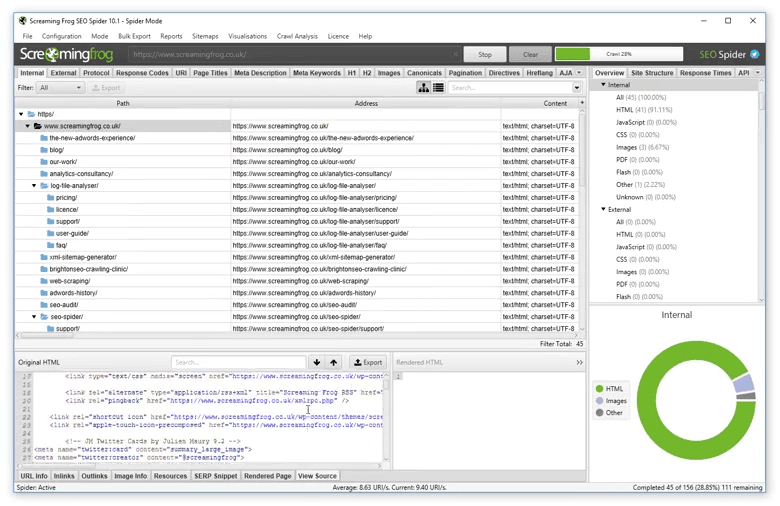
Best for every agency doing technical work. No rival matches its crawl depth at any price, and recent versions connect to OpenAI, Gemini and Claude APIs for alt text and prompt-based analysis across a crawl.
Price $279 per license per year (£199), annual only. Free up to 500 URLs.
Skip it if you expected shared seats. There are none, so a three-person team pays $837/year, and the Log File Analyser is a separate $209/year product.
Sitebulb Crawl output turned into 300+ prioritized, severity-rated hints.
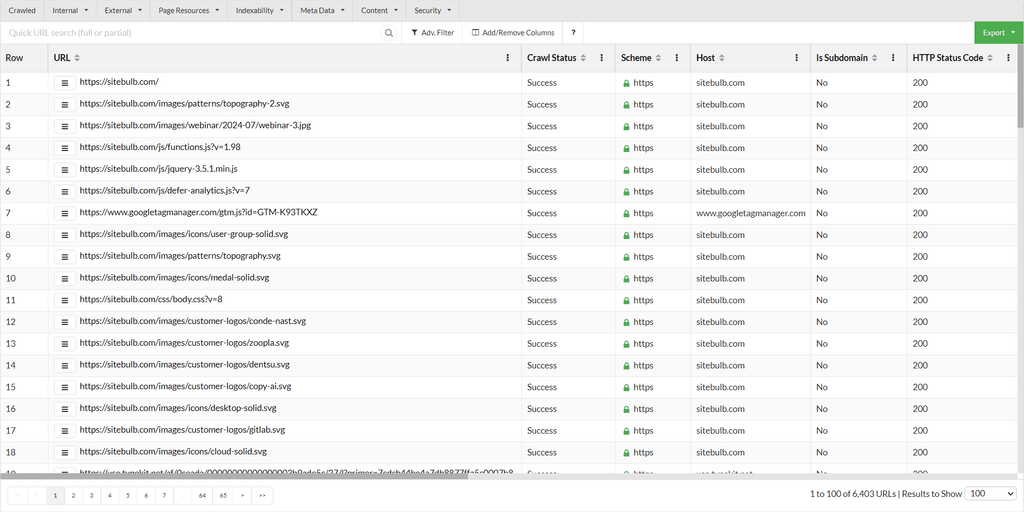
Best for agencies presenting audits to non-technical clients. Screaming Frog gives you data; Sitebulb gives you something a client reads and approves budget from.
Works with Screaming Frog rather than replacing it. Most technical teams run both.
Price Desktop Lite about $18/month ($13.50 annually). Desktop Pro about $42 ($35). Cloud from about $125.
JetOctopus Log file analysis with AI crawler tracking across 40+ bot types.
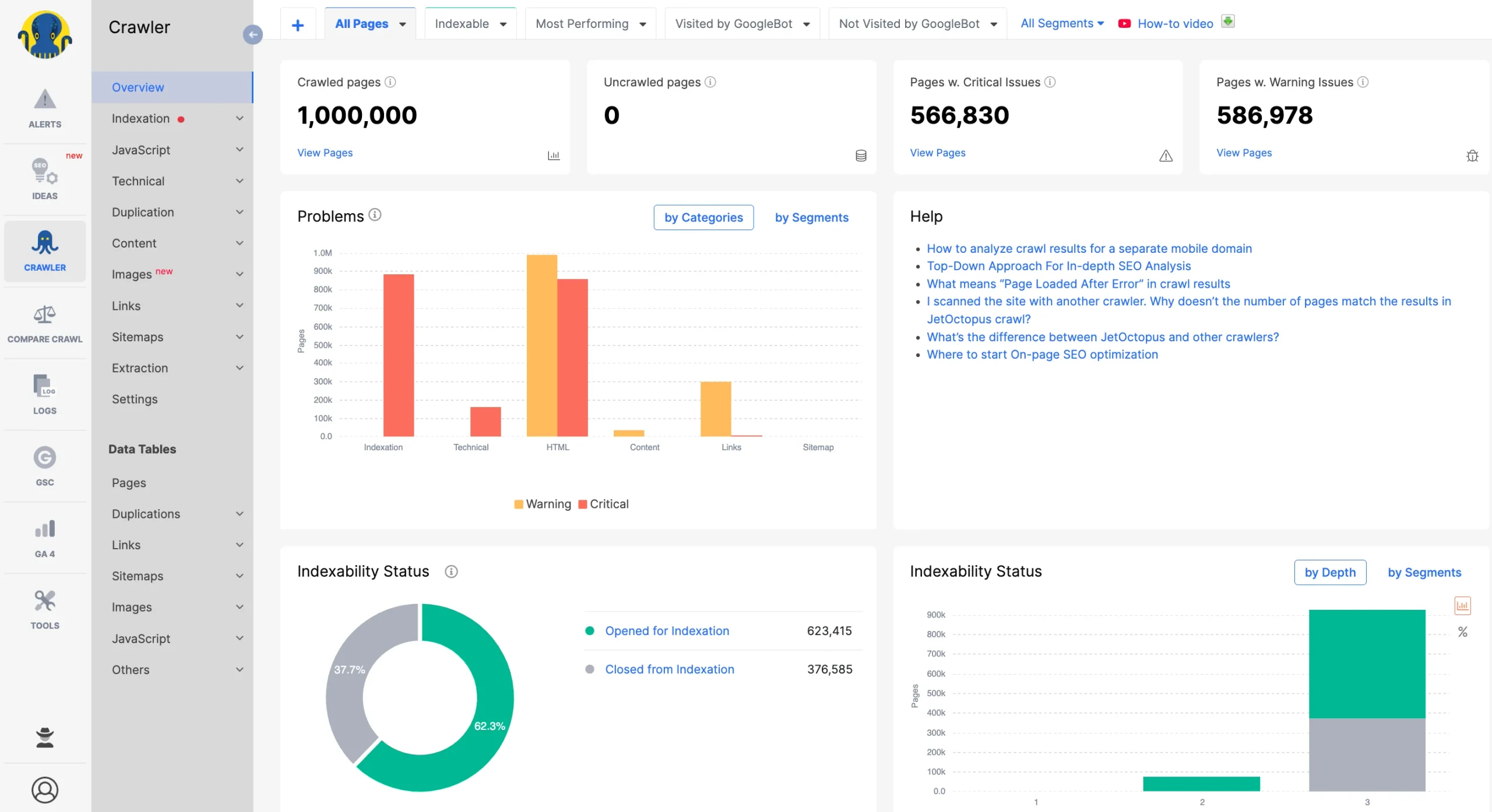
Best for agencies whose clients ask why AI engines never cite them when rankings look fine. Logs are the only place that answer lives, and BrightEdge put agent activity near 15% of total website traffic in April 2026.
Price Scales with crawl volume, quoted.
Link Building and Outreach Tools
The split is between relationship tools and volume tools, and they bill in opposite directions. One meters on contacts stored, the other on emails sent. Our guide to the best link building tools goes deeper on workflow.
Pitchbox High-volume outreach with prospect qualification built in.
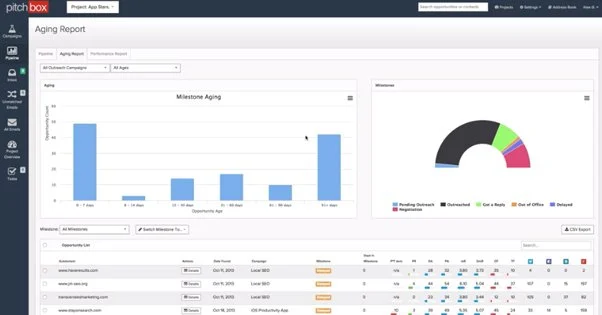
Best for agencies running link building as a standalone service line. Ahrefs, Semrush, Moz and Majestic data pulls into the prospect list, so you filter on DR and traffic before writing a single email.
Price Pro from $165/month (2 users, 2,000 emails), Advanced $420, Scale $675. Most agencies need Advanced once more than two people touch outreach.
Skip it if nobody can spend weeks learning it, or if outreach is occasional rather than continuous.
Postaga Campaign templates covering ten-plus outreach types.
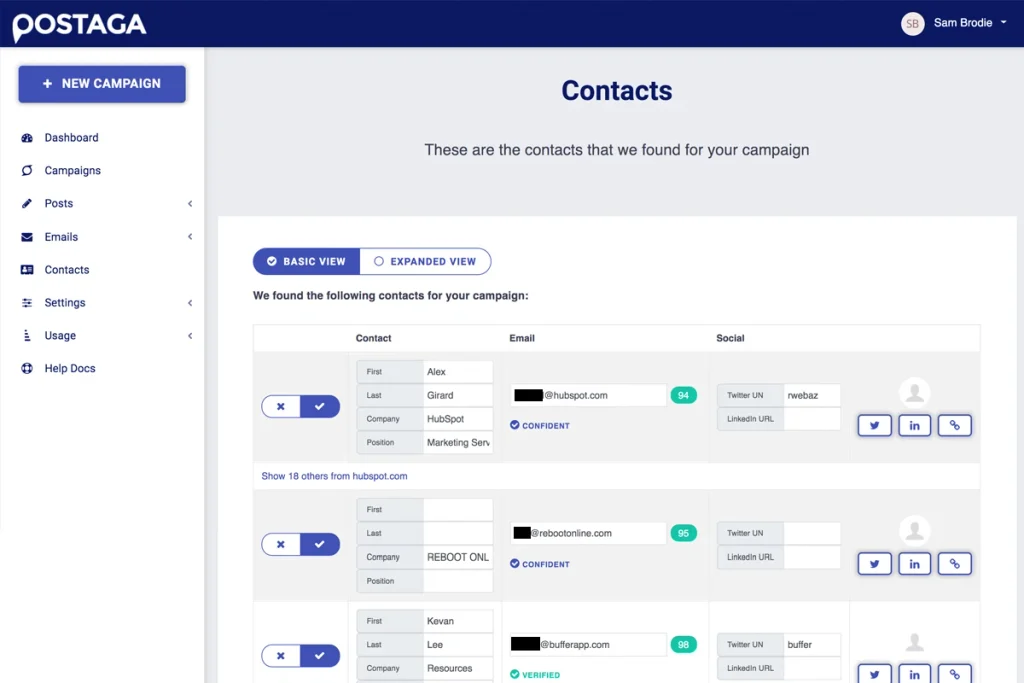
Best for agencies adding link building as a new service. The templates give a small team a structure to follow instead of a blank sequence builder.
Price Around $84/month for Pro. Confirm on its site, since directory listings disagree.
Skip it if you’re running large campaigns. Its contact database is smaller than Pitchbox’s and you’ll supplement with an email finder.
BuzzStream Outreach CRM where every interaction sits on one shared contact record.
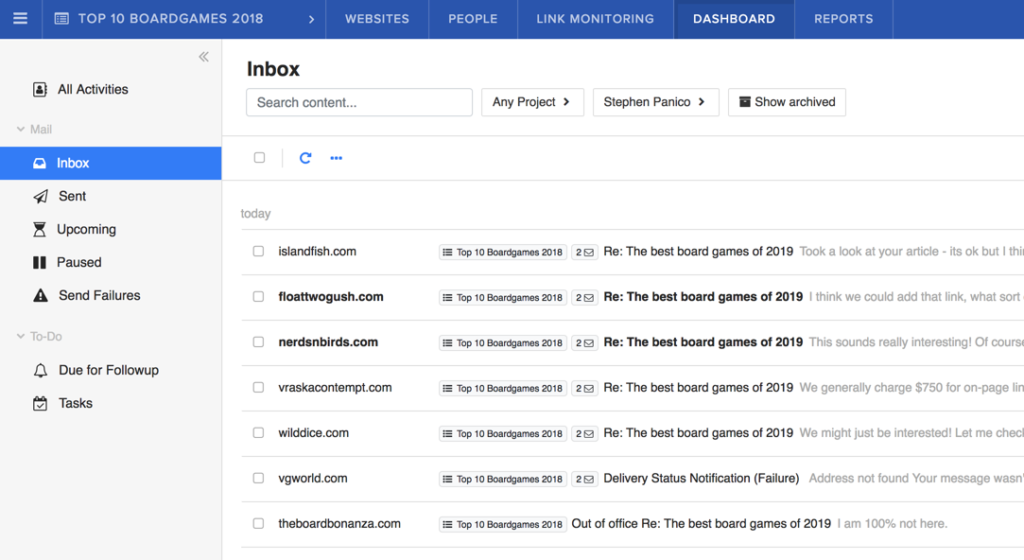
Best for agencies doing digital PR, where relationships compound across campaigns and a journalist must never receive the same pitch twice from two people.
Price Starter $49/month, Growth $174 (3 users, 25,000 contacts), Professional $424.
Skip it if volume is the goal. It meters on contacts stored rather than emails sent, so high-volume campaigns get expensive fast.
Local SEO Tools
Local agencies usually need two of these, not one: something that manages listings and reviews, and something that shows grid visibility. They do different jobs and clients want both.
Search Atlas OTTO Automated GBP optimization, content and citations deployed across accounts.
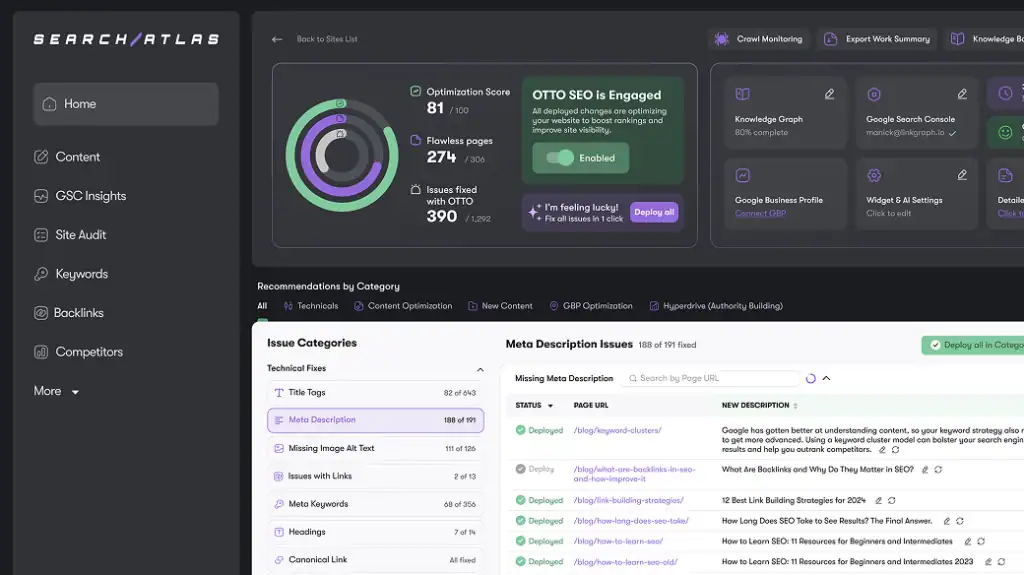
Best for agencies managing GBP work at volume who want execution rather than recommendations. White-label dashboards and client portals start on Pro.
Price Growth $199/month ($159 annually), Pro $399 ($319), Agency $999 ($799).
Skip it if you’re budgeting off the headline price. OTTO project count meters the real bill, so 20 clients on Pro needs 16 extra sites at about $59 each, landing nearer $1,260/month.
BrightLocal Citation management, listings sync and review handling, priced per location.
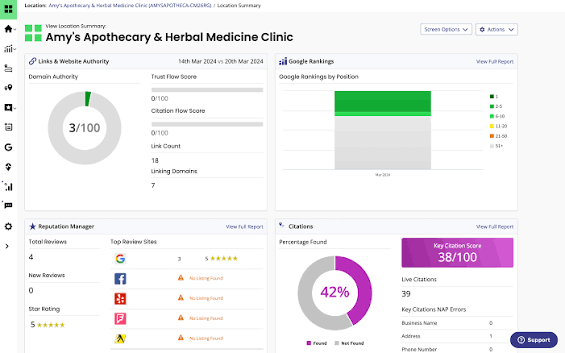
Best for agencies where reputation management is part of the retainer. Listings sync across Google, Bing, Facebook and Apple, with bulk GBP posting on Manage.
Works with Local Falcon, which covers the grid visibility BrightLocal reports only at a single point.
Price Track $39/month ($29 annually), Manage $49 ($36), Grow $59 ($44), per location.
Skip it if you quoted from the $39 price and reviews are in scope. Review management is Grow-only, and 41 to 50 locations runs about $449/month.
Local Falcon Geo-grid rank tracking that visualizes local visibility as a map.
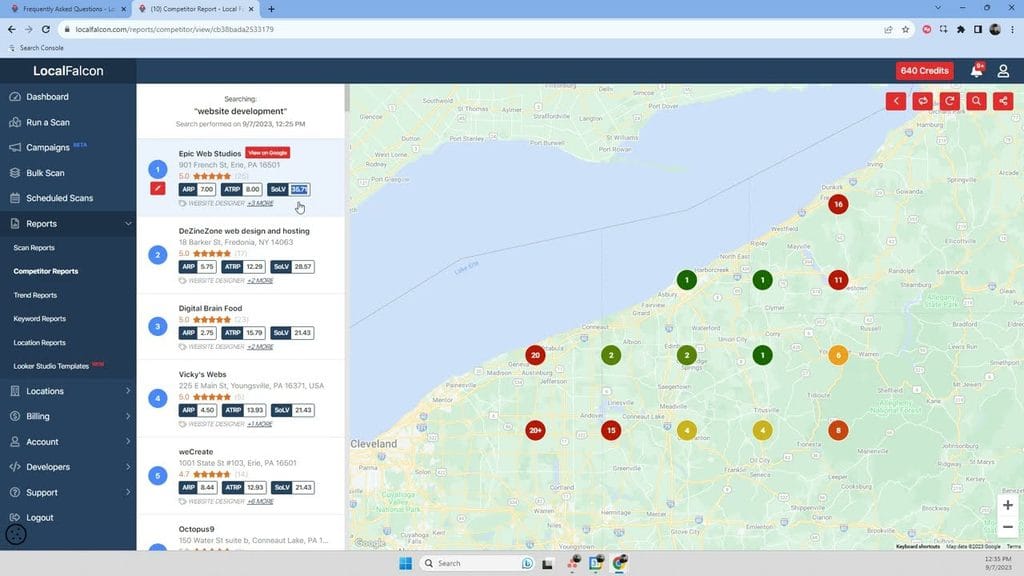
Best for agencies that need to show progress a client can see. Nothing else makes local movement this obvious in a meeting, which makes it a retention tool as much as a tracking one.
Price Starter $24.99/month (7,500 credits), Basic $49.99 (15,150), Pro $99.99 (31,250).
Skip it if you haven’t done the grid math. One location, ten keywords, daily 5×5 scans burns the entire Starter allowance. A 10×10 grid needs 30,000 credits.
How to Pick the Right Stack for Your Clients
Retainer size and service focus set the stack. The honest total always runs higher than entry prices suggest, because seats and data sources are where the bill actually grows.
| Category | Local SEO | Content | Technical | E-commerce |
|---|---|---|---|---|
| Reporting + monitoring | Core | Core | Core | Core |
| AI visibility tracking | Later | Core | Later | Core |
| Rank tracking | Core | Later | Later | Core |
| Content optimization | Skip | Core | Skip | Later |
| Schema markup | Later | Later | Core | Core |
| Technical crawling + logs | Skip | Later | Core | Core |
| Programmatic pages | Later | Skip | Skip | Core |
| Entity + internal linking | Skip | Core | Later | Later |
| Outreach | Skip | Later | Skip | Later |
| Local + GBP | Core | Skip | Skip | Later |
Recommended Tool Stacks by Client Retainer Size
SMB clients, $500 to $2,000/month. SE Ranking Core for research, tracking and AI visibility in one, Surfer Standard for content, Swydo for reporting, plus free tools. About $317/month, or $271 annually. The logic is consolidation: at this retainer, every extra subscription eats the margin.
Mid-market clients, $2,000 to $10,000/month. Semrush Guru, Surfer Pro, and reporting sized for 20 clients. Roughly $760 to $970/month. Seats move this total more than tools do, since three Ahrefs users at $60 each costs more than an entire extra platform.
Enterprise clients, $10,000+/month. Semrush Business or Ahrefs Advanced, Clearscope Business, Profound Growth, AccuRanker Professional. About $1,500 to $1,600/month before enterprise quotes. At this level the tool bill is a rounding error against the retainer, so buy on capability.
Recommended Tool Combinations by Agency Focus Area
Local SEO agencies. BrightLocal for listings and reviews, Local Falcon for grid visibility, Nightwatch for organic positions, and a reporting tool to hold all three. Budget by location count, not client count, since one franchise client can carry 40 locations. Skip content optimization entirely.
Content-focused agencies. One scorer only, Surfer or Clearscope. Add MarketMuse for planning and Frase for briefs. AI visibility belongs here early, because content teams are the ones who can act on a citation gap.
Technical SEO agencies. Screaming Frog and Sitebulb as a pair, JetOctopus when AI crawler behavior enters scope, and Schema Pro or Linkilo on WordPress rosters. The cheapest stack here, roughly $100/month plus seats, because the expensive part is the person reading the crawl.
E-commerce agencies. Schema App for product markup, Semrush for category research, WP All Import and a programmatic stack for filter pages. Track AI visibility earlier than feels necessary: BrightEdge measured AI referrals to e-commerce brands up 752% year over year into the 2025 holidays, while Google still drove 87.6% of organic shopping traffic. Both are true at once.
Whichever stack you pick, the reporting layer is where the client sees it. White-label reporting for marketing agencies is worth reading before committing to a tool that only exports PDFs.
Common Mistakes Agencies Make When Buying SEO Tools
Four mistakes account for most of the wasted spend, and none are about picking the wrong vendor.
They publish unedited AI content. Sites that scale AI-written content without review get hit, and the March 2026 core update fell hardest on templated location pages that swapped a city name and offered nothing else. Build review into the cost of the content, not into whatever time is left over.
They ignore AI visibility because it’s small. Under 1% of referrals is easy to dismiss. But the agencies tracking citations now will have a baseline and a read on the patterns before the share grows. Track it even if you don’t optimize for it yet.
They buy two tools that do the same job. The classic version is two content scorers, or a standalone AI tracker on top of a suite that already includes one. Before any new subscription, name the tool it replaces.
They expect AI to replace strategy. AI speeds up execution. It doesn’t decide which content to create, which keywords touch revenue, or what makes a client different from the three competitors also running AI-assisted content. That’s the part clients pay a retainer for.
How to Measure ROI on Your SEO Tool Investment
Measure time saved first, output quality second, opportunity cost third. The first is the only one you can pin down inside a month.
Time saved is a before-and-after. A piece that took eight hours by hand and takes three with AI assistance saves $375 at a $75 blended rate. Multiply by monthly volume and compare against the subscription. At twelve pieces a month against a $219 tool, the math isn’t close.
Output quality is the check on that math. Faster content that doesn’t rank is wasted money. Compare AI-assisted performance against your historical benchmarks over 90 days. If it holds up in half the time, that’s real. If it doesn’t, the time was borrowed from results.
Opportunity cost is the one agencies forget. Hours saved on execution can go to strategy, client relationships and new business, which is the work that grows an agency and gets squeezed first when everyone is buried in production. That’s the same logic behind agency profitability generally: the constraint is rarely the tool bill, it’s where senior time goes.
Final Thoughts
The tool market in 2026 rewards agencies that buy for their bottleneck and ignore the rest. Rankings, reporting and technical work are still the foundation, since nearly every AI Overview cites something from the top 20 even though almost half of individual citations now come from further down.
Ignore AI visibility, programmatic pages and entity work and you leave capability on the table. Chase all three before the foundation is solid and you leave money there instead.
Start with what takes too long today. The tools are mature. Execution is what’s left.
Agency SEO Tools FAQ
Straight answers on what to buy, what to skip and what it really costs
Three or four. A research and tracking suite, a reporting tool, a crawler, and one specialist tool for whatever service you sell most of. That covers the majority of agency work.
The test for anything beyond that is simple. Name the task that gets faster. If nobody on the team can, the subscription is buying reassurance, not capacity.
A suite covers every function adequately. A specialist does one function better than any suite can. Semrush, Ahrefs and SE Ranking handle research, tracking and audits in one subscription. Screaming Frog crawls deeper than any of them, and AccuRanker tracks faster.
Run one suite plus one or two specialists. Running two suites is the most common waste in agency stacks, because their keyword databases do the same job and you pay for both.
Ahrefs if you sell link building. Semrush if you pitch on competitive intelligence. Ahrefs has the stronger backlink index. Semrush shows a competitor’s paid and organic history at a depth that tends to win pitches.
Seat policy often decides it first. Ahrefs includes one user per plan and charges $40 to $100 for each extra, so a four-person team on Standard pays $429 a month rather than $249.
For one or two small clients, almost. Search Console covers rankings and impressions, GA4 covers traffic, Screaming Frog crawls 500 URLs free, Google’s Rich Results Test validates schema, and Looker Studio builds the report.
The free stack breaks on three things: competitor data, which no free tool provides, keyword volume research, and client-ready reporting at scale. Those are usually the first three paid purchases, in that order.
Most reporting and tracking tools do. Most content tools do not. Swydo, AgencyAnalytics, SE Ranking, AccuRanker, Nightwatch, BrightLocal and Whatagraph all run 14-day trials with no card required. Mangools gives 10 days, Frase 7.
Content optimization is the exception. Surfer offers a money-back window rather than a trial, and Clearscope has neither. Budget a paid first month there and treat it as the evaluation.
Between 5% and 15% of the retainer, and the percentage should fall as retainers rise. The same stack can be the right and wrong answer depending on who you serve.
| Client retainer | Typical stack | What that means |
|---|---|---|
| $500 to $2,000 | $270 to $320 | Consolidate hard, favour bundles |
| $2,000 to $10,000 | $760 to $970 | Comfortable, buy specialists |
| $10,000 and up | $1,500 to $1,600 | Buy on capability, not price |
If your tool spend crosses 20% of a retainer, the problem is usually the retainer, not the tools.
Only when the tool is priced per client. Absorb everything else into the retainer. A per-client platform gives you a clean line item a client can verify. A per-seat or per-source tool does not, and itemizing it invites a conversation about why they are funding software they cannot see.
The stronger position is to fold tools into the retainer and never mention them. Clients buy outcomes. An itemized software line turns your margin into a negotiation.
Worth it for tools you have run for six months. Risky for anything new. Discounts range from about 10% on AccuRanker and Advanced Web Ranking to 20% on SE Ranking and Semrush and roughly 35% on Mangools.
Some vendors remove the choice. Whatagraph, Screaming Frog, Schema Pro and Rank Math sell annual only, so the commitment is the entry price rather than a saving.
Seats, data source caps and metering units. None of them appear in a headline price. Ahrefs charges per extra seat. DashThis caps sources rather than dashboards. Advanced Web Ranking sells keyword units, where one unit is one query on one engine on one device weekly, so 7,000 units is nearer 1,000 real keywords at daily desktop and mobile tracking.
Two more to check before quoting a client. Local Falcon meters on map pins, so one location scanned daily on a 5×5 grid consumes an entire entry plan. Search Atlas meters on concurrent projects, which roughly triples the headline figure for a 20-client agency.
Around $100 a month on annual billing. Mangools at $29.90 covers keyword research, SERP analysis and 200 tracked keywords. A reporting tool from $54 handles clients. Screaming Frog stays free under 500 URLs, and Search Console fills the rest.
Two constraints will force the first upgrade. Mangools Basic allows exactly one user, and its 100 daily lookups run out fast across two active clients.
SEO gets you ranked. GEO and AEO get you quoted. Generative engine optimization and answer engine optimization are two names for the same job: being the source an AI assistant names when it answers a question in your client’s category.
They are not separate disciplines with separate tools. The work is the same content, structure and authority work, measured differently. Treat the terms as a reporting distinction rather than a service line.
Only if your current platform does not already include it. SE Ranking bundles AI tracking into its base plan. Surfer includes it from the Standard tier. Semrush sells it as an add-on to a subscription you may already hold. Buying a standalone on top of any of those pays twice for the same data.
On Ahrefs or Looker Studio you have no AI coverage, so a standalone is the right purchase. Pick by billing model: unlimited seats if the team is large, per-brand if clients are few and big, bring-your-own-key if the roster is WordPress and retainers are small.
No. Ranking makes a page eligible, not selected. Across 362,000 keywords, seoClarity found 94% of AI Overviews cite at least one page from the top 20, while 44% of individual citations come from pages outside the top 20 entirely.
So a client who ranks nowhere is rarely cited, and a client at position three can still be absent from the answer. That gap is the whole reason AI visibility tracking exists.
Put it beside rankings in the report they already read. A second dashboard creates a second conversation, and most clients do not want one. The Semrush data source exposes AI Overview keyword fields, so the count of keywords triggering an AI Overview can sit next to positions in a single view.
Set the scale expectation when you present it. AI platforms send under 1% of referral traffic, so frame it as brand presence and discovery. A client told to expect visits will be disappointed by accurate data.
No, because the expensive part of SEO was never the execution. AI shortens drafting, crawling and reporting. It does not decide which keywords touch revenue, which clusters are winnable, or what makes a client different from three competitors using the same tools.
The measurable shift is where senior hours go. Agencies that convert saved production time into strategy grow. Agencies that convert it into more volume at the same price compete with everyone else doing the same thing.
Because they are measuring different things and neither is wrong. Rank trackers differ on location, device, personalization and how often they refresh, so a weekly tracker and a daily one will disagree by design. Search volumes differ because some tools model them and others blend clickstream data.
The practical rule for agencies: pick one tool as the number of record for client reporting and never mix sources in the same chart. Consistency matters more than accuracy, because clients track the trend, not the absolute.
Easier than most agencies fear, because reporting tools pull from source APIs rather than storing your data. Reconnect Google Ads, GA4 and Search Console in the new platform and the history usually backfills on its own.
What does not transfer is anything the old tool generated itself: rank tracking history, custom metrics, goal records and report templates. Export those before you cancel, and rebuild templates during a quiet month rather than a reporting week.
Most reporting platforms include it on every plan. Most SEO suites charge extra or gate it to a higher tier. Swydo, AgencyAnalytics, DashThis and Nightwatch include white-labeling from the entry plan. Advanced Web Ranking includes three layers of branding on every tier.
The ones to check before quoting: SE Ranking sells it as a $69 monthly Agency Pack, Search Atlas unlocks it at the Pro tier, and BrightLocal at Grow. Price the add-on into any comparison, because it can change which tool is actually cheapest.
Before approving a new subscription, name the tool it replaces. If nothing gets cancelled, it is an addition rather than an upgrade and it has to justify itself alone.
Audit quarterly and look for any tool with exactly one active user, which usually means a trial nobody cancelled. Check seat counts at the same time, since per-seat tools grow quietly with headcount.
The ones that meter on something growing slower than your client count. Per-seat pricing scales with headcount. Per-client pricing scales in a straight line with the roster. Per-source pricing scales slowest when clients run similar platform combinations.
Twenty clients on three platforms each is 60 data sources, which is $294 a month on Swydo’s per-source model against $500 on a $25-per-client model. That flips when clients each run eight channels, since per-client pricing charges the same either way. Model your own roster before assuming either is cheaper.
A day for reporting tools, a week or two for suites, and several weeks for outreach platforms. Pitchbox is the one agencies consistently underestimate, and its learning curve is a real cost alongside the subscription.
Factor onboarding into the buying decision, not just the price. A cheaper tool nobody masters delivers less than a pricier one the whole team uses well.
Your tools do the work. Your reports decide whether clients see it.
Start Your Free Trial Today