
Proving ROI to a client means showing a return they can verify and tie back to their own business, not just a ROAS figure they have to take on faith. Reporting a number is easy. Proving it is what keeps the client.
Most agencies report plenty of ROI. Spend, ROAS, conversions, cost per lead. And clients still ask “is this actually working?” because the numbers sit on the page without connecting to the thing the client cares about, which is money in the door. This article walks through how to build ROI into a client report so it holds up when the client asks the only question that matters: how do you know?
The quick version:
- Reporting ROI puts a number on the page. Proving it means the client can verify the number and connect it to their business.
- Start from the client’s definition of return, in money, not the platform’s definition, in conversions.
- Show the full cost, including your fees, or the ROI is inflated and easy to poke holes in.
- Blend every channel into one honest return figure, and fold in the revenue the ad platforms can’t see.
- Be straight about attribution. A number you can defend beats a bigger number you can’t.
What Proving ROI Actually Means
Proving ROI is the difference between a number the client reads and a number the client believes. Reporting ROI is writing “ROAS 4.2” on a slide. Proving ROI is showing what was spent, what came back, how you know, and what it means for the client’s business.
Here’s the test that separates the two. Read any ROI figure in your report and ask it on the client’s behalf: how do you know that? If the report answers the question by itself, you’ve proven the return. If the answer lives in your head and only comes out on the call, you’ve asserted it, and an asserted number is one the client can quietly stop believing.
A quick example. “ROAS 4.2” proves nothing on its own. The client doesn’t know if that counts their offline sales, whether it includes your fees, or how it compares to what they were getting before. “You invested $12,000 this month across all channels and it returned $50,400 in tracked revenue, a 4.2x return, up from 3.6x last quarter” is the same metric, made provable. Same number, completely different level of trust.
That’s the frame for the whole article. Every ROI claim in a report should survive the client asking how you know.
Why Proving ROI Matters
Proving ROI isn’t a reporting nicety. It’s increasingly the thing that decides whether a client stays, because the pressure on their side has gone up.
- Clients now scrutinize every marketing dollar. Marketing budgets have flattened to 7.7% of company revenue, and 59% of CMOs say they don’t have enough to execute their strategy. A client under that pressure wants proof, not a dashboard.
- The whole industry has shifted from activity to outcomes. In Nielsen’s 2025 research, 85% of marketers said they were confident measuring ROI, yet only 32% actually measured it holistically across channels. The agency that closes that gap looks materially better than the one that reports channel by channel.
- Failing to show value is a leading reason clients leave. In the Setup Marketing Relationship Survey, dissatisfaction with delivery was the number one reason clients end agency relationships, and 40% said they expected to switch partners within six months. Proving ROI is a retention tool as much as a reporting one.
There’s a link to the sibling problem worth naming. Failing to prove ROI is a form of under-reporting the value you actually deliver. You did the work and got the result. If the report doesn’t make the return provable, the client discounts it.
What You’ll Need
Proving ROI pulls from a few places, and the goal is to get them into one report where the math is visible.
You’ll need the ad platforms themselves (Google Ads, Meta, and the rest), GA4 or your analytics source for tracked revenue, and, crucially, the client’s own numbers: what a lead is worth to them, their close rate, and any offline or CRM revenue the platforms never see. Then you need a reporting layer that ties those together and shows the calculation rather than hiding it. Swydo does that, and its entry plan includes 10 data sources with a 14-day free trial, which is enough to connect a full client’s stack and build a real ROI view.
How to Prove ROI in Your Client Reports
Seven steps take a report from stating ROI to proving it, and they build on each other in sequence. The first four get the math right: the client’s definition of return, the true cost, one blended figure, and the revenue platforms miss. The last three make that math believable, with a target to measure against, honest attribution, and one plain sentence on what the return means for the business.
1. Start From the Client’s Definition of Return
Before any number goes in the report, define return in the client’s terms, not the platform’s. The platform counts conversions. The client counts revenue, profit, and pipeline.
Ask what a conversion is actually worth to them: the average deal size, the close rate on a lead, the margin on a sale. A report that says “180 conversions” proves nothing. A report that says “180 leads, which at your 20% close rate and $3,000 average deal is roughly $108,000 in potential revenue” is speaking the client’s language. That translation is the foundation everything else sits on, and it maps to the metrics your client actually cares about.
2. Show the Full Cost, Not Just Ad Spend
ROI is return over investment, and most reports understate the investment by counting only ad spend. If your fees aren’t in the denominator, the ROI you’re showing is inflated, and a sharp client will notice.
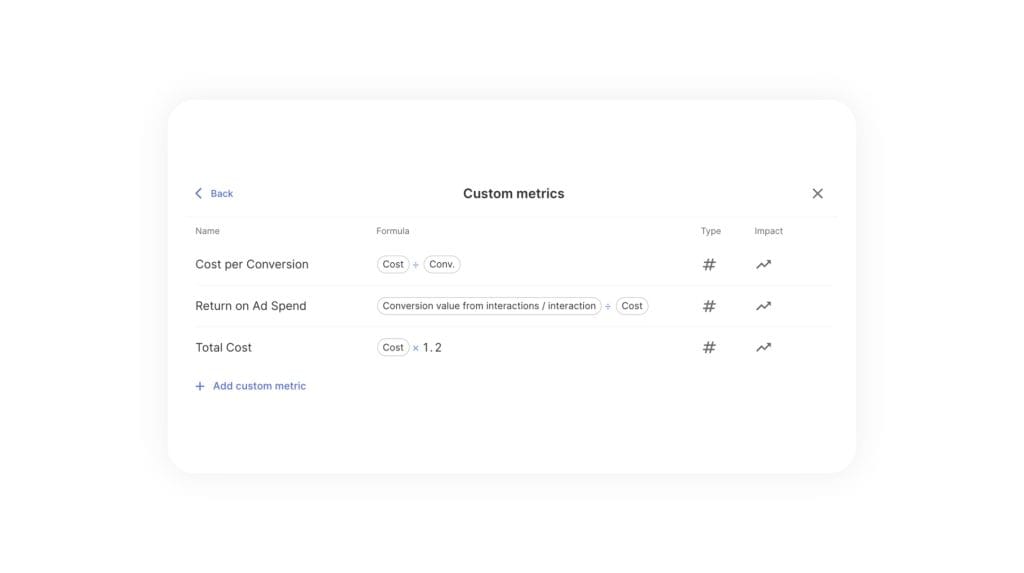
Build the real calculation: ad spend plus your management fee is the true investment. In Swydo, Custom Metrics let you define that calculation once, including agency markup, so the report shows an ROI figure that already accounts for what the engagement actually costs. It’s a smaller number than ad-spend-only ROAS, and that honesty is exactly what makes it credible. This is also where the difference between ROAS and ROI stops being academic and starts mattering to the client’s trust.
3. Blend Every Channel Into One Honest Return
Clients don’t run one channel, and they don’t think in channels. They want to know the total return across everything they’re paying for, in one number.
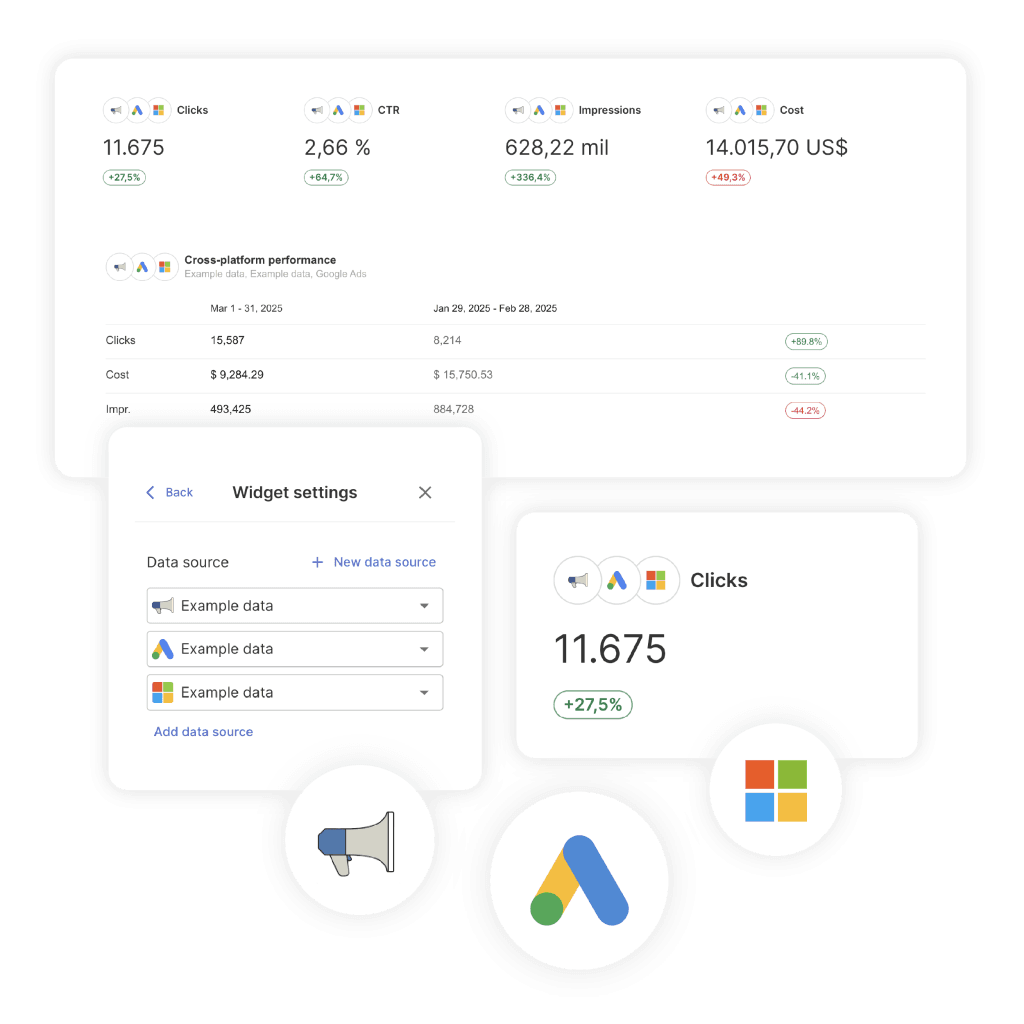
Reporting Google Ads, Meta, and shopping separately forces the client to do mental math across tabs, and mental math erodes trust. Swydo’s Combined Data Sources blends up to five ad platforms into a single Revenue or ROAS figure, so the report shows one cross-channel return instead of five fragments. Worth naming the limit up front: a custom metric can’t live inside a combined widget, so you show the native cross-channel ROAS from the blended sources, and keep any bespoke ROI calculation in its own widget beside it. The two together give the client the blended number and the fee-adjusted one.
4. Bring In the Revenue the Platforms Can’t See
The biggest hole in most ROI reporting is the revenue that never touches an ad platform. The lead that closed three weeks later. The phone call. The deal the client’s sales team finished offline.
If your report only shows platform-tracked conversions, you’re systematically underselling the return, because the most valuable outcomes often close off-platform. Swydo’s Manual KPIs let you enter the closed revenue the client reports back to you, so the report ties ad spend to actual business results instead of stopping at the platform’s edge. This is the step that turns “we drove 180 leads” into “those leads became $90,000 in signed revenue,” which is the number the client’s CEO actually cares about.
5. Set the Return Against a Goal the Client Agreed To
A return figure floating on its own still leaves the client asking whether it’s good. Set it against a target, and the same number becomes a story.
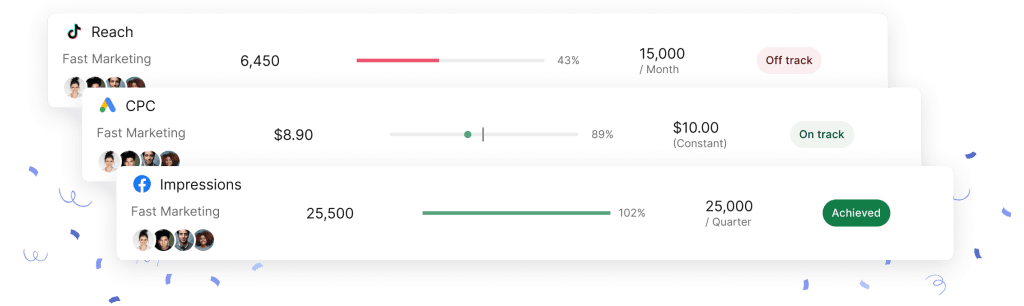
In Swydo, Goals attach a target and a timeframe to a metric, showing progress as On Track, Off Track, or Achieved. “4.2x ROAS” is a fact. “4.2x ROAS against the 4.0x target we agreed on, pacing ahead for the quarter” is proof that the plan is working, framed against a bar the client signed off on. That agreed target is what stops every report from relitigating whether the results are good.
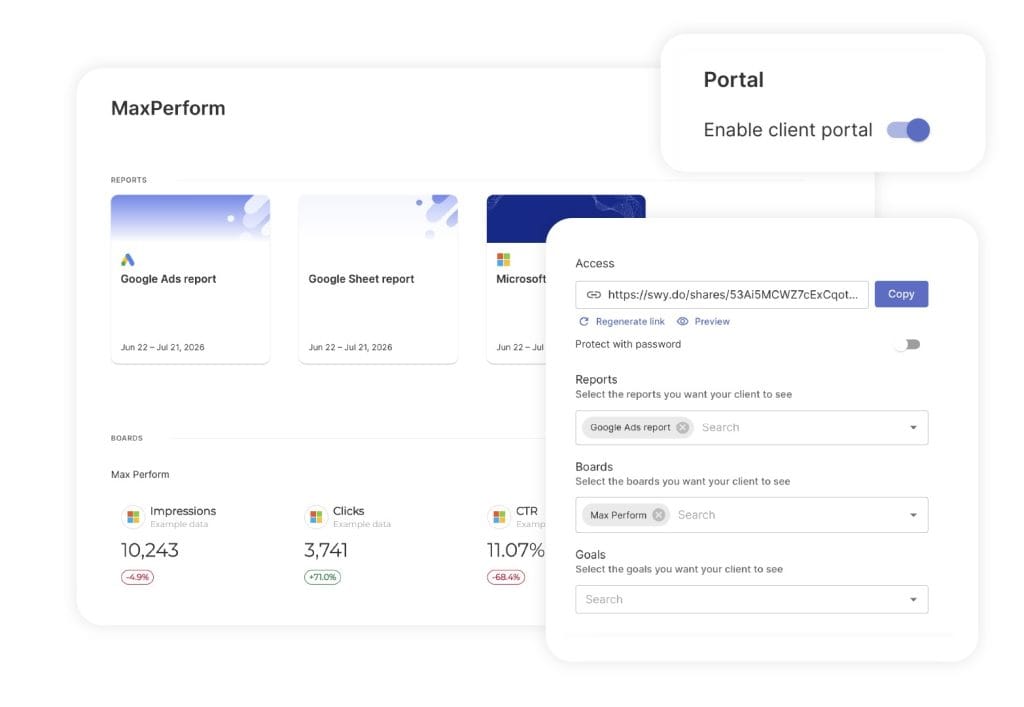
The proof lands harder when the client can watch it between reports, not only on the day one arrives. Swydo’s Client Portal gives each client one secure link that combines their reports, boards, and goals, so they can check progress toward the ROI target whenever they want. A client who can see the return pacing ahead of goal on their own is a client who already knows the answer before the renewal conversation starts.
6. Explain the Attribution Honestly
This is the step that separates agencies clients trust from agencies clients audit. Your tracked revenue and the client’s CRM will not match exactly, ever, because of attribution windows, cross-device journeys, and how each system defines a conversion. Say so, in the report, before the client finds the gap themselves.
One honest line does the work: “Platform-tracked revenue shows $50,400. Your CRM will show a different figure because of attribution timing and offline closes. We reconcile to your numbers quarterly.” That sentence costs you a slightly smaller headline and buys you total credibility. Proving ROI does not mean claiming the biggest possible number. It means claiming a number the client can trust, which is worth far more.
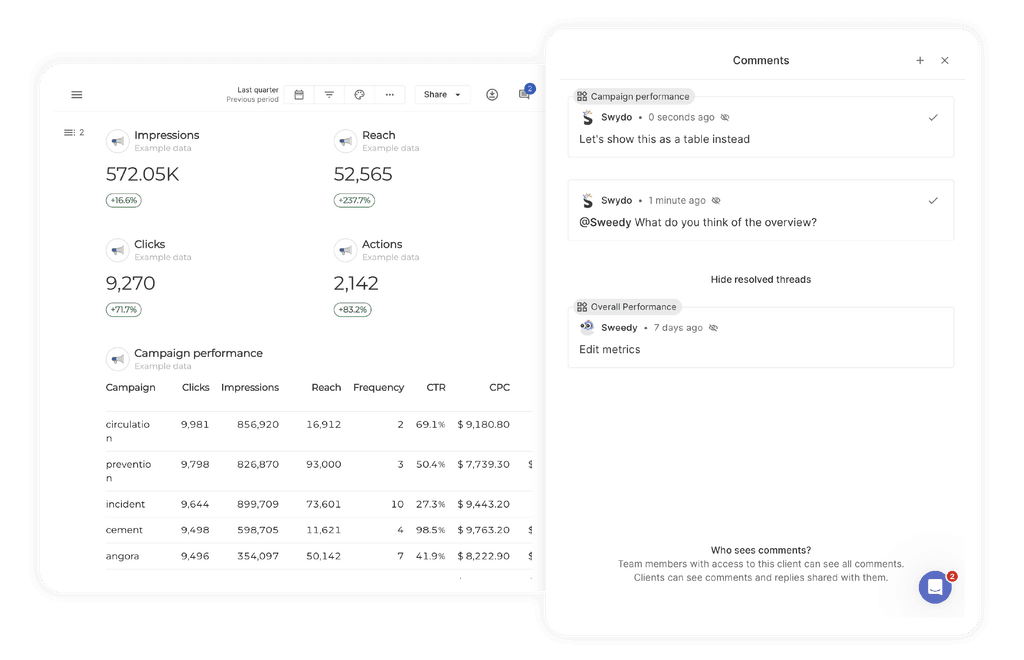
Some clients will still ask about the gap, and where that question gets answered matters almost as much as the answer. Swydo’s Comments, currently in beta, let a client open a thread on the exact widget that puzzles them, so your reply sits next to the revenue figure it explains instead of vanishing into an email chain.
Before you answer, you can leave an internal note and @mention a specialist to check the tracking, then reply to the client once the facts are confirmed. Resolve the thread when it’s settled and the history stays put, so the next time anyone asks how you know, the answer is already attached to the number.
7. Narrate What It’s Worth in One Line
Finally, say what the return means in plain language, because a number the client has to interpret is a number that lands weakly. The report should state, in one sentence, what was spent, what came back, and what that means for the business.
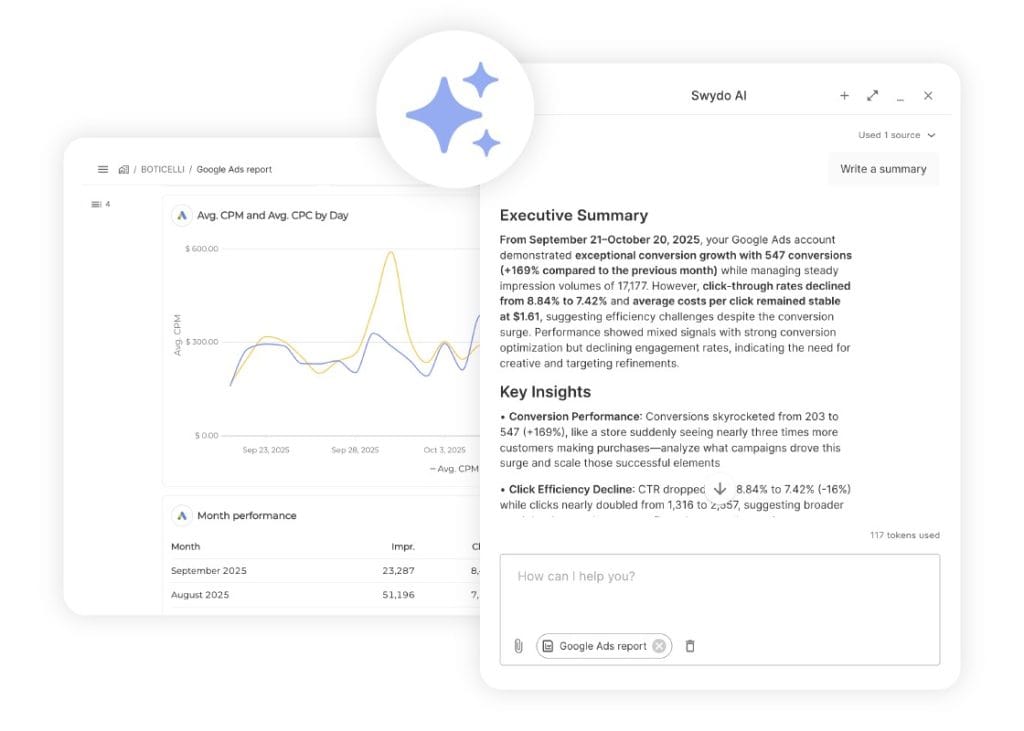
Swydo’s AI-generated email summaries draft that recap from the report’s own data and regenerate on every scheduled send, so the return arrives with a sentence of context instead of as a bare figure. You edit it to match the relationship, but the story goes out with the report. The mechanics of turning the numbers into a story apply here more than anywhere, because ROI is the number the client repeats to their boss, and you want them repeating your framing.
Is It Really That Simple?
Mostly, but there’s a trap on the other side, and it’s the opposite of under-reporting. Once you start proving ROI, it’s tempting to prove too much.
The temptation is to claim credit for everything. Last-click attribution hands your channel the entire sale even when six other touches did the work, and it’s easy to let a flattering ROAS stand unquestioned. That feels like proving ROI. It’s actually building a number that collapses the moment the client’s finance team looks closely, and when it collapses, it takes your credibility with it.
The honest move is to show the return and its limits together. Attribution is genuinely hard, which is why only about a third of marketers measure ROI holistically even though most believe they can. Nobody has a perfect number.
The agency that says “here’s the return, here’s how we tracked it, here’s what we can’t see” wins more trust than the one waving a suspiciously clean 8x. A defensible number beats an impressive one every time a client renews.
And keep the distinction between ROAS and ROI sharp. ROAS ignores your fees and the client’s margins, so a high ROAS can sit on top of a thin or negative actual return. If you only ever show ROAS, you’re showing revenue efficiency, not profit, and a smart client eventually asks the difference.
Get ahead of it.
The reports that hold up are the ones that already answer the questions a skeptical client would ask, rather than leaving them to a call. It’s the same reason the strongest reports cut the vanity metrics that look impressive but fall apart the moment a client looks closely.
Proving ROI to Clients FAQ
Direct answers to the questions clients ask when they want to know how you know| Metric | Divides by | What it leaves out |
|---|---|---|
| ROAS | Ad spend only | Agency fees, cost of goods, margin |
| ROI | Ad spend plus fees and costs | Less, which is exactly why it holds up |
Final Thoughts
Proving ROI comes down to one habit: make every return figure something the client could verify and tie to their business, rather than a number they have to trust you on. Show the full cost, blend the channels, include the revenue the platforms miss, set it against an agreed goal, and be honest about what attribution can and can't see.
Do that and ROI stops being the number clients question and becomes the number that keeps them. Because a return a client can prove to their own boss is a return they don't want to walk away from.
Show clients a return they can verify, in every report you send.
Start Your Free Trial Today