
“Realised we were underpricing by 30%”
“Raised our retainer floor in one week”
“Finally have a defensible markup”
“Stopped guessing on new client pricing”
What Should You Actually Be Charging This Client?
Most agencies price retainers by feel — and discover at year-end that their blended margin is half of what they thought. This calculator backs you into the math: given your team cost, tool stack, and target margin, here’s the service fee and media markup you should actually be quoting.
Agency Margin & Markup Calculator
Plug in one client’s economics and see your current margin versus the price you should be charging to hit your target.
Start With Your Agency Type
What this client pays you per month — not including media spend.
Percentage you add on top of media spend as agency fee. Industry standard: 10–20%.
Software allocated to this client — reporting, ad tools, project management, etc.
Freelancers, subcontractors, ad-hoc costs allocated to this client.
“Loaded” = salary + benefits + overhead, divided by realistic billable hours. We’ve done the math.
The margin you want to hit. Healthy agencies aim for 20–30% net.
Current Net Margin
11.7%
Recovering $70/hr against a $75 loaded cost
Underpricing · 13 Points Below TargetTotal Revenue
$4,700
Total Cost
$4,150
Net Profit
$550
Hourly Recovery
$70/hr
Stop Pricing by Feel
The Pricing You Set Today Compounds Across Every Renewal.
Swydo pulls ad spend, billable hours, and tool costs into one per-client view so the next renewal is a data conversation, not a guess. Build the dashboard once; reuse the format across your whole book.
No credit card required · Cancel anytime · Unlimited users & clients
How It Works
The Math Behind the Markup
Pricing math is reversible. Most agencies start from “what should I charge?” and guess. This calculator works backward: given the cost and the target margin, the price falls out.
The Formula
Cost side Team cost = Hours × Loaded rate Total cost = Team + Tools + Other
Margin Net profit = Total revenue − Total cost Net margin % = Profit ÷ Total revenue
Reversed: what should I charge? Target revenue = Total cost ÷ (1 − Target %) Target service fee = Target revenue − Media revenue
Status bands Underpricing → > 5 pts below target Watch → within ±5 pts of target On Target → at or above target
Why We Treat Media Markup and Service Fee Separately
Media markup compounds with ad spend, but doesn’t scale your time. Service fee covers your team’s work. Mixing them hides the truth: a 15% markup on $100K of media is $15K/month of revenue with near-zero marginal cost — that’s where the margin actually comes from for high-spend clients.
Target Margin Defaults to 25%
Parakeeto and Promethean Research benchmark healthy digital-agency net margin at 20–30%. We default to 25% as the middle. Below 15% is the bleeding zone; above 35% is rare premium positioning. Adjust the target to your model — boutique consultancies aim higher, full-service shops accept lower.
The Two Levers: Fee or Markup
To hit your target, you can raise the service fee OR raise the media markup. The calculator shows both. For clients with low ad spend, the fee is the lever. For clients with high ad spend, even a 2% markup bump can close the gap without touching the headline price.
The Pricing Compound Effect
A retainer priced 10% low today compounds across every renewal — clients anchor to your starting number. The cost of underpricing isn’t this year’s $5K loss; it’s next year’s $5K + the year after’s $5K + the harder renewal conversation when you finally try to fix it.
The Hidden Problem
Most Agencies Don’t Know What They’re Charging.
They know their retainer numbers. They know their hourly rates. But the actual blended margin — including media markup, tools, subcontractors, and team time — sits in a year-end accounting report that arrives too late to fix anything.
Agencies that price by feel typically charge 8–15% below where the math says they should be.
Industry benchmark for digital agencies from Parakeeto and Promethean Research.
An underpriced retainer at signing usually stays underpriced for at least three renewal cycles.
Pricing decisions feel like one-off conversations — but they compound. A retainer set 10% below where it should be doesn’t get renegotiated up at renewal. It gets renewed at a small CPI bump. The next renewal does the same. Three years later, you’re 15 points off target margin on that account, and the renewal conversation to fix it now requires a hard reset that risks the relationship.
The deeper problem is that pricing math hides inside the wrong report. Your accounting tool shows agency-wide P&L — a lagging average that doesn’t tell you which clients are under-priced. Your project management tool shows hours but not the cost or the revenue. The two don’t talk. So the conversation never happens.
The fix isn’t pricing strategy. It’s pricing visibility: per-client margin, refreshed monthly, surfaced before the renewal — not at year-end accounting.
Next Steps
What to Do With Your Number
Whichever band your client landed in, here’s the playbook for turning the calculator into a pricing change that sticks.
If Underpricing — Pick Your Lever Before the Conversation
You have two levers: raise the service fee, or raise the media markup. For clients with low ad spend, the fee is your only move. For clients with significant ad spend, a 2–3 point markup bump can close most of the gap without changing the headline retainer — which is often easier to land at renewal.
Run the Calc on Your Five Largest Clients This Week
The pattern repeats. Once you find one underpriced client, you’ll find more — usually the ones who’ve been with you longest, because their retainer hasn’t moved with your costs. Rank them by margin gap. The biggest gaps are your priority renewal list.
Anchor the Renewal Conversation With Data
“Looking at the last six months, your account is consuming 32 hours/month at our loaded rate, plus tool costs and ad management. To deliver this profitably we need to be at $X” lands very differently from “we need to raise the price.” Numbers depersonalise the conversation.
Build the Margin View as a Report Template
So next year’s renewal isn’t another standalone analysis. Browse the Swydo report templates library for starting points by channel — the PPC and Cross-Channel templates already include a media-spend widget you can layer cost data onto.
Connect the Three Data Sources That Make This Live
Ad platforms for media spend, Toggl for billable hours, your CRM or invoicing tool for revenue. Check the Swydo integrations list against your stack — most agencies are connected in under 15 minutes, and the margin view rebuilds itself every month.
From Calculator to Dashboard
How Each Number Above Becomes a Live Pricing Lens
The calculator gives you one client at one moment. Swydo gives you every client, refreshed monthly — so pricing conversations happen on data, not anecdote.
- Apply your media markup directly in the dashboard. Custom Metrics let you add agency fees on top of ad-platform data — so the marked-up media revenue line shows up automatically in every report.
- Predictable cost as you scale. $69/mo flat for 10 data sources, then $4.50 each. No per-client tax, no per-user fee. The Tool Stack line stays predictable from 10 clients to 100.
- White-label two views from the same data. Show clients results (without your cost line). Show internal teams and partners the margin view. One source of truth, two reports.
- Free human-assisted migration. Already using AgencyAnalytics, DashThis, Whatagraph, or Looker Studio? Our team rebuilds your reports in 2–5 days. Free.
No credit card required · Cancel anytime · Free migration included
FAQ
Questions Agencies Actually Ask
What’s a Realistic Target Margin for a Marketing Agency?
Parakeeto and Promethean Research benchmark healthy digital-agency net margin at 20–30%. The calculator defaults to 25% as the middle of that range. Boutique consultancies and specialist shops can target 30–40% on the strength of premium positioning. Full-service agencies with heavy production overhead typically accept 15–22%.
Below 15% is the bleeding zone — you’re running on hope. Above 40% is unusual and usually means either exceptional pricing power or under-servicing that will eventually surface as churn.
What’s the Standard Media Markup for an Agency?
Industry standard sits between 10% and 20% on top of media spend, depending on the platform and the agency’s positioning. PPC agencies on Google Ads usually charge 15%. Programmatic and display, where there’s more setup and trafficking work, often run 20–25%. Some specialist agencies skip media markup entirely and bake the equivalent into their service fee.
The right answer depends on your model: if you’re transparent about markup with clients, 12–18% is the comfortable band. If markup is opaque and bundled, the effective number tends to land higher.
Should I Mark Up Media or Bake It Into a Higher Service Fee?
Both work, but they signal different things. Markup ties your revenue to client spend — when they scale media up, you scale automatically. Easier on rising-tide clients; ugly on declining ones. Higher service fee insulates you from ad spend volatility but caps your upside when clients scale.
Most agencies use a hybrid: a base service fee that covers fixed work + a smaller markup that captures the variable upside. The calculator handles both — adjust the markup slider to zero and see what the service fee would need to be to compensate.
What Does “Loaded Hourly Cost” Mean?
“Loaded” means the true cost of an hour of someone’s time — not just their hourly rate. It includes salary, employer taxes, benefits, software seats, and allocated overhead. The formula: annual salary × 1.3–1.5×, divided by realistic billable hours per year (~1,600 senior, ~1,800 junior — not the theoretical 2,080).
The dropdown’s tiers reflect roughly: Junior ($45K base ≈ $50/hr loaded), Mid ($65K ≈ $75/hr), Senior ($95K ≈ $110/hr), Lead/Strategist ($130K ≈ $150/hr), Director ($175K+ ≈ $200/hr). Pick the role doing the bulk of the work.
How Do I Raise Prices With an Existing Client Without Losing Them?
Lead with the work, not the price. “Looking at the last six months, the scope has expanded from X to Y, and our team is now spending Z hours/month on your account. To deliver this at the level you’ve come to expect, we need to adjust the retainer to $A” is a different conversation than “we need to raise the price.”
Time the conversation at renewal, not mid-cycle. Offer two paths: same scope at the higher price, or the original scope at the current price. Most clients pick the first because they’ve been getting the expanded version for free — they just didn’t know.
Why Does the Calculator Show Two Suggested Prices?
Because you have two levers — service fee and media markup — and the right one depends on the client. The “target service fee” assumes your current markup stays the same; the “target markup” assumes your current fee stays the same. Either path hits your target margin.
For clients with low ad spend, the markup lever is too small to move the needle — you have to raise the fee. For clients with high ad spend ($50K+/month), even a 2–3 point markup bump closes the gap without touching the headline retainer. The calculator gives you both so you can choose the easier conversation.
How Often Should I Run This Calculation?
For every client, at least once a year — three months before the renewal date. Pricing decisions compound across renewal cycles, so catching the gap early gives you time to either reset expectations or quietly adjust over multiple renewals instead of one painful jump.
For new business pitches, run it before you send the proposal. The calculator’s “target service fee” output is the floor you should be quoting at, not the ceiling.
Can This Replace a Real Accounting System?
No — and it’s not trying to. This is a pricing-decision tool. It tells you what to quote, what to renegotiate, and where the margin’s leaking. It doesn’t track invoices, run payroll, or file taxes.
Pair the per-client margin view in Swydo with your accounting tool (Xero, QuickBooks, etc.) and time-tracking (Toggl integrates natively). Three systems, one source of truth for the pricing question.
More Free Tools
Other Calculators Worth a Minute of Your Time
Built on your data
Everything You’d Report On, Already Connected
Swydo pulls live client data from 30+ marketing platforms into automated, white-label reports and dashboards — the same engine behind every number in this calculator.
 Google Ads
 Google Analytics
 Facebook Ads
 Facebook Insights
 Microsoft Ads
 LinkedIn Ads
 Instagram Ads
 TikTok Ads
 X (Twitter) Ads
 YouTube
 Snapchat Ads
 Google Sheets
Start From a Ready-Made Report Template
Click any template to open a live example report you can clone in one click.
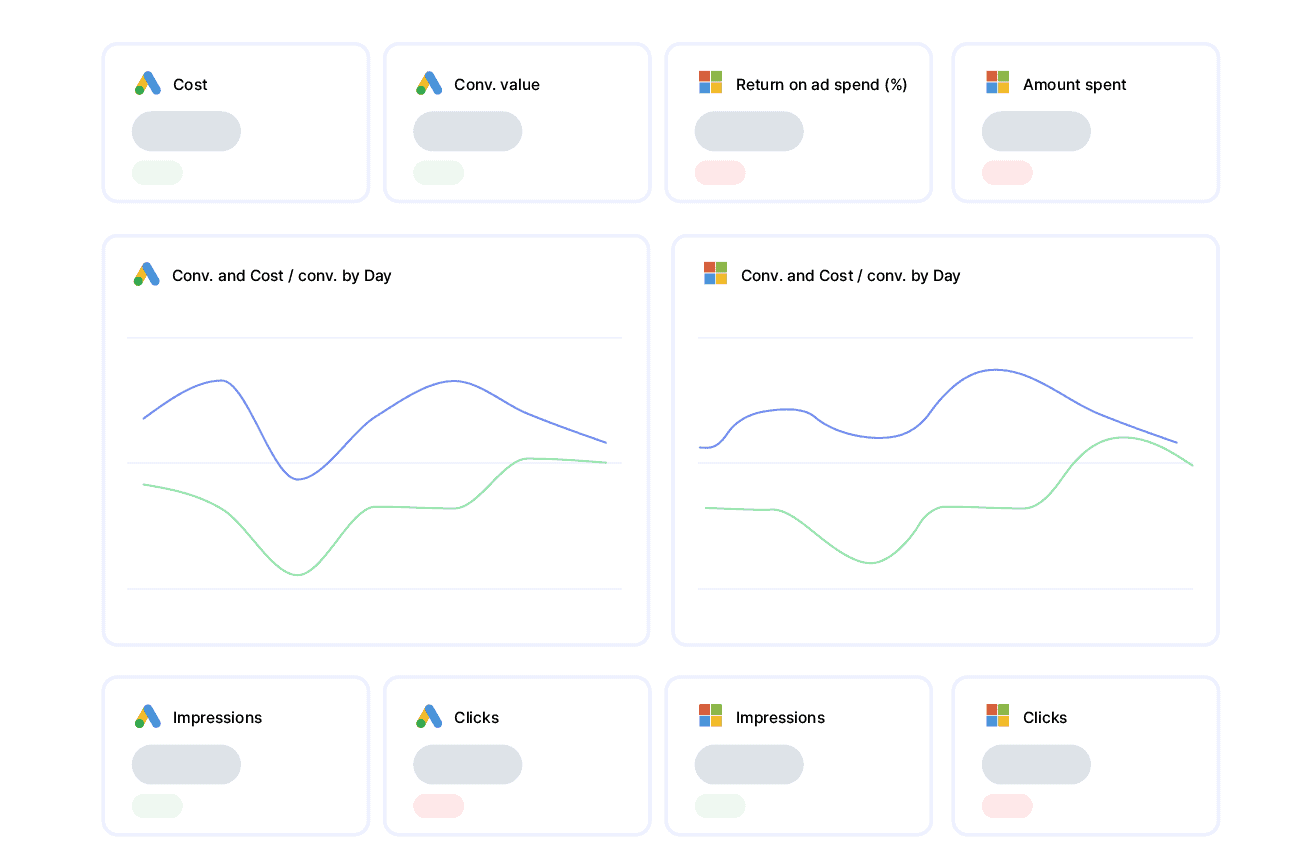
PPC Report
Google & Microsoft Ads spend, conversions, CPA and ROAS in one client-ready view.
View report template →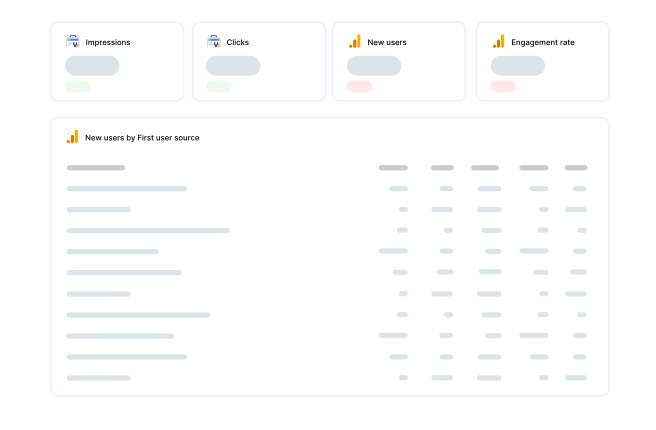
SEO Report
Organic traffic, keyword rankings and Search Console performance, automated each month.
View report template →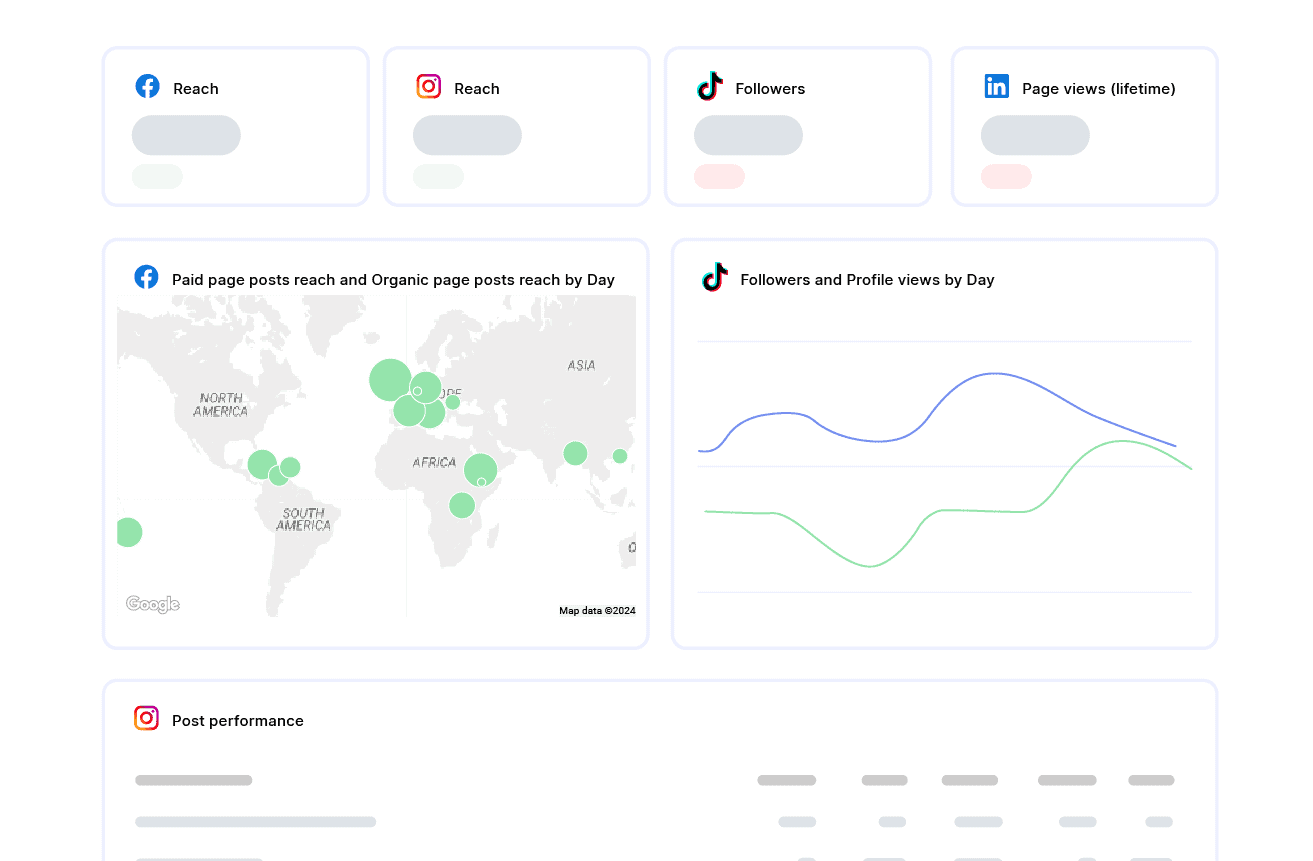
Social Media Report
Facebook, Instagram, LinkedIn and TikTok engagement and growth across every channel.
View report template →Client Testimonials
Discover Why Over 2,500 Agencies Trust Swydo
Swydo saves countless hours. An Excel report could easily take five or six hours. With Swydo, it takes 10 minutes, maybe 20.

The number one thing I love about Swydo is the customer support. I clicked the chat box and in less than 15 minutes I had a reply from Andrea.

What used to take days now takes minutes, cutting our reporting time by over 50%. An absolute game-changer!



Stop Quoting by Feel. Start Quoting by Math.
You’ve seen what one underpriced client costs. Multiply that across your book and the case for live margin tracking writes itself. Swydo’s 14-day trial includes free human-assisted migration — our team connects your data sources and rebuilds your reports.
No credit card · Cancel anytime · Free migration from any reporting tool